

A Day Out in Weybridge
Just outside of London, where the River Wey meets the River Thames, Weybridge’s name itself comes from the river crossing, which was once the defining feature of the area. Originally a small settlement tied to the nearby Oatlands Palace, built by Henry VIII in the 16th century, Weybridge became more prominent as transport links improved and London expanded. By the 19th and 20th centuries, Weybridge had somewhat unexpectedly become associated with the early days of British motorsport and aviation.
Weybridge has a strong connection to engineering and transport history, focussed on the Brooklands site, which was once the world’s first purpose-built motor racing circuit. Today, that legacy still shapes what there is to do here.
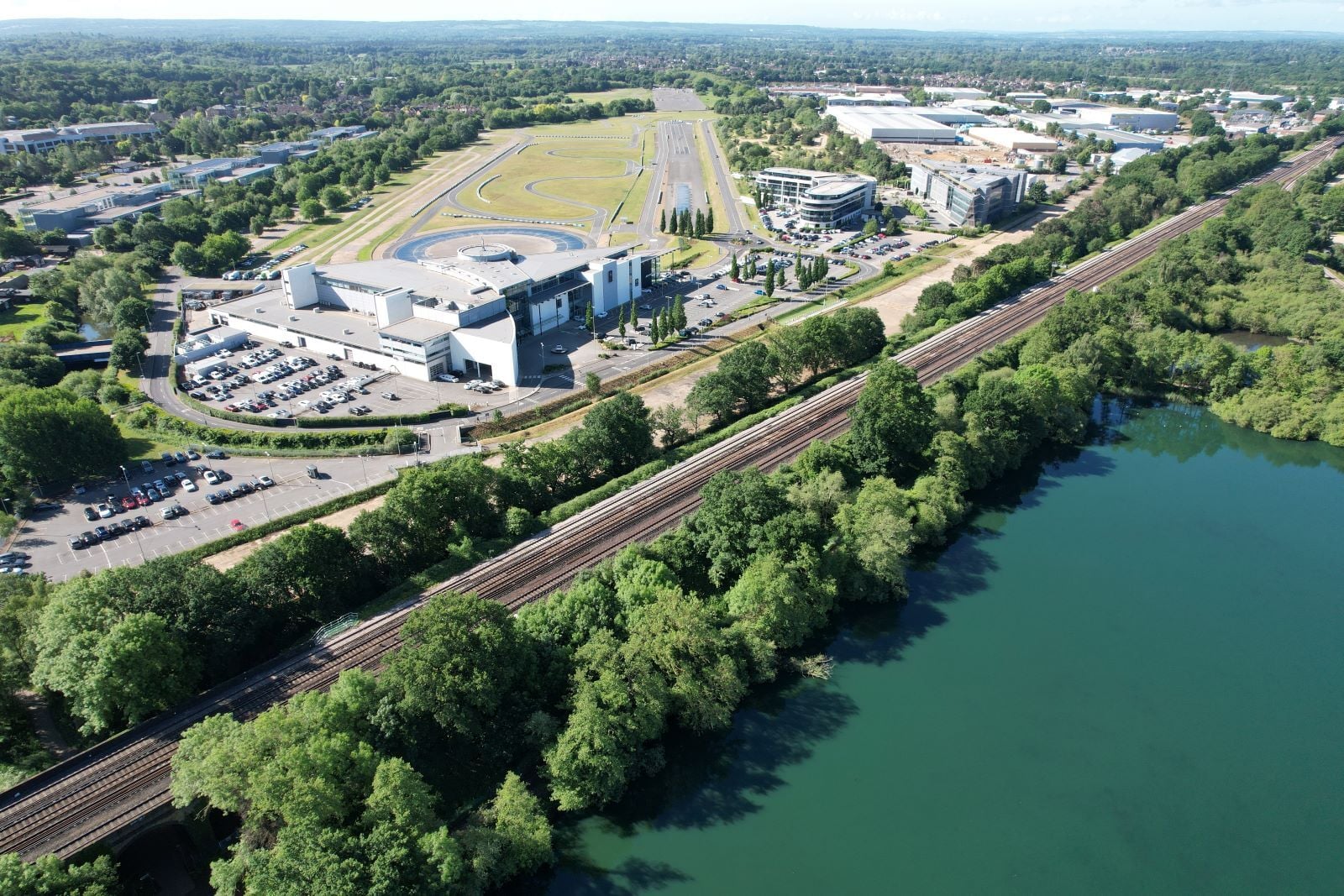
Mercedes-Benz World
When a car brand goes beyond the traditional showroom, the result is Mercedes-Benz World. Located next to the former Brooklands track, the setting already carries a strong sense of speed and history. The building itself is spread across three floors, and inside there are over 100 vehicles on display at any one time, covering everything from early models to current performance cars and racing machines. Entry is free and it is well laid out, but the displays are only part of the experience.
The outdoor site includes around 2.5 kilometres of purpose-built track, with sections designed for different types of driving, and all in constant use throughout the day. There is a handling circuit for high-speed driving, a skid pan for learning how to control a car in low grip conditions, and an off-road course with steep climbs and drops. Driving experiences are the core of Mercedes-Benz World. Options range from short passenger laps with a professional driver, to full sessions where visitors take to the wheel themselves. Instructors guide drivers in real time, giving confident drivers a boost whilst ensuring those with less experience are well supported. Those without a licence aren’t left out; junior experiences and simulators inside ensure everyone can take part. Even without getting behind the wheel, Mercedes-Benz World is worth the time. Seeing cars pushed to their limits up close is surprisingly compelling, particularly when it’s only a few metres away.
St George’s Hill
For golf lovers visiting Weybridge, St George’s Hill Golf Club sits behind gates, trees and a big reputation. This is one of the most well-known estates in Surrey, developed in the early 20th century with privacy as a priority. The course opened in 1913 and was designed by Harry Colt, one of the most influential golf architects of the early 20th century. It sits on classic Surrey heathland, which means sandy soil, fast draining ground and a landscape built around heather, pine trees and natural elevation.
There are three loops of nine holes, Red, Blue and Green, which can be combined into different 18-hole rounds. The Red and Blue nines form the main championship layout. The Red Course in particular runs just over 3,200 yards for nine holes and includes a mix of long par 4s, shorter risk reward holes and one of the most talked about par 3s on the course. Off the tee, the fairways are relatively generous, but the real difficulty comes from the greens and bunkering. The clubhouse sits above the finishing holes, looking back over the course, and has a very traditional feel. Mobile phones are not allowed in the clubhouse or on the course, which gives it a different atmosphere compared to most modern clubs. For golfers, this is the kind of course that stays in the head after the round.
London Bus Museum
London Bus Museum works best when it is seen as part of a bigger story, not just a collection of vehicles. It is really about how London grew, and how millions of people moved around every day. The museum itself is relatively new, opening at Brooklands in 2011, but the collection goes back much further. It started in the 1950s and 60s, when a small group of enthusiasts began saving buses that would otherwise have been scrapped. Their first major success was preserving a 1929 single decker, which is often considered one of the earliest examples of private vehicle preservation in the UK.
That effort gradually grew into the London Bus Preservation Trust, which still runs the museum today. Over time, the collection moved from a former aircraft factory in Cobham to its current purpose-built home at Brooklands. It starts with horse-drawn buses from the 19th century, including early designs with open seating, and moves through the shift to motorised transport in the early 20th century. The museum tracks how London’s growing population pushed changes in capacity, efficiency and comfort, eventually leading to the introduction of models like the AEC Routemaster in the 1950s and 60s. On certain weekends and events, visitors can ride the vehicles, and displays include ticket machines, uniforms, route maps and signage. Most visits last one to two hours, which makes it easy to combine with Brooklands Museum next door, however within that time, it manages to cover more than 150 years of transport history.
Brooklands Museum
Brooklands Museum is the reason that Weybridge has this unusual mix of attractions in the first place. The site opened in 1907 as the world’s first purpose-built motor racing circuit, and later became a major centre for aircraft production. The original track is still there, including the steep banking, which is one of the most intriguing parts of the visit. Standing next to it makes it clear how different early motorsport was. No modern safety barriers, no runoff areas, just concrete built for speed.
Inside, the museum covers both sides of the site’s history. There are vintage racing cars, motorcycles and aircraft, including large-scale planes that can be admired by walking through them. Concorde is the highlight for many people, and guided tours allow access inside. Exhibitions explain the development of engineering, from early racing technology through to aircraft production during the 20th century, whilst simulators and interactive displays help break things up. As the site of the original Brooklands motor racing circuit, a visit to this museum brings a level of motorsport authenticity that’s hard to replicate.
Brooklands Community Park
For those wanting a break from engines, exhibitions and the background noise of motorsport history, Brooklands Community Park sits just beside all of this legacy. Right next to the Brooklands site, the park is part of the redevelopment of the area and includes open fields, walking paths, play areas and space for sport.
The park covers around 60 acres of open space, built on land that was once part of the Brooklands racing and aviation site. That history is still there in the background, but it has been adapted into something far more usable. There is a 1.5 kilometre circular route, or for those wanting a slightly longer stroll, paths extend out toward the River Wey and link back toward Weybridge itself. A skate park, BMX area and multi-use sports court add a bit of energy, whilst children’s play areas and picnic spots make it work for families. Large sections have been left as natural grassland, supporting wildflowers and local wildlife, including butterflies and small bird species. After the museum or a session on the track, Brooklands Community Park is a good outdoor spot to slow things down.
In Weybridge, there is engineering history at Brooklands, modern driving at Mercedes-Benz World, a detailed look at public transport, a private golfing estate that feels a world away and a park that brings everything back down to something simple. Everything is so close together, so there is no complicated planning required and the day can shift depending on mood or weather. Weybridge does not rely on one major attraction, instead, it builds a day out through contrast.