

The Most Expensive Clothing Brands
From Birkin bags to $400 socks, here are the most expensive clothing brands we can expect to see more of in 2025. Let’s face it, clothes today are more than just necessary garments used to preserve human modesty. While affordable fast fashion is widely available, demand for luxury fashion hasn’t slowed. Quite the contrary: data shows that over the next five years, the luxury apparel market is expected to reach $1.5 billion, growing at a CAGR of 6.56%. Indeed, last year, LVMH owner Bernard Jean Étienne Arnault overtook tech behemoths Jeff Bezos and Elon Musk to become the world’s richest man, reflecting our increasing willingness to splurge on designer goods.
The Most Expensive Designer Brands
While it’s true that a big portion of the price tag of designer clothing is in the prestige of brand association (who doesn’t want to be seen with a Birkin bag and some Chanel sunnies?), other factors are also at play, such as the quality of material, craftsmanship, innovation, and beyond. Let’s take a look at the most expensive clothing brands in 2025.
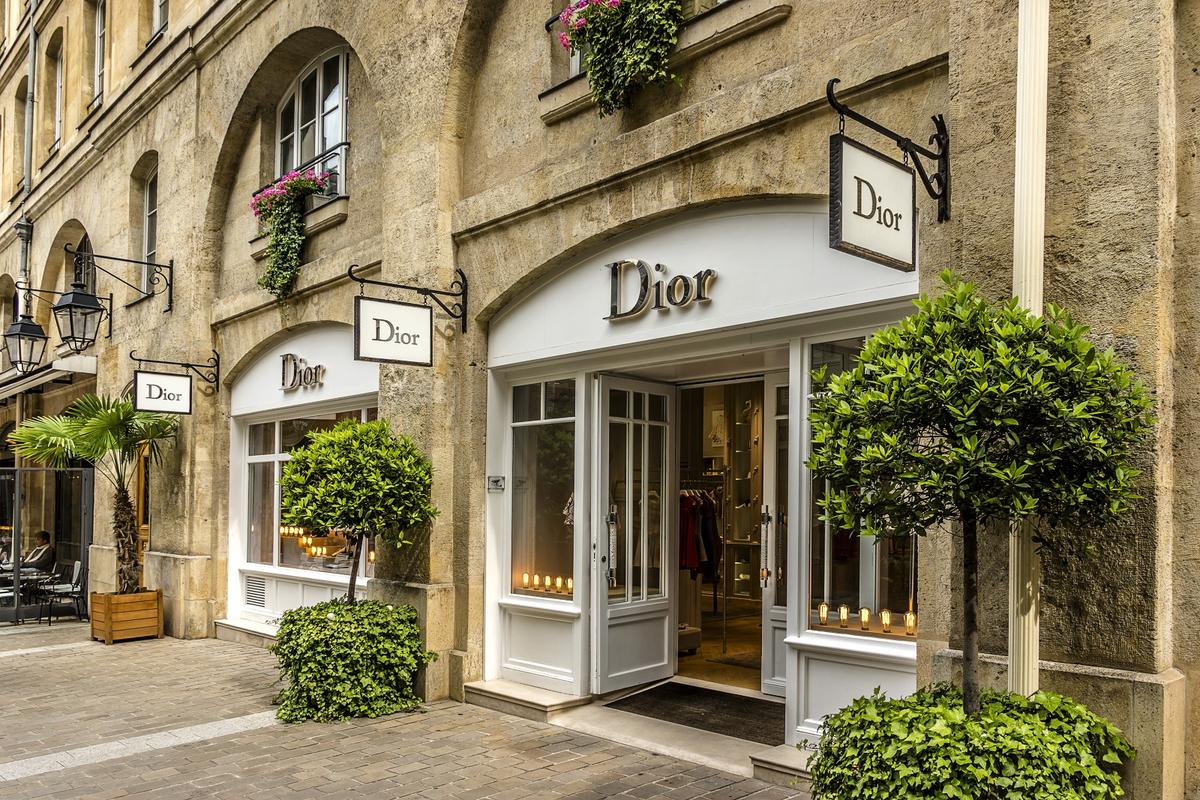
Dior
French luxury brand Dior was founded in 1946 by fashion designer Christian Dior. Today, the brand is known for both haute couture and ready-to-wear fashion, as well as its iconic fragrances like Miss Dior. Many Dior handbags come in the range of $3000-5000, but others can cost up to $30,000 if made from rarer materials such as crocodile, lambskin or python.
The Lady Dior bag is one of the most iconic in the Dior collection and retails at around $6000. Unsurprisingly, this timeless garment was named after the late Princess Diana, who famously had one in every material and colour.
Dior is more than just an expensive brand (expensive though it is) – the designer house has consistently pushed boundaries and steered female fashion in new directions. Following the second world war, Dior introduced dresses with cinched waists and big, bold skirts that take up space – a marked change from the more modest and reserved looks of pre-war Britain and France.
Also Read: Most Expensive Cigar Brands
Louis Vuitton
Louis Vuitton, a flagship brand of LVMH, is one of the oldest designer houses in Europe, founded in Paris in 1854. The brand specialises in high-quality leather goods, including handbags, accessories, belts, shoes and more. Monogrammed handbags remain the most popular Louis Vuitton items, which links back to the brand’s original innovation of travel trunks with a flat top and bottom – a design that ultimately steered the brand’s expansion throughout the twentieth century.
Today, standard Louis Vuitton bags retail at around $2000, but other brand items have sold up to an eye-watering $2.1 million, such as the Steiff Teddy Bear. Bags and leather goods aside, fashion items currently retailing at Louis Vuitton include a $26,000 mink zipped hoodie, a $22,000 fox fur jacket, and $6200 pearl-embellished track pants.
Also Read: Expensive Caviar Price
Balenciaga
Balenciaga is a Spanish luxury fashion house founded in San Sebastián in 1919 by Cristóbal Balenciaga. Like Dior, Balenciaga played its part in transforming womenswear, introducing high-end collections that promoted greater freedom of movement than the corset, such as the tunic dress and the bubble skirt. This boundary-pushing brand has a cult-like following, enabling it to release whatever it wants, whether it’s heeled green crocs or a $1000 cotton towel skirt that looks like it’s a joke but isn’t.
While items such as the towel skirt may be enough to make many of us tut and move on, Balenciaga’s continued strength shows that the brand is able to be more experimental with its sartorial decisions because its loyal client base will continue to buy.
A pair of Balenciaga’s over-the-knee biker boots are priced at nearly $9000; a cotton trench coat at $4000, and a basic cotton t-shirt at $950. One of the most popular Balenciaga releases in recent years is the chunky Triple S sneakers, which retail upward of $1000 and often sell even higher on the secondary market.
Also Read: World's Most Expensive Camera
Hermes
Another legendary Parisian luxury brand – Hermes is one of the few designer houses that remains family owned. It was founded in 1837 by Thierry Hermes, where it specialised in crafting quality harnesses for carriages before going on to sell luxury silk scarves throughout the interwar period. Today, the brand is best known for its iconic Birkin bags, named after the late French-English actor and singer, Jane Birkin.
Small Birkin bags such as the Birkin 25 retail for around $11,000, but the price can climb substantially higher, particularly on the secondary market. In 2022 for instance, Sotheby’s sold a Niloticus crocodile skin Birkin 30 for nearly half a million dollars ($450,000). The most expensive Birkin bag to date is the diamond Sac Bijou Birkin, of which there are three, which was priced at $2 million. ‘Bag’ in this case is somewhat a misnomer: the Sac Bijou is more of a piece of jewellery than a bag, with more than 2700 diamonds set in rose gold.
Also Read: Top 10 Most Expensive Hobbies
Gucci
Luxury fashion house Gucci burst onto the scene in the roaring twenties (1921), in Florence, Italy. It quickly garnered a solid reputation for the quality of its leather goods, which it retains to this day. Some of the most popular Gucci items that retail today are Gucci leather loafers (around $1000), leather belts (upward of $500), and various fragrances. This iconic brand leverages the power of celebrity, forming partnerships with Miley Cyrus, Kendall Jenner, Paul Mescal and Julia Garner.
Some of the most expensive Gucci items sold to date include a $250,000 belt with a 30-carat diamond encrusted double buckle; a $32,000 crocodile skin tote bag with a bamboo handle; and a $28,990 leather shoulder bag from the original 1921 collection.
Also Read: Most Expensive Motorcycle in the World
Chanel
Few luxury fashion houses command the level of respect and brand awareness as French brand Chanel (est. 1910). Founder and fashion designer Coco Chanel was one of the rare genuine trailblazers in the world of fashion, and her influence remains visible today. Designing in a time where women were squeezed into tight, restrictive corsets, Chanel introduced simple but elegant garments that were both comfortable and chic – perhaps best embodied in the ‘Little Black Dress’. Chanel is also credited with popularising women wearing trousers, in addition to sporty chic attire.
One of the most expensive Chanel items sold to date is the famed alligator skin Chanel Diamond Forever bag, which brought in $261,000 for charity. Today, standard Chanel tweed jackets are priced around $4500, slingback footwear upward of $1100, and $300 for a pair of mixed-fibre socks.
Also Read: Most Expensive Yachts in The World
Versace
Italian fashion brand Versace is one of the newer luxury fashion houses, established in 1978 by designer and socialite Gianni Versace. Unlike the more chic and understated looks associated with Dior and Chanel, Versace is known for its maximalist, bold prints, embodied by its iconic Medusa logo.
One of the most iconic and expensive Versace items sold is the ‘The Face’ — a rhinestone jacket that belonged to Elizabeth Taylor, which was auctioned for $128,000. For more casual wear, standard Versace men’s tops retail upward of $1000; tote bags at $2000, and towelled bathrobes up to $925.
Today, the fashion house is run by Gianni’s sister, Donatella Versace, following Gianni’s death in 1997.
Also Read: The Most Expensive Wine in The World
Prada
Much like Gucci and Louis Vuitton, Milanese luxury fashion house Prada (est. 1913) started off selling excellent quality leather goods in Italy, such as trunks and handbags. The success of Prada’s global expansion can be credited to designer Miuccia Prada, the granddaughter of founder Mario Prada, who breathed modernity into the brand with iconic fashion pieces like the minimalist Prada nylon bag, which currently retails upward of $1000.
One of the most expensive Prada bags is the Matinee Ostrich Leather Bag, priced at $10,700, in addition to the Brandy Top Handle V2 Bag, which is priced at $10,200. Ready-to-wear items such as men’s pants range from $1000 to $4000, depending on the material. Leather boots are similarly priced at $1470.
As the trailblazing Coco Chanel famously said: fashion fades, but style is forever. This motto is exemplified by the enduring legacy of these luxurious brands, from Hermes’ iconic Birkin bag to Balenciaga’s daring subversion of urban fashion. Although most people don’t have $10,000 to splurge on an ostrich leather bag, or $1000 on a towel skirt, these brands continue to redefine how we dress and how we think about fashion.
Read More
Recent Articles
October 23rd, 2026
October 22nd, 2026
October 20th, 2026
October 19th, 2026