

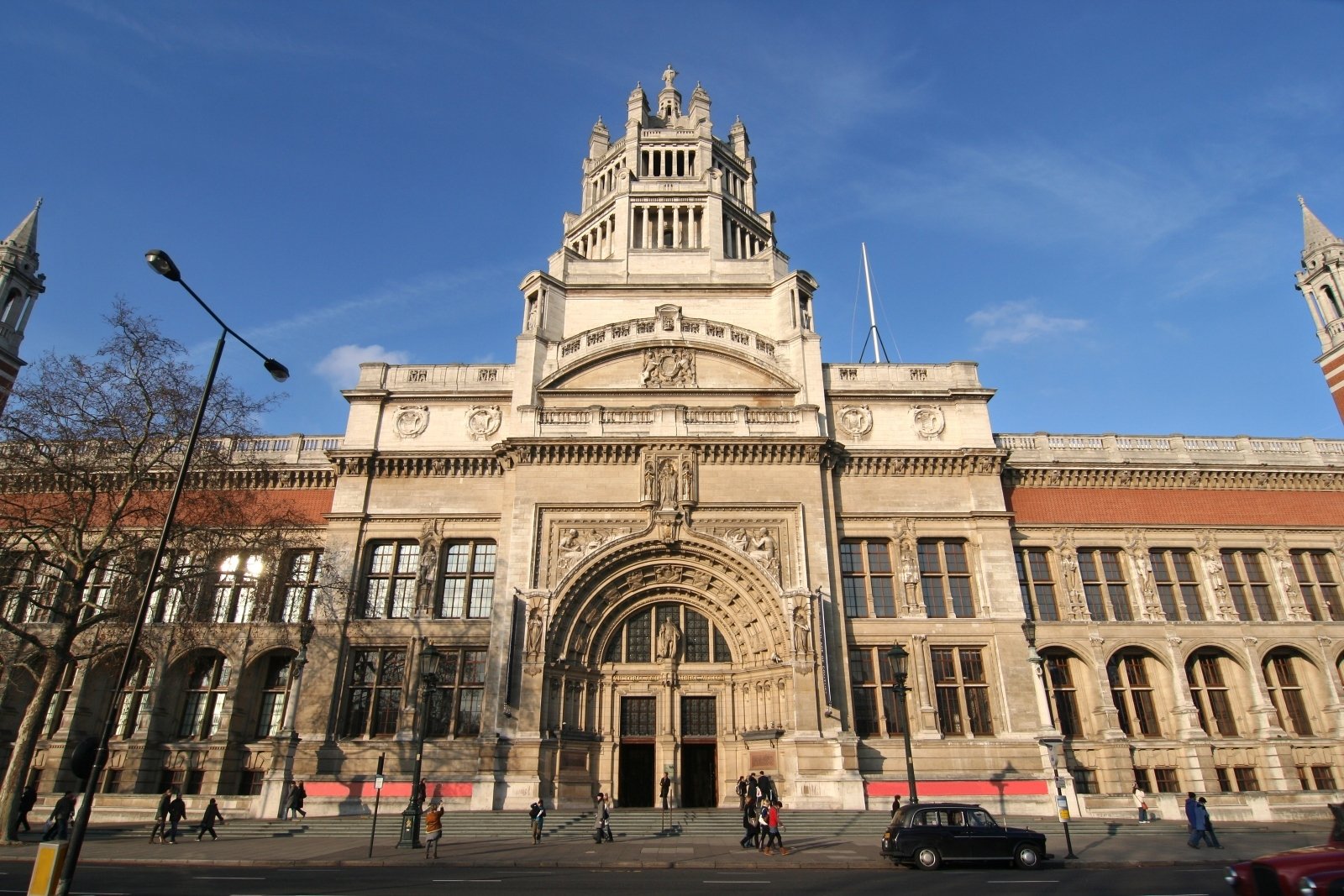
The Victoria & Albert Museum in South Kensington is home to one of the most thrilling and complete collections of art, design and engineering pieces in the world. It has millions of objects that span over 5,000 years to chart almost every medium that human beings have chosen to use for their own expression and cultural preservation.
As one of the most prestigious and visited museums anywhere on the planet, it holds a unique and important status. It acts as a record used by academics, scholars, writers, and artists to develop their work in understanding exactly who we are and where we came from. However, it also encourages everybody to bear witness to that record and engage with it for themselves, interacting with the objects and finding their own sparks of inspiration and creativity within it.
The story of how the V&A came to be is itself a fascinating snapshot of an influential royal figure and the state of the world in general at a key moment in its history.
An Exhibition Like No Other
Great Britain in the mid-19th century was the centre of the industrialised world. The country had assumed the position as chief innovator for the ways that technology, science and engineering could enhance civilisations, improve lives and boost commerce and trade all over the globe.
In 1851, the Queen’s Consort, Prince Albert, was the driving force behind a grand plan to showcase all of this might and power with The Great Exhibition of the Works of Industry of All Nations. This took place over six months in the Crystal Palace of London, a masterpiece of iron and glass that was raised in months as a demonstration of the applications of the Victorian methodology.
Albert was not simply a symbolic figurehead. Influenced by his German education, he was acutely aware that art and beauty had to become a part of the technological advances that industrialisation was uncovering. He also knew that education for a new generation would be vital to allowing this to happen. The Great Exhibition was an opportunity to uncover what the world was doing, where Britain’s weaknesses were, and where they could perhaps borrow, or take from, to develop a new era of science aligned with art.
Also Read: Famous Art Galleries
Investment for a New Future
The key takeaway for Prince Albert and many others was that although Britain had made great strides in terms of production, the design quality and style were perhaps lacking in comparison to some areas of the world. Fortunately, the exhibition had been a huge success and generated a surplus of funds that could immediately attend to this issue with investment for the future.
Also Read: Frieze Art Fairs in London
Building Albertopolis
Exhibition funds were duly ploughed into the purchase of land in South Kensington to create a new cultural district dedicated to education, science, art and industry. This area quickly became known as Albertopolis because of the prince’s committed patronage and the Museum of Manufactures opened here in 1852. It displayed many of the objects from the Great Exhibition, with decorative arts, industrial design and raw materials all on show as a teaching collection. The general public could view them during opening times, with artisans and designers allowed to come in to study them after hours. It held a clear mission to boost the country’s future output in design and manufacturing in a pragmatic way. The Museum of Manufactures eventually became known as the South Kensington Museum and when a large new phase of construction took place, a new name was decided.
Queen Victoria honoured her husband by renaming the grand new museum as the Victoria and Albert Museum in 1899. It came almost 40 years after his death and marked the museum’s formal position as a permanent national institution with a beautiful, grand new façade on Cromwell Road that one can still enter through today. On opening, the queen stated that she wanted it to ‘prove a lasting monument to my dear husband’s zeal for the encouragement of art and science’.
Also Read: Private Art Galleries in London
A Modern Monument
Today, the V&A has over 50,000 square metres of collection space across six floors. There are permanent collections of ceramics, fashion, sculpture and furniture with areas for temporary collections and installations that change throughout the year. Study rooms, archives and dedicated conservation rooms for teaching keep Prince Albert’s vision alive and well in the 21st century.
Importantly, entrance to the permanent collection remains completely free of charge to encourage use and visits from anybody who can make the trip to South London. Perhaps the most impressive of the permanent exhibits is the Raphael Cartoons that were created as the great Renaissance artist’s designs for his Sistine Chapel tapestries.
These priceless pieces are perfect for the V&A as they showcase the process with iteration and design valued as highly as the final product. They demonstrate alignment with the museum’s guiding philosophy that bridges craft, structure and materials with the expression of human endeavour and enduring artistic skill.
Also Read: Best Contemporary Art Galleries in London
A Cultural Touchstone
The V&A also upholds these same standards of enquiry and celebration for works of modernity. Their 2013 exhibition devoted to the work, process and life of David Bowie for David Bowie Is was the perfect example. It understood the artist as creator, with a clear separation from his rock star status, using his own personal archive as the foundation. Costumes such as the iconic Kansai Yamamoto designs from the Ziggy Stardust era and handwritten lyrics offered an intimate glimpse into Bowie’s worldview and creative lens. The immersive sound-led experience that the museum produced gave a thrilling context to each and every object for visitors.
The V&A remains a beacon for what Prince Albert set out to achieve almost 200 years ago. It sits in the middle of a modern Albertopolis in South Kensington that now counts the Science Museum, Imperial College London and the Natural History Museum as its neighbours. As the original pioneering institution in the area, it was born out of one man’s dedication to developing the right balance between progress, engineering and art. The fact that it continues to do so today is something worth celebrating with one’s own time and patronage whenever possible.