

The city of London is fortunate to be full of iconic landmarks. These are the buildings and places that are instantly recognisable to eyes from all over the world. They are so well-known that even the slightest glimpse of one of them in a movie or TV show is an instant shortcut for exposition in the story. As soon as they appear on screen, the viewer understands specifically and exactly where the action will be taking place.
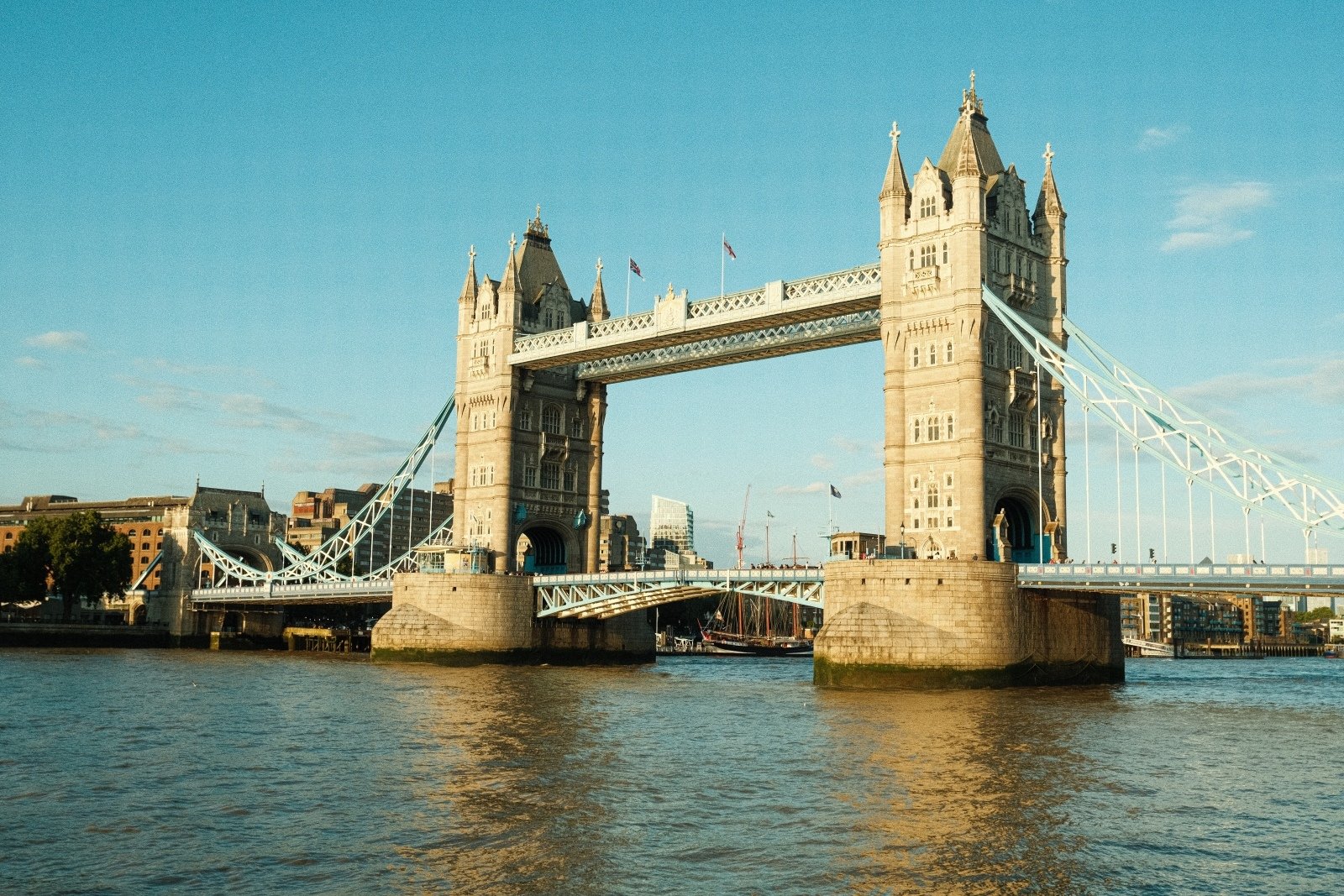
There is a very strong argument to be made for Tower Bridge to be the most famous London landmark of all. It represents a triumph of Victorian engineering that was created to solve a problem for a growing city in an ingenious way. As a result, this Grade I-listed site duly became a tourist attraction in its own right with a wealth of its own stories attached to it after over 130 years of proud service.
Commerce Drives Innovation
The mid-to-late 19th century had given London a very particular problem. As the commercial centre of the world, the city was rapidly expanding eastwards and that meant the river Thames must be crossed more and more every day. At the time, London Bridge was the only bridge crossing in the east of the city, and it was becoming heavily congested with workers, carriages and horses’ hooves, causing daily disruptions. These were having a big impact on the city’s productivity and trade, which the city leaders simply could not allow, and the matter quickly became political.
Trade on Land & Water
The Port of London was also one of the busiest of its kind on the planet during this era. Tall-masted ships and ever-growing steamships still needed unrestricted access upriver to the bustling docks that lay east of London Bridge. Any fixed bridge that would allow these vessels to pass underneath would require extremely high approach ramps that would make it impossible for horses and road carriages. The city had found itself at the intersection of newly industrialised land and the age-old maritime trade routes and both had to be accommodated.
A Daring Design
A special Bridge Committee selected Sir Horace Jones as the architect and Sir John Wolfe as the engineer for the elegant, powerful and distinctly Victorian solution. It took over eight years to complete this massive civil construction project and cost well over a million pounds. Foundations were sunk 8 metres below the river bed using pressurised chambers that had the workers at high risk of the bends (decompression sickness) in such challenging conditions. Unbelievably, the trade route on the water stayed open all through the construction period too.
Jones and Wolfe were all too aware that aesthetically, the bridge must have an outlook sympathetic to its historic surroundings. With the Tower of London as its close neighbour, it was decided that the steel skeleton would be clad with Cornish granite and Portland stone for an overall neo-Gothic look that hid its contemporary construction materials.
Strength in Steam
Tower Bridge opened in 1894, spanning 61 metres over the River Thames between the City of London on the north bank and Southwark on the south. It runs for 244 metres in length with its towers standing 65 metres above the river level. This combination of bascule and suspension bridge design used around 11,000 tonnes of steel in its construction, with huge steam-powered boilers driving two 1000 tonne hydraulic bascules that could be raised smoothly and reliably in under five minutes.
It was an incredible success. Bridge Masters, Engineers, Signalmen and Stokers worked around the clock to coordinate road traffic and closures so the ships could pass through without delay. This masterpiece of original engineering operation remained in place until the mid 1970s, when it was replaced by electric systems to power the hydraulics, with the mechanics still working in exactly the same way.
A Modern Attraction
Visiting Tower Bridge in 2026 is a thrilling experience that takes you inside this marvel to witness it at work. It is one of the most well-curated attractions for a heritage location anywhere in the city. Climbing through the North or South Tower to begin allows one to truly appreciate the scale of this construction, with the textual and video interpretations guiding visitors through the build process while connecting it to the human story of the workers who made it all possible. As the bridge is very much still in operation, it also presents a unique opportunity to witness it in action as one of the busiest roads and waterways in the city.
A tour will take you deep into the engine rooms where the great boilers still stand and it is easy to imagine the heat, cacophony and stress of the workers who toiled there. Special tours even allow for a brief trip into the bascules themselves, where the awe-inspiring technology of the Victorian period is still hard at work in the 21st century.
Stroll Through The City Skies
The original high-level walkways at Tower Bridge that spanned the towers were a key structural component that also allowed pedestrian crossings when the bascules were raised. However, they were very rarely used and eventually closed to the public in 1910, left abandoned and almost forgotten.
In 1982, they finally reopened as a part of the Tower Bridge Exhibition. This encouraged residents and visitors to the great city to take in one of the finest views possible of an iconic skyline over the winding river. However, it was in 2014 that a series of glass panels were inserted on the old Victorian steel skeleton of the walkway to create a transparent path above the capital.
This bird’s-eye view from this fantastic attraction lets visitors watch those famous red London buses travel as tiny toys underneath, with thousands of tourists and workers making a daily commute on the streets below. If you time your visit correctly, there is always the added thrill of watching this marvel in action as the bascules raise and a vessel passes between them.
Tower Bridge serves as the perfect monument to the incredible levels of engineering, civic architecture and sheer scale that defined Victorian London and is well worth the time taken to appreciate it.