

Notting Hill Carnival 2026: Food, History and the Business of Feeding a City
29–31 August 2026
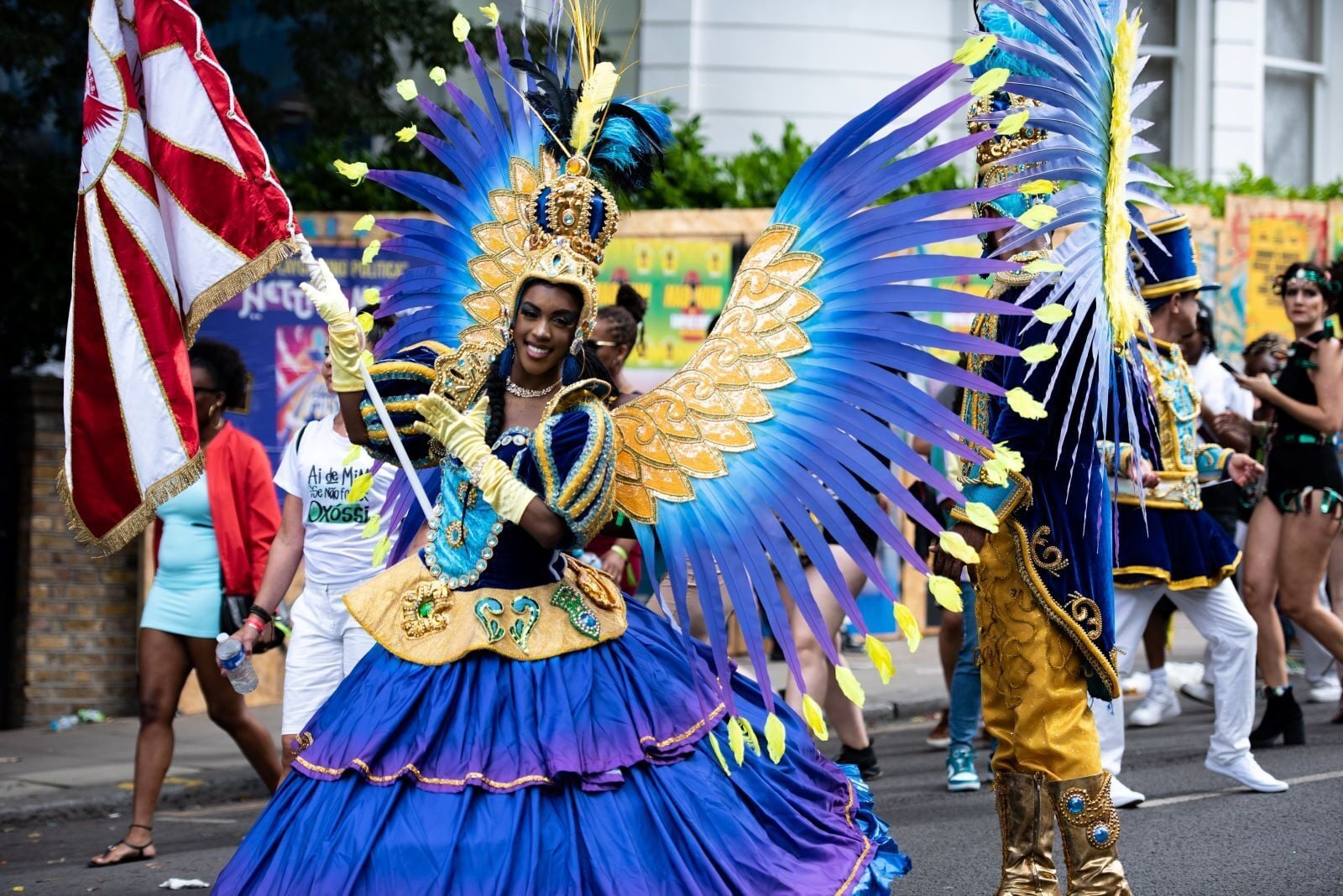
Each August Bank Holiday, Notting Hill Carnival draws more than a million people to West London for two days of music, colour and Caribbean flavour. While sound systems and masquerade costumes dominate the streets, a significant proportion of the audience comes prepared to queue for food. Jerk smoke drifting along Ladbroke Grove is a clear signal that hundreds of catering operations are already in service, cooking at near-industrial scale while relying on recipes that are anything but new.
From Carnival to Kitchen: Where the Food Comes From
Faced with the realities of post-war Britain, many individuals from Caribbean backgrounds turned to familiar forms of culture for continuity. Music, food and informal gatherings, such as shebeens and blues parties, often provided this space for community and socialising. Food was practical and easily adaptable, with dishes such as rice and peas and curry goat regularly chosen as they were able to feed large groups and hold flavour over time.
Notting Hill Carnival emerged as a public celebration of Caribbean culture and community. The earliest event, which was an indoor carnival held at St Pancras Town Hall in 1959 and was organised by Claudia Jones, focused on presenting Caribbean culture publicly and building a sense of collective identity that was frequently expressed through music and food.
Community organisers, including Rhaune Laslett, later helped move celebrations outdoors and food scaled with them, requiring licensing, supply chains, staffing and equipment capable of serving thousands of meals in a few hours. Jerk pans, oil drums and portable grills became standard, with traditional dishes such as jerk chicken, curry goat and fried fish particularly well-suited to batch cooking and quick service.
The development of Carnival and the food associated with it also reflects the range of Caribbean cooking. While often grouped together, the region spans many culinary traditions, with many differences between Jamaica, Trinidad and Tobago and Guyana. This variation can be seen across the event, where stalls stretch from through Notting Hill and North-West London and each represent different cooking techniques and flavour profiles.
What People Actually Eat
For 2026, Grace Foods has been confirmed as a major official food partner as part of the 60th-anniversary celebrations. Grace is one of the UK’s most established Caribbean food brands, supplying sauces, coconut products and spices used by both home cooks and professional caterers. Its involvement reflects the scale Carnival has reached while remaining rooted in Caribbean supply chains.
There are more than 300 licensed food stalls across the Carnival footprint. Each operates under tight time pressure, with most preparing components in advance and finishing dishes on site.
Despite the breadth of global street food now found at large UK festivals, Carnival remains firmly Caribbean in the food it offers. Jerk chicken dominates for a reason. It is well suited to outdoor cooking, improves with smoke and spice and can be portioned quickly. Marinated in allspice, Scotch bonnet, thyme and garlic, it is cooked over open coals in steel drums or purpose-built jerk pans and usually served with rice and peas.
Other staples appear with equal regularity:
- Roti, particularly Trinidadian-style, filled with curried goat, chicken or vegetables
- Doubles, a breakfast and snack food of fried bara bread with spiced chickpeas
- Patties, their pastry tinted yellow with turmeric and filled with beef, chicken or vegetables
- Guyanese pepper pot, slow-cooked and heavily seasoned, often served with bread
- Fried plantain and saltfish
Vegetarian and vegan food has become standard. Many Caribbean dishes are plant-based by tradition and several stalls now trade exclusively in vegan Caribbean cooking.
Longstanding Traders and Restaurant Involvement
Jay Dee’s Catering
Best for: classic Carnival staples
Among the most recognisable operators is Jay Dee’s Catering, based around Lancaster Road during Carnival. Its menu is straightforward: jerk chicken and rice and peas, cooked in volume and served quickly. Like many established Carnival caterers, Jay Dee’s trades year-round, often in events and private catering, which allows for the level of planning Carnival demands.
Curtis Caribbean
Best for: seafood Middle Lane
A reliable stop for those seeking more than the usual Carnival staples. Curtis Caribbean places particular emphasis on seafood, alongside bakes and a small but well-chosen selection of cakes. Cooking is careful and controlled, with standards holding steady even at peak times.
Mr Roy Jerk Chicken
Best for: traditional jerk and slow-cooked meats
Goldborne Road
One of Goldborne Road’s most dependable jerk stalls. The chicken delivers proper heat and smoke, while the oxtail and curry goat are slow-cooked and well reduced. Service remains organised under pressure and the owner’s regular presence helps maintain standards.
Grannies Caribbean Jerk Shack
Best for: home-style Jamaican cooking
Grannies Caribbean Jerk Shack, typically found near Powis Square, focuses on Jamaican cooking rooted in domestic tradition. The flavours are unapologetically robust and reflect a wider pattern among long-running stalls, where recipes are inherited rather than adapted for trend.
Cottons
Best for: restaurant Caribbean cooking
Cottons, with permanent sites across London, has long aligned itself with Carnival through outdoor service and pop-ups. Its menus offer a broader view of Caribbean cooking, bridging restaurant dining and street food without softening either.
Queues are inevitable, particularly from midday onwards. Portions are generous and designed for sharing. Licensed traders display food hygiene ratings and many stalls sell coconut water alongside soft drinks, which remains one of the more practical choices over a long afternoon.
From 29–31 August 2026, the jerk pans, roti griddles and curry pots will once again do what they have done for decades: feed people efficiently, commercially and with cultural intent. Carnival food remains one of the clearest records of how Caribbean cooking has been sustained, professionalised and shared in Britain.
Read More