

A Guide to Golf Courses in Buckinghamshire
Buckinghamshire has never shouted loudly about its golf. Unlike neighbouring Surrey or Berkshire, it does not trade on tournament venues or exclusivity. Instead, its reputation has been shaped by parkland courses that sit within the landscape and clubs that have evolved steadily over time.
What follows is a look at five of Buckinghamshire’s most established and respected golf courses, each with its own character and history.
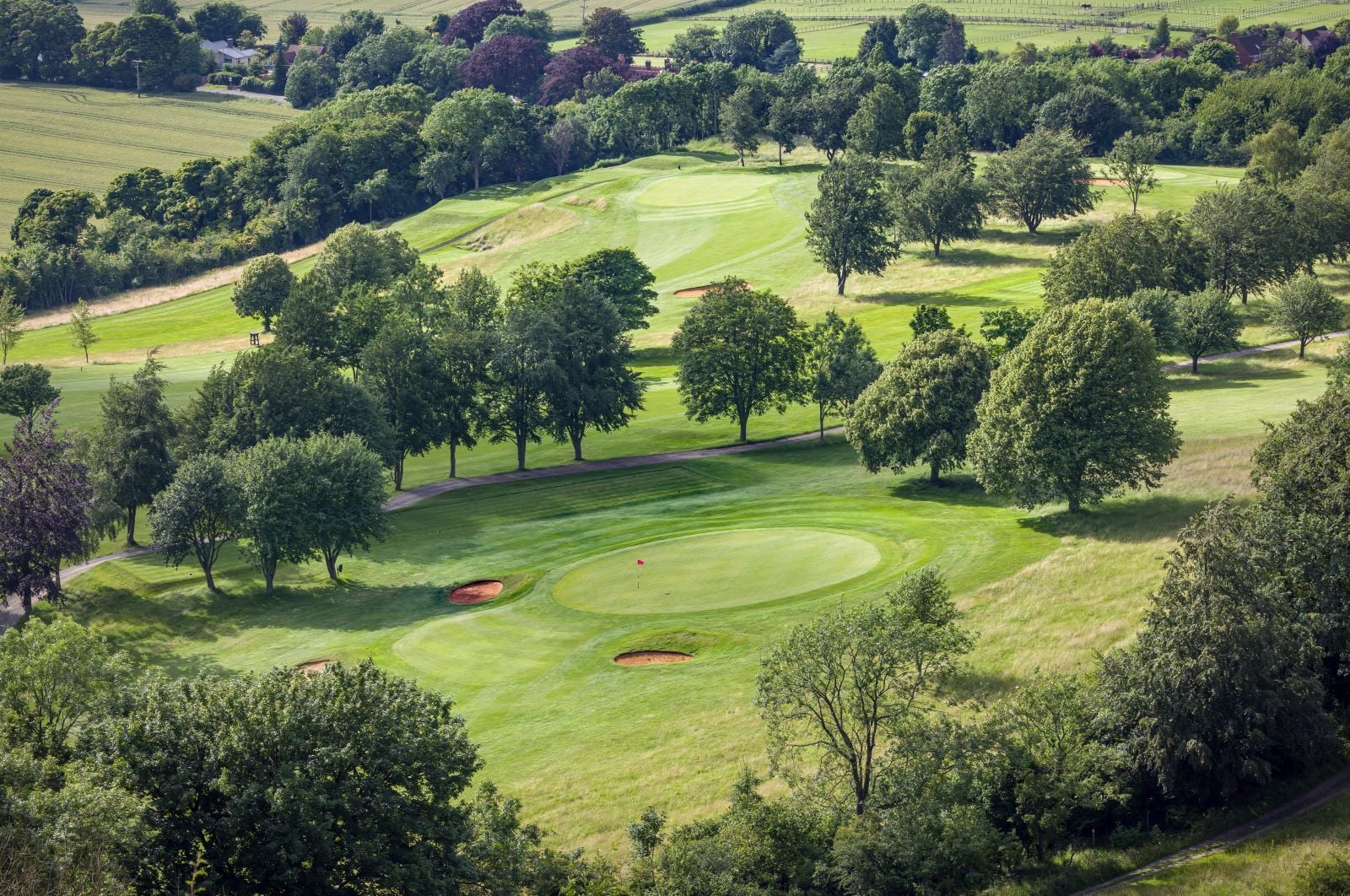
Woburn Golf Club, Milton Keynes
Woburn is the county’s most recognisable golfing name and its most complete proposition. Set within the wider Woburn Abbey estate, the club operates on a scale rarely matched elsewhere in the region, with three full 18-hole courses laid across woodland and open heath.
The Dukes and Duchess courses opened during the 1970s, with the Marquess added in 2000, expanding Woburn into a 54-hole venue of national standing. Since hosting the Dunlop British Masters in 1979, the club has staged around sixty professional tournaments across its three layouts. It was also the first 54-hole venue to have all three courses ranked in Golf Monthly’s Top 100 Courses in the UK and Ireland.
While the settings are broadly similar, the courses offer a handful of differences. The Dukes is regarded as the most exacting, with tight driving corridors and greens that place a premium on position rather than power. The Duchess is more forgiving and strategic, often described as a course for the thinking golfer, while the Marquess plays longer and reflects a modern championship layout.
Burnham Beeches Golf Club, Burnham
Founded in 1891, Burnham Beeches is Buckinghamshire’s oldest golf club and one of its most historically grounded. Set on the edge of more than 500 acres of protected woodland, the course takes its name from the beech forest that borders it.
The club began with 47 members, including 21 women, at a time when female participation in golf was uncommon. Early development was shaped by J.H. Taylor, five-time Open Champion and one-third of the Great Triumvirate alongside James Braid and Harry Vardon. Taylor’s influence can still be felt in the routing and green complexes, where strategy and placement outweigh brute force. The course was later redesigned by F.W. Hawtree in 1965 and remains largely unchanged today, retaining its parkland identity across gently rolling terrain framed by mature trees.
Burnham Beeches is privately owned by its membership, a structure that has helped preserve its traditional character while allowing steady development. The freehold purchase of the course in 2013 secured the club’s long-term future and reinforced its status as a members’ club that continues to welcome visitors and societies.
The club’s history includes a number of notable figures. Lady Astor, the first woman to take a seat in the House of Commons, was a long-standing member, while Arthur Lacey, born in the cottage beside the fifth hole, later captained the Ryder Cup in 1951. The course has been played by golfers including Braid, Taylor, Vardon, Bernhard Langer, Seve Ballesteros, Luke Donald and Charley Hull. Beyond golf, figures such as Don Bradman, Richie Benaud, Kevin Keegan, Gary Lineker and Alan Shearer have also played here.
Stoke Park, Stoke Poges
Set within more than 300 acres of Capability Brown-designed parkland, Stoke Park centres on a Grade I listed Georgian mansion and operates as a leisure destination, providing a golf course with a hotel and events space rather than functioning solely as a members’ club. The estate has attracted high-profile visitors and has appeared in films including Goldfinger and Bridget Jones’s Diary.
The championship golf course, designed by Harry Colt in 1908, is arranged across three nine-hole loops and reflects Colt’s emphasis on strategy over length. Tree-lined fairways and water hazards reward restraint and positioning, encouraging a measured style of play suited to sociable rounds. While it does not offer the difficulty of some specialist clubs, the course’s setting and history remain central to its appeal.
The Buckinghamshire, Denham
Carved into more than 200 acres of parkland along the banks of the River Colne, The Buckinghamshire occupies a well-established position among the county’s golf clubs. Located near Denham, close to Buckinghamshire’s southern edge and within reach of west London, the club has hosted events on the Ladies European Tour.
The championship course opened in 1992 and was designed by John Jacobs, former Ryder Cup captain. His philosophy is evident throughout, with golf that rewards judgement as much as execution. Stretching to just over 6,800 yards, the par-72 layout adapts to a range of abilities and styles.
Thousands of indigenous trees were planted during construction and wildflower growth is encouraged through the rough. A major bunker renovation in 2017 reduced overall bunker coverage while sharpening its strategic impact. Away from the fairways, the club maintains a traditional atmosphere. The clubhouse prioritises comfort and familiarity, while the wider estate includes a restored 17th-century house with bedrooms, reflecting its identity as a golf estate rather than a standalone course.
Chiltern Forest Golf Club, Aylesbury
Set on the northern edge of the Chiltern Hills beside Wendover Woods, Chiltern Forest Golf Club occupies an elevated position above Aylesbury. The 18-hole parkland course is routed across hills and shallow vales, with holes that move through woodland and open ground.
Golf has been played on this land for more than a century, when much of the surrounding Halton estate was owned by the Rothschild family. Aston Hill, the road running alongside the course, was used for early 20th-century hill climb motor races, events that gave rise to the Aston Martin name. During both world wars, the land was requisitioned by the War Office and became part of RAF Halton, where Sir Henry Cotton played a role in extending the course to nine holes during the Second World War.
Civilians were first permitted to play during the 1950s and the course was later acquired from the Ministry of Defence, with a new clubhouse built in 1977 and extended in 1998. Further land purchases during the 1980s and 1990s allowed the course to expand, with additional holes created on former Forestry Commission land and neighbouring farmland. The full 18-hole layout was officially opened in 1992 with a pro-celebrity competition.
Today’s course is suited to golfers of all abilities. The routing makes use of the terrain, with holes that rise and fall through mature trees. Accuracy and course management are rewarded, particularly on tighter woodland holes, while more open stretches allow more confident play.
The county’s best courses reward judgement, patience and familiarity. It is golf that has grown alongside its surroundings, and that, more than headline tournaments or reputation, is what gives Buckinghamshire its lasting appeal.