

The Best 5 Beaches in Greece - Golden sands and Hidden coves
Greece is very much defined by its coastline, only second to Norway in Europe in terms of length. With thousands of islands scattered across the Aegean and Ionian seas, the country has been a vital control point for trade across the Mediterranean throughout history, but in the modern period, it is tourism that dictates the flow of things around Greece and its seaside spots.
With more options to choose from than any other nation in Europe, the best beaches in Greece range from dramatic cliffs and hidden coves that are linked to many a deity of its ancient past, to wide stretches of pale, pristine sand backing onto glorious pine trees. Some spots are easier to reach than others, whilst a few of the most stunning locations on this list may require boat journeys or long treks through the country’s notoriously rugged terrain to access.
Navagio
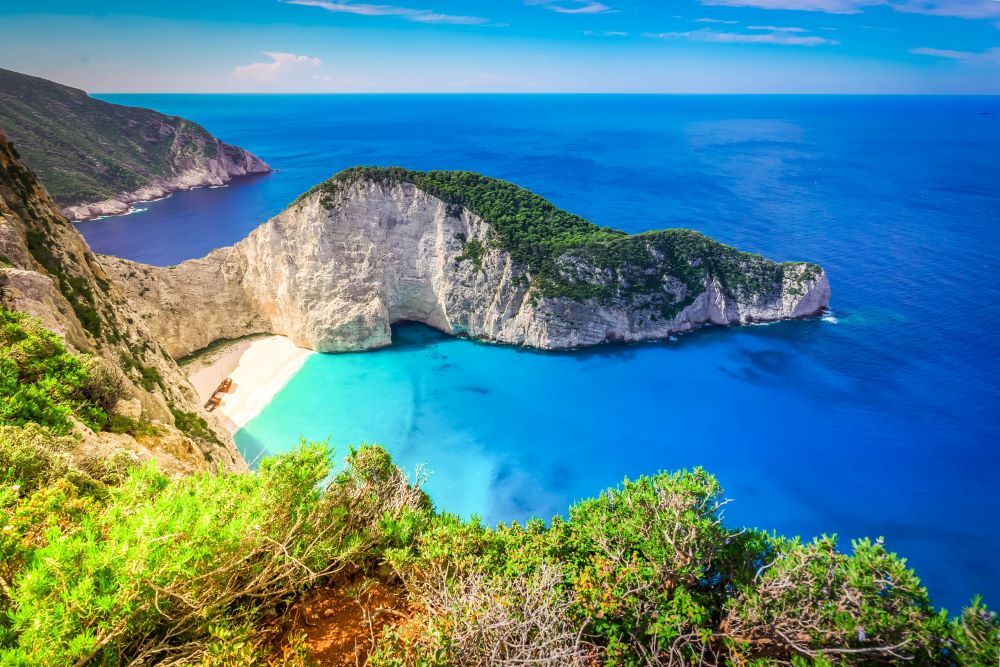
Navagio Beach, famously known as Shipwreck Beach, is a hidden stretch of cove along the coast of Zakynthos, defined by its towering 200-metre limestone cliffs and some of the clearest turquoise waters in all of Greece. The cove’s striking appearance is a result of the white pebble sand reflecting sunlight through the highly mineralised water, creating an almost neon-blue glow against the sheer, vertical rock faces that also bounce their fair share of light back across the surface of the water. The beach is entirely inaccessible by land, meaning the only way to visit is by boat, usually departing from the nearby Porto Vromi or Saint Nikolaos.
The bay’s centrepiece, of course, is the MV Panagiotis, a coaster that ran aground during a storm in October 1980 while allegedly smuggling cigarettes. Over the decades, the salt air and sun have weathered the hull into a deep, rusted orange, providing a tantalisingly striking contrast against the unabashed natural beauty of the area. While the wreck is slowly being reclaimed by the elements and partially buried by shifting sands, it remains a hauntingly beautiful site for the thousands of visitors who swim in the surrounding cove’s crystalline waters.
Sarakiniko Beach
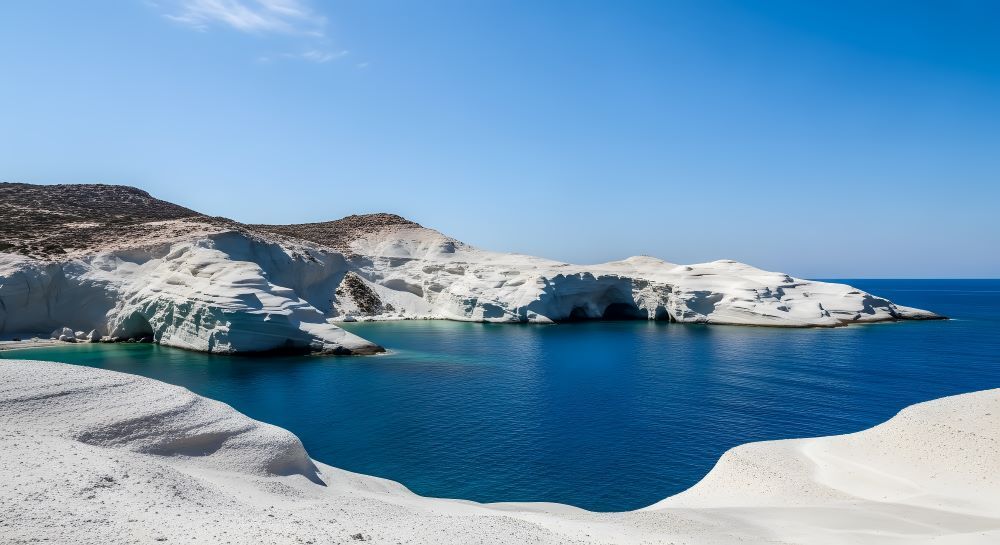
Sarakiniko Beach on the island of Milos offers visitors an unforgettable beach trip and is one of Greece's best beaches for those looking for jaw-dropping scenery and contrasts. The beach is a landscape of bone-white volcanic tuff instead of traditional sand or pebbles, which over millennia, the relentless force of Aegean winds and salt spray has sculpted smooth, flowing curves, deep canyons, and stark ridges that resemble a lunar surface.
This strikingly brilliant white terrain creates a blindingly beautiful contrast against the saturated turquoise and deep navy blue tones of the surrounding sea, making it one of the most widely photographed and beautiful locations in the whole of the Mediterranean. Reflecting the complex volcanic history of Milos, Sarakiniko is as much a geological wonder as it is a pleasure destination. Its labyrinth-like caves and gleaming surfaces provide an ethereal backdrop that feels entirely detached from the typical Greek island aesthetic, and very much like it could be home to some of the country's ancient deities and monsters.
Porto Katsiki
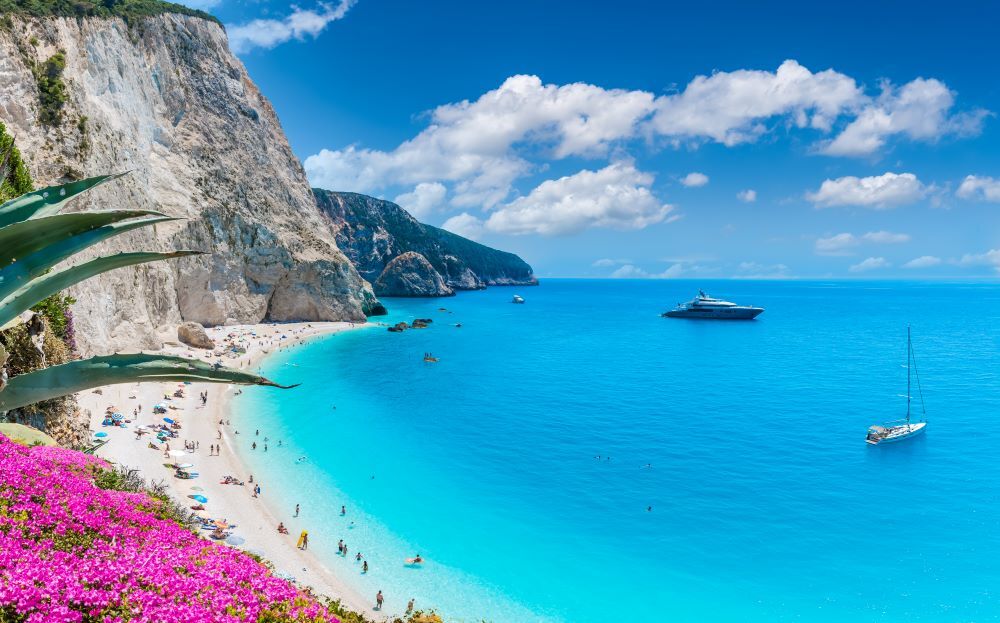
Porto Katsiki has long been the crown jewel of Lefkada’s western coastline, historically accessible only by sea until the late 20th century, when the iconic cliffside staircase was constructed, which has played a central role in establishing the Ionian Islands as a global destination for "blue-flag" excellence. The beach itself is a narrow, pristine ribbon of white shingle tucked at the base of 100-metre vertical cliffs that act as a colossal sun reflector, intensifying the luminous, milky-turquoise hue of the deep Ionian waters.
To access this hidden sanctuary, visitors must navigate a steep pedestrian bridge and a winding descent of approximately 100 stone steps, a layout that offers a staggered, panoramic reveal of the entire horseshoe bay. Once on the shoreline, the towering rock face provides a massive natural windbreak, ensuring the sea remains exceptionally calm and translucent for swimming. The surrounding clifftops feature small cantinas and a dedicated observation deck, providing a strategic vantage point to witness the legendary sunsets that bathe the white limestone in a brilliant golden glow.
Elafonissi
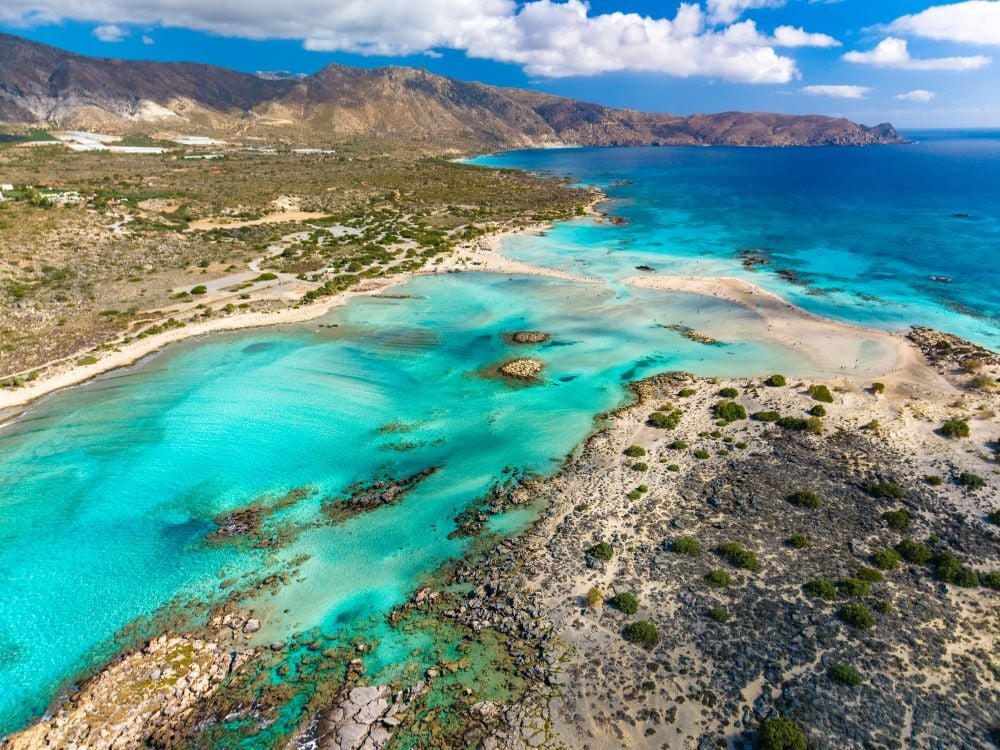
Historically, Elafonissi has served as a remote sanctuary at the far southwestern edge of Crete, gaining international fame as one of the few places in the world to feature a naturally occurring pink-tinted shoreline. This rare phenomenon is the result of millions of crushed red and pink seashells pulverised by the tides and blended with the fine white sands of the Libyan Sea. The beach itself is a complex network of shallow, crystal-clear lagoons and shifting sandbars that allows visitors to wade through knee-deep, glass-like channels of warm, turquoise water to reach a secluded nature reserve filled with rare sea daffodils and ancient cedar trees.
As a strictly protected Natura 2000 site, the area is free from permanent buildings, preserving a raw ecosystem that serves as a vital nesting ground for loggerhead sea turtles. The combination of its pastel-hued sands and the absence of traditional development makes it one of the most visually unspoilt and ecologically significant coastal environments in the whole of the Mediterranean basin.
Apella
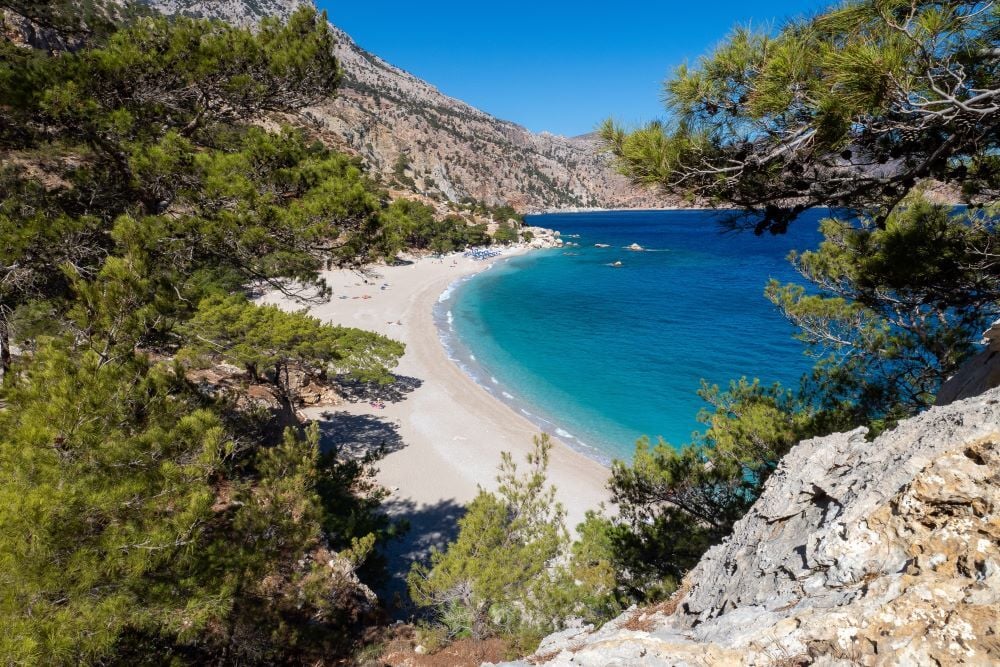
Apella Beach has consistently ranked among the finest coastal locations in Europe for its untouched purity. Tucked into the steep eastern slopes of the island of Karpathos, this secluded bay remained largely a local secret for generations. Its limited accessibility has significantly restricted large-scale tourism and allowed the beach to retain its prehistoric aesthetic perfectly. Today, it serves as a premier example of "slow travel" in Greece, where the absence of large-scale development and urban build-up has protected the island's rare Mediterranean ecosystem, where ancient pine forests meet the crystalline depths of the Aegean.
The beach itself is a striking horseshoe of brilliant white pebbles and coarse sand, framed by vertical, pine-clad cliffs that plunge directly into the sea to create a dramatic emerald-on-blue backdrop. To reach its secluded setting, visitors must navigate a series of high-altitude, winding mountain roads that offer spectacular panoramic views before a final descent into the quiet valley, where the cliffs act as a natural windbreak, while the scent of sun-warmed pine needles provides an immersive experience of Karpathos' rugged coastal wilderness.
Read More