

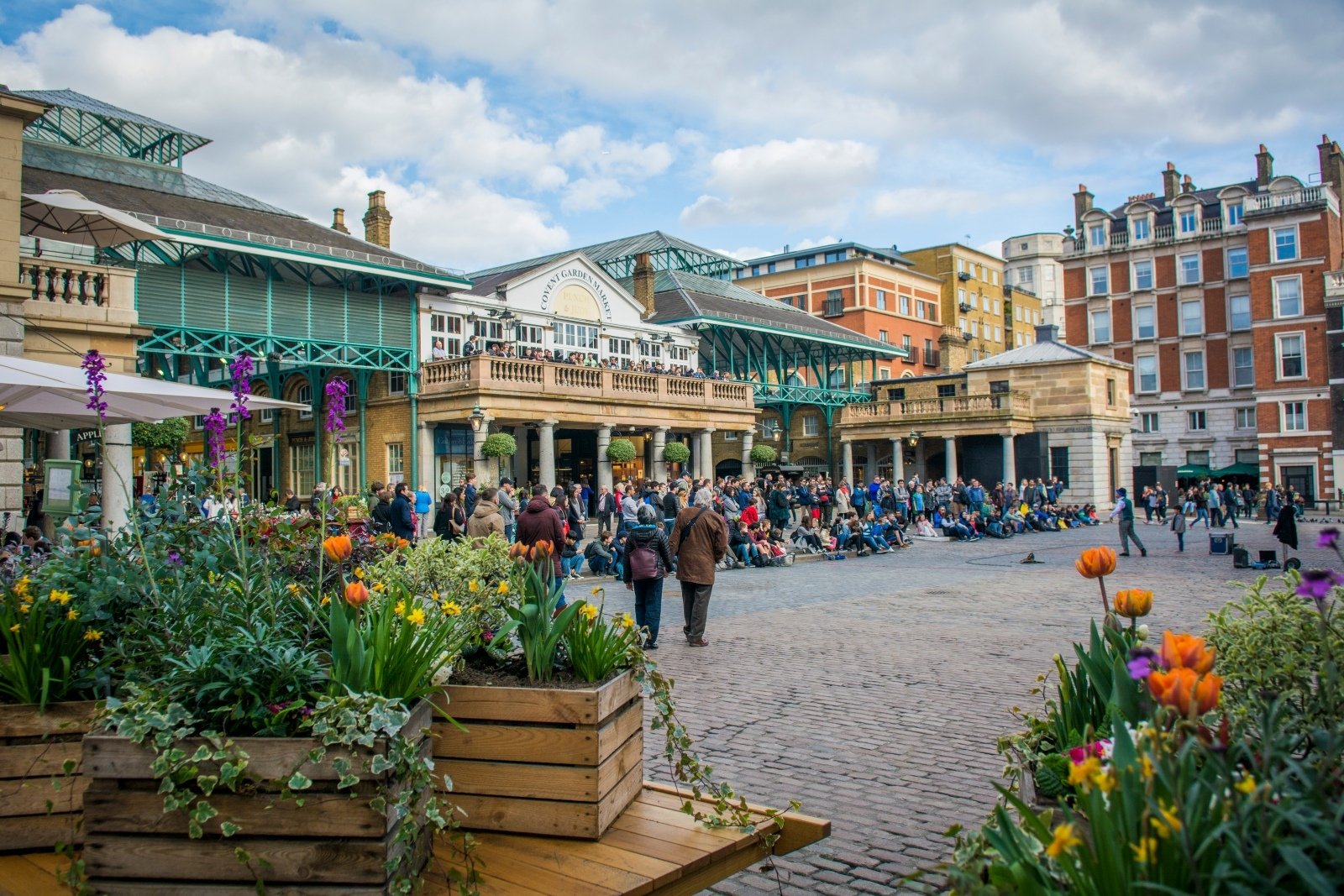
It is all too easy to be overwhelmed with choice in some of central London’s most interesting neighbourhoods. Covent Garden has been a hive of activity for centuries, with a consistently stellar reputation for food and drink, shopping, entertainment and more than its share of interesting tales from the past.
It feels like an overused cliché to suggest that any place would have something on offer to accommodate all tastes, but Covent Garden definitely does fit that bill. Taking the time to research and plan how to get the most from your visit can become a part of the overall attraction, with opportunities to learn exactly how the area has come to be so well-revered. To guide you in this regard, here is a brief collection of the very best things to do in Covent Garden.
Pop To a Shop
There isn’t anywhere quite like Covent Garden for shopping in London. A huge part of the appeal is the mix of indoor and outdoor buildings that have found their new retail purpose across the streets and delightful hidden courtyards on site. Here you will find a fabulously diverse collection of global brands, flagship stores and independent boutiques that more than justify an hour or two to stroll and explore.
The Apple Market that was once home to fruit and vegetable produce stalls, is now home to a delightful collection of craft and antique vendors. It is an artisanal goods paradise of art, jewellery, candles and interesting objects all under a canopy of nostalgic charm. Across the main piazza, British heritage brands are well represented by All Saints, Barbour and Aspinal of London stores and nearby Floral St is the home of Radley, Mulberry and Paul Smith. In Covent Garden, there is a combined atmosphere of beautiful Victoriana, the allure of the Swinging Sixties and a fresh 21st-century modernity all on show in one electric and eclectic retail destination.
Take a Tour
Covent Garden is full of hidden stories and history. To get the most from your time there, a guided walking tour is a great way to take in as much information as possible while gaining access to the parts that you may otherwise miss completely. The Inside Story – Covent Garden Walking Tour from London Walks – a renowned provider in the capital – allows you to tread through tales that span centuries. It details the original layout of the first ever planned square in the city of London in the 1630s, taking what was once an orchard and thrusting it into a hive of activity forever after. Along the narrow alleys and side streets, a social history is plotted that combines the glamour of London’s theatre world and its most notable figures with the rougher taverns and sometimes rougher threads of working-class life here through the ages. All of the guides are well-versed, engaging and able to meet any questions with illuminating answers. You may find that an experience such as this offers a view on the area with an entirely different lens and context.
Stroll Through Neal's Yard
Despite being only a few metres long, this tiny alley can be understood as the perfect illustration of Covent Garden’s allure. Running between Shorts Gardens and Monmouth Street, it opens up into a courtyard that has been the subject of almost 50 years of continuous renovation and redevelopment.
The 17th-century developer Thomas Neale laid out the area over 300 years ago as a rather nondescript collection of warehouses. By the 1970s, it was all but forgotten, not even appearing on many maps of the wider area. Everything changed in 1976 when Nicholas Saunders moved in to create Whole Foods Neal’s Yard here. A select collection of boutique businesses soon followed with ethical food produce, skincare innovators, bakeries, cafes and coffee shops all working together as one community. Visitors are welcomed by a riot of colour and an overall treat for the senses as they amble by, testing and tasting everything on show. Neal’s Yard has managed to maintain the village store type of experience in the middle of one of the world’s leading capital cities and it packs a huge punch with every footstep covered.
Street Entertainment
The diary of Samuel Pepys is responsible for a great deal of what we know about London’s social history. In it, he recounts a story about witnessing a puppet performance on the streets of Covent Garden in 1662, giving us the first record of what became a world-famous tradition and also the first mention of the quintessentially English tourist tradition of a Punch and Judy show. In the 21st century, this area is alive with acrobats, musicians, singers, jugglers and comedians all working under a regulated system of street performance.
The cobbles of the Piazza and the entrances to the Market Buildings are considered prime spots with free performances throughout the day and evening. Crowds gather around the performers and there is an established etiquette for a small payment to be offered directly to them when the act is finished, if one has stayed and enjoyed the show. You may even be fortunate enough to catch a star in their ascendancy, as acts such as comedian Eddie Izzard and the magician Dynamo all began their careers on these hallowed cobbles.
Catch a Show
It would be extremely difficult to mention activities in Covent Garden without mentioning the theatre district it so proudly supports. The Theatre Royal, Covent Garden, was built here in 1732 and eventually became the Royal Opera House with a reputation as one of the most prestigious venues in Europe for opera and ballet. The area is an integral part of London’s famous West End Theatre ecosystem, with The Vaudeville Theatre and Donmar Warehouse operating to host a variety of large commercial productions and more innovative and intimate modern works.
The Nutcracker at The Royal Opera House is currently running until early January for a classic festive treat and the long-running musical SIX is scheduled at The Vaudeville until 2027, with tickets still available. If classic British comedy is something that excites you, then When We Were Married by the revered 20th-century playwright J.B. Priestley is also showing at Donmar Warehouse until early February 2026. All of which perfectly demonstrate the wonderful breadth of options that these stages continue to provide.
However one chooses to spend their time in Covent Garden, do try to take in all moments to truly appreciate how significant the neighbourhood is. With the undoubted crowds and passing feet of tourists, it is easy to miss a certain building or object that may fuel your interest or spark another story. Slowing down while others rush around is definitely well-advised in this excellent area.