

Published: 03 March 2026
In 1712, the physician, naturalist and renowned collector Sir Hans Sloane added perhaps the most important item to his own personal hoard. He purchased the entire manor of Chelsea and Knightsbridge as a semi-rural hamlet on the western frontier of the city of London. At the time, this was a relatively unpopulated area of the capital where artists would often gather to escape the busier streets. Over the next 300 years, the area was developed by generations of the Sloane family and their Cadogan descendants into one of the most valuable and coveted collections of property in the world.
At its heart is Sloane Street, running from Knightsbridge to Sloane Square. During the second half of the 20th century, this gradually became a rival to Bond Street as the London pinnacle of high-end retailers and flagship stores for global brands.
Fast Forward to Fashion
The 1960s and 1970s saw fashion take over Sloane Street with Chanel opening one of its initial London stores here and Hermès quickly following suit. By the end of the 1980s, this area was blooming with a new generation of young socialites and aristocrats that began to shape the next phase, encouraging Dior, Versace, Louis Vuitton to all become part of the fixtures. Every brand worked with the Cadogan estate to ensure that the heritage and architecture of the area were sympathetically renovated and repurposed as they staked their claim on this prestigious postcode.
Go for Gucci
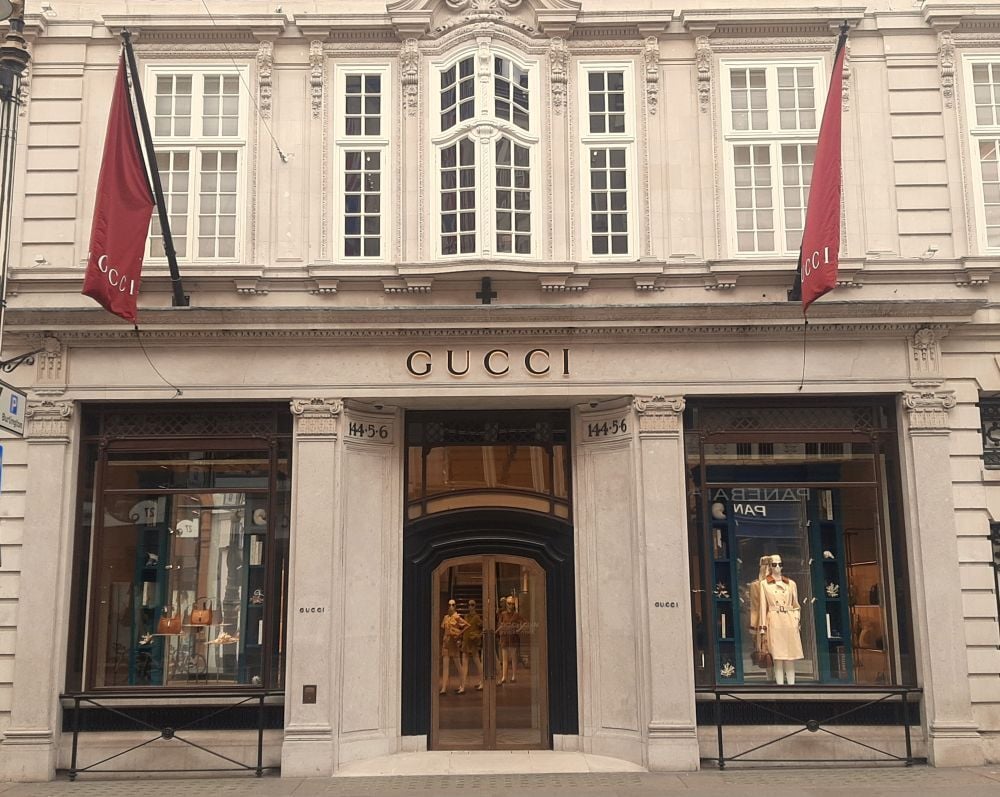
In 1990, the Italian fashion titan landed on Sloane Street, bringing fabulous Florentine luxury to London within a flagship setting. The world-famous luggage maker turned lifestyle brand seemed perfectly at home straight away. Amongst the red-brick Georgian mansions and opposite the wonderful greenery of Cadogan Place Gardens, Gucci at 18 Sloane Street represented a modern reimagining of a classic London landmark.
Its success was also much more than just commercial; in many ways, it ushered in an entire new era for Knightsbridge, where a continental approach to fashion and retail was being adopted, applying style and finesse without much of the pomp and fuss of traditional English high-end shopping.
Changes in The Air
The Gucci brand was evolving around this time too. The 90s were a time of transition away from the familial power struggles and shocking events that led to the founder’s grandson, Maurizio Gucci, being murdered in an event shrouded by mystery. A young Texan designer named Tom Ford began to assert his influence during this time before eventually becoming creative director in 1994. His impact was astounding, delivering a new air of seduction, polish and cinematic glamour to everything he touched for the brand. It was no coincidence that the Sloane Street store was now one of the best-performing and highest-earning throughout Ford’s reign. Late 1990s London was the ultimate stage for his vision and philosophy.
A Refined Refit
In the world of fashion however, nothing can stay still. In 2008, the new Gucci creative director, Frida Giannini, commissioned a refurbishment on the Sloane Street store to strengthen its position for a new generation.
A palette of polished golds and smoked mirrors was applied within the art deco-inspired geometry of the new space to striking effect. It now felt more boutique than brand-led, with an immersive experience for the loyal customers that strolled beneath high ceilings and impressive visual merchandising in the open spaces.
The new look was officially unveiled in March 2009 with a star-studded event hosted by British Vogue, showcasing what had become over 20,000 square feet of peerless luxury retail over two floors. As the magazine commented at the time:
‘Gucci has gone and upped the luxurious fashion label ante, revealing its new-look London flagship boutique’
The Sloaney Bag
In true Gucci style, the reopening of the Sloane Street store was accompanied by a limited edition luggage piece that is now an iconic collector’s item. The Gucci Union Jack Sloaney Boston Bag was a boutique-exclusive item designed by Frida Giannini that combined the heritage of the London location with the design language of Florence. As one would expect, this very quickly became the handbag of the year, with an appearance on Kate Moss’s arm undoubtedly helping its status too.
The Future of the Flagship
The Gucci Sloane Street store is now an essential anchor for the brand worldwide. It represents a flagship in one of the world’s most important cities where the full suite of menswear, womenswear, jewellery and Gucci Décor homeware are showcased.
The VIP and personal concierge service for shopping remains a huge draw for Kensington residents and visitors here looking for an opportunity to find exclusive pieces before anybody else. Sir Hans Sloane himself would be buoyed to see that his own spirit of collection and development is still very much alive and well in this part of London, safe in the hands of the fabulous Gucci brand.