


London isn’t just the heart of British culture and commerce, it's an academic powerhouse too. With more universities than any other UK city and a student population in the hundreds of thousands, the capital offers extraordinary diversity in courses, campuses and career opportunities.
But with over 40 higher-education institutions peppered across zones and boroughs, how does one choose?
In this guide, we reveal a carefully curated list of the top 10 universities in London, all evaluated on consistent criteria, academic reputation, research strength, graduate outcomes and overall performance in UK league tables.
London School of Economics and Political Science (LSE)
Ranked first in the UK and first in London in The Times & Sunday Times Good University Guide 2026, the London School of Economics and Political Science does not just lead the capital, it tops the national table outright. Established in 1895, LSE is a world-leading specialist in the social sciences, with particular strength in economics, politics, international relations, law and sociology.
Its central London location places students directly within the policy, finance and professional ecosystems that many go on to shape, and its research has directly informed UK and international public policy through long-standing advisory links with bodies such as the UK government, IMF and World Bank. In research terms, LSE consistently ranks among London’s strongest global performers in Times Higher Education tables and reinforces its reputation that extends well beyond the UK.
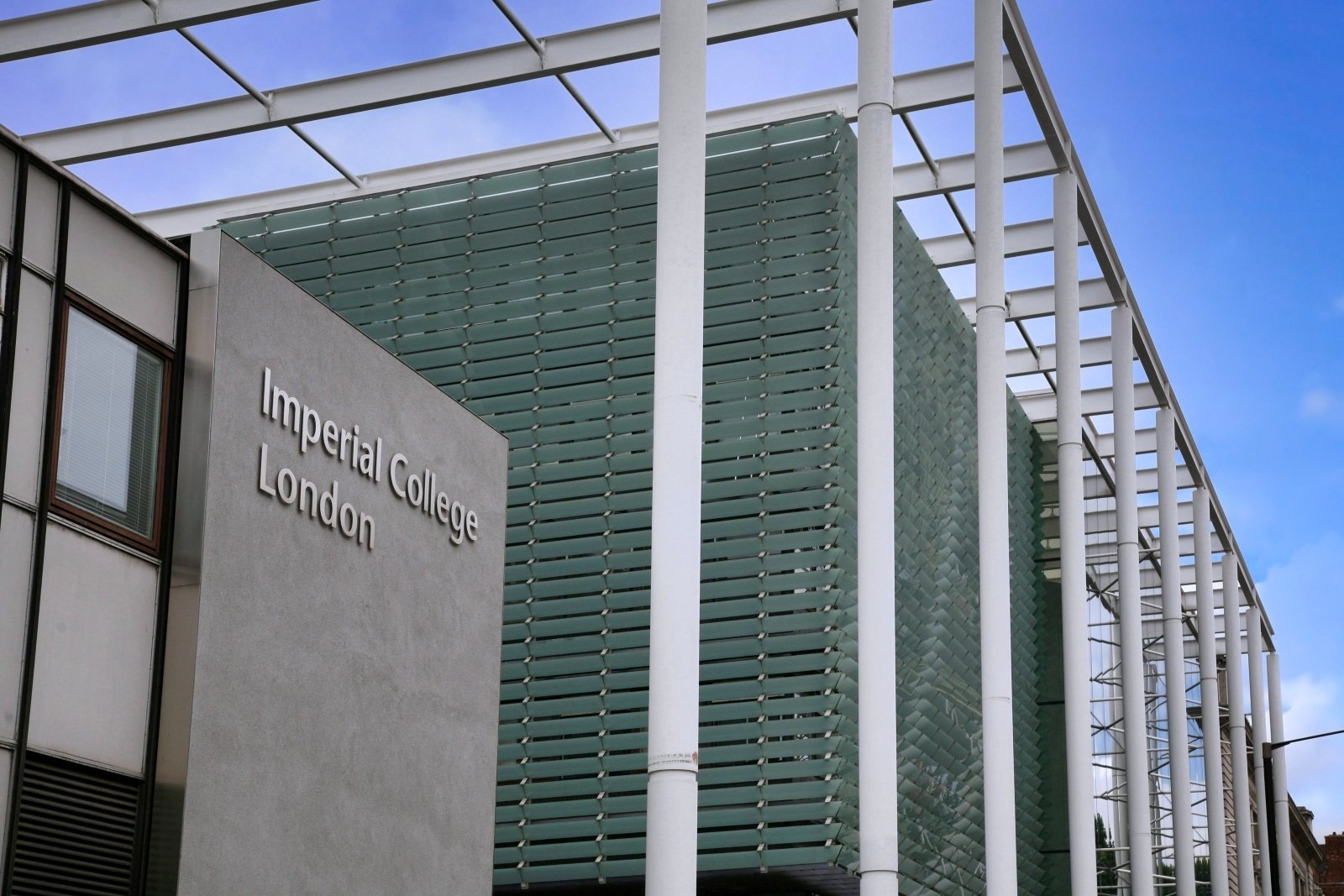
Imperial College London
Imperial places sixth in the country in the 2026 Times rankings and remains the capital’s most formidable STEM institution. Its history began with Prince Albert, husband of Queen Victoria, who envisioned South Kensington as a cultural district with museums, colleges and the Royal Albert Hall. In 1907, the Royal College of Science, the Royal School of Mines and the City and Guilds of London Institute merged to form Imperial College London, an institution whose researchers later played a central role in national Covid-19 modelling and vaccine manufacturing during the pandemic.
Its appeal is straightforward, with high entry standards, outstanding research output and graduate prospects that consistently rank among the best in the country. Imperial is also London’s highest global placer, ranking eighth worldwide in the 2026 World University Rankings coverage. Engineering, medicine, natural sciences and computing are its core strengths, with the Business School adding a quantitative edge.
University College London (UCL)
Placed ninth in the UK, UCL’s defining strength is its scale and academic range. Founded in 1826, it is one of the country’s most research-intensive universities, with disciplines spanning arts and humanities, health sciences, law, engineering and beyond.
Its community of more than 51,000 students from 150 countries and over 16,000 staff pursue academic excellence, break boundaries and address real-world problems, with UCL researchers among the early pioneers of CRISPR gene-editing continuing to lead advances in neuroscience, artificial intelligence and urban health.
King’s College London (KCL)
King’s ranks 19th nationally and occupies a distinctive middle ground, large, prestigious and deeply research-led. Its campuses at Strand, Waterloo, Guy’s and Denmark Hill reflect its historic position as the first university institution to be established in London and the first in England to be entirely secular and to admit students regardless of religion.
Founded in 1829, King’s roots reach back to the 12th century and the university is now made up of five campuses across London, supporting one of Europe’s largest integrated health research ecosystems with discoveries that continue to shape NHS practice in mental health, neuroscience and infectious disease.
Royal Holloway, University of London
Ranked 32nd in the UK, Royal Holloway is situated within 135 acres of parkland; the university’s coat of arms celebrates the heritage of Bedford College, founded in 1849 by Elizabeth Jesser Reid and Royal Holloway College. The two institutions merged in 1985 to form what is now Royal Holloway, University of London.
Royal Holloway tends to attract students who want access to London’s opportunities without the intensity of living in the city full-time and, beyond its celebrated campus, is internationally recognised for cybersecurity research through one of the UK’s leading Information Security Groups.
Queen Mary University of London (QMUL)
Queen Mary places 35th nationally and sixth in London, performs consistently well in UK league tables and holds Russell Group status. It has a long and distinctive history built on four historic institutions that stretch back to 1785 and beyond.
Its founding institutions are St Bartholomew’s Hospital Medical College, London Hospital Medical College, Westfield College and Queen Mary College. Today it operates six campuses across East and Central London, alongside an international presence in China, France, Greece and Malta. It is a major centre for medical teaching and research and forms part of UCLPartners, which is the world’s largest academic health science centre, with researchers making significant contributions to genomic medicine and large-scale clinical trials through Barts Health NHS Trust.
City St George’s, University of London
City St George’s was formed in August 2024 following the merger of City, University of London and St George’s, University of London. Ranking 42nd in league tables, the institution brings together a long and layered academic history. City traces its origins to 1894 as the Northampton Institute and was granted university status by royal charter in 1966, while St George’s, founded in 1834, joined the partnership as part of the 2024 merger, bringing with it a long-standing global reputation in emergency medicine and infectious disease research.
Today, City St George’s maintains strong links with the City of London, with the Lord Mayor of London serving as the university’s rector. It operates across several central London campuses spanning the London Borough of Islington, the City of London and the London Borough of Wandsworth and is organised into six schools encompassing around forty academic departments and research centres. Academic performance is a key strength, with 86% of the university’s research rated world-leading or internationally excellent. It also ranks fifth in London for graduate prospects.
University of the Arts London (UAL)
University of the Arts London ranks 53rd nationally, which is a strong showing for a creative institution in a league-table system that traditionally favours research metrics. UAL generates and inspires creativity and, since 1842, its colleges have been defining creative education, with Central Saint Martins alumni repeatedly reshaping global fashion and contemporary visual culture.
UAL is a federation of six arts colleges: Camberwell College of Arts, Central Saint Martins, Chelsea College of Arts, London College of Communication, London College of Fashion and Wimbledon College of Arts. Established as The London Institute in 1986, it became a university in 2003 and adopted its current name in 2004. Today, it hosts one of the largest international student bodies of any university in the UK. Fashion, design, fine art, communication and performance disciplines define its academic territory, with study closely entwined with the industries students aim to enter.
University of West London (UWL)
Placed 64th in the UK, the University of West London is a public research university with campuses in Ealing, Brentford and Reading, Berkshire. Its roots date back to 1860, when the Lady Byron School was founded, later becoming Ealing College of Higher Education. Today, it is home to the London College of Music, known for its close integration with the professional music industry.
UWL is not a research-led global name, but that is not its ambition. Instead, it appeals to students who want a direct route into work, supported by a London location that feels accessible rather than overwhelming.
SOAS University of London
The School of Oriental and African Studies is a public research university and a member institution of the University of London. Established in 1916, the school specialises in the study of Africa, Asia and the Middle East and its scholars have played a formative role in the development of post-colonial studies and contemporary development economics.
It ranks second in the UK for international faculty in the QS World University Rankings 2025, and has three subjects in the global top 30: Development Studies (5th), Anthropology (18th) and Politics (28th). Students from 128 countries earn their place through specialism rather than scale. It is academically focused, distinctive and internationally minded, particularly in subjects central to global affairs. Politics, development studies, languages, anthropology and area studies define its academic identity and its smaller size appeals to students seeking a more concentrated environment.
Ultimately, London offers no single path to excellence, only different ways to achieve it. The right choice is less about chasing prestige alone and more about selecting the institution whose strengths best align with a student’s academic aims in one of the world’s great academic capitals.