


There was a time when prints were considered the younger sibling of painting and sculpture: admired, certainly, but rarely the star of the show. That hierarchy has been dismantled. Today, prints are among the most dynamic and desirable corners of the art market, with collectors from seasoned connoisseurs to a new generation of buyers competing for the most coveted impressions.
Sotheby’s has long been at the centre of this shift. As one of the most influential institutions in the global art world, the auction house continues to bring together works of remarkable pedigree from private collections across the globe. Increasingly, it is the print sales that generate some of the most spirited bidding.
Recent seasons have seen works by Banksy, Andy Warhol, David Hockney and Roy Lichtenstein exceed expectations, confirming that the appetite for graphic works is only growing.
For younger collectors in particular, prints represent a compelling entry point into serious collecting: iconic imagery, impeccable provenance and, at least compared with unusual works, relatively attainable prices.
A Spring Auction to Watch
This month, Sotheby’s London turns the spotlight firmly onto the medium with its Prints & Multiples sale, open for bidding until 25 March.
The catalogue reads like a curated tour through modern art history. Works by Pablo Picasso, Henri Matisse and Andy Warhol sit alongside pieces by Roy Lichtenstein, David Hockney and Gerhard Richter, creating a visual dialogue that spans movements from Post-Impressionism to Pop Art.
What makes prints particularly alluring is their immediacy. They often capture the most recognisable motifs of an artist’s career, distilled, graphic and instantly striking. The result is art that feels both historically significant and refreshingly contemporary.
More Than Just Reproductions
Despite their rising prominence, prints still suffer from a common misconception: that they are simply copies of existing artworks. In truth, many of the most celebrated prints were conceived specifically for the medium.
The process itself is both technical and collaborative. Artists work closely with master printers, employing techniques such as etching, lithography or screenprinting to build an image layer by meticulous layer. The result is an original artwork, not a reproduction, that carries its own artistic significance.
The specific skill is one reason why the market has surged in recent years. Since 2023, individual prints have begun to achieve prices once associated almost exclusively with unique paintings.
Picasso’s Weeping Woman
Few artists understood the expressive potential of printmaking quite like Pablo Picasso. His La Femme qui Pleure I (1937) is a striking example: an etching, aquatint and drypoint that sold for approximately $4.6 million at Sotheby’s London.
The image is connected to Guernica, Picasso’s monumental response to the bombing of the Basque town during the Spanish Civil War. The weeping woman appears as a recurring symbol within the artist’s work of this period, her distorted features conveying grief, anguish and the wider tragedy of war.
Rare impressions such as this one are particularly prized by collectors, combining historical resonance with extraordinary technical refinement.
Hokusai’s Great Wave
If there is one print that needs no introduction, it is Katsushika Hokusai’s The Great Wave. Created in 1831 as part of the celebrated series Thirty-Six Views of Mount Fuji, the woodblock print has become one of the most recognisable images in art history.
In November 2025, an early impression achieved $2.8 million at Sotheby’s Hong Kong after a brisk eight-minute bidding battle.
Although thousands of impressions were produced in the nineteenth century, only a small number of early examples survive today. Collectors favour these earliest prints for their exceptional clarity and the richness of the famous Prussian blue pigment that defines the composition.
Warhol’s Marilyn Moment
If Picasso captured the trauma of the twentieth century, Andy Warhol captured its obsession with fame.
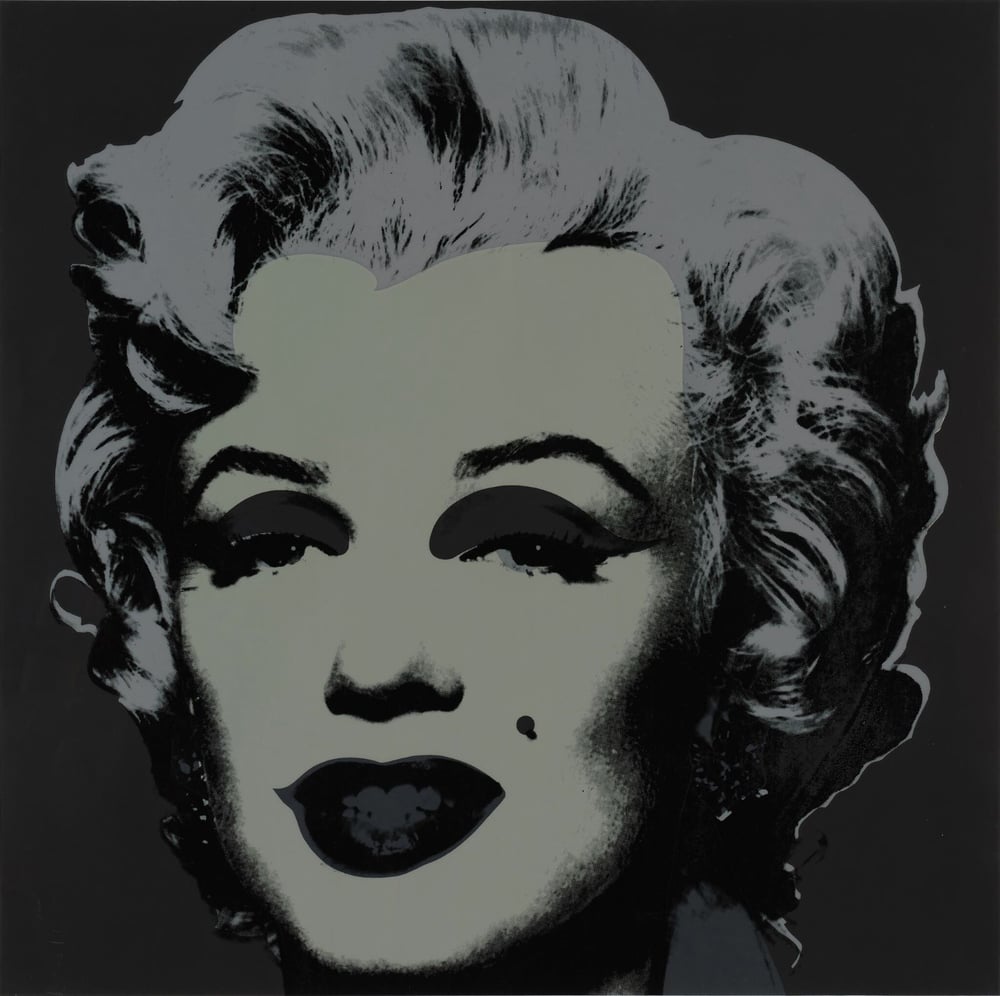
His Marilyn series, produced in 1967, remains one of the most recognisable bodies of work in contemporary art. Using his signature silkscreen technique, Warhol repeated Monroe’s image in vivid colour combinations that blurred the line between celebrity culture and fine art.
One of the highlights of Sotheby’s upcoming sale is Marilyn (Feldman & Schellmann II.31), a luminous screenprint in coral, pink and yellow that perfectly embodies Warhol’s fascination with glamour, image and repetition.
Warhol once quipped that if you wanted to understand him, you should simply look at the surface of his work. Yet those surfaces, glossy, vibrant and hypnotic, have become the visual language of the late twentieth century.
As Sotheby’s prepares to bring these and other remarkable works under the hammer this spring, the message is clear: prints are no longer the quiet achievers of the art world. They are, quite simply, some of its most compelling.
For collectors, they are irresistible, giving them the chance to live with an iconic image, produced with extraordinary skill and steeped in art history.