

Discover Mykonos - Greece's treasure Island
Mykonos is one of the most celebrated islands in the Aegean Sea. Known for its whitewashed local architecture, charming harbour towns and sunswept beaches that dot the rugged coastline, it is one of the core islands in the Cyclades island group. Despite its modern reputation as a popular summer destination, Mykonos remains deeply connected to the myths and traditions of the Cyclades.
Narrow streets, small chapels and ancient fishing harbours continue to shape the character of its settlements, while archaeological tourism is a big draw, with many sacred and historically significant ruins and dig sites that reflect Greece’s proud heritage as the birthplace of enlightenment in Europe. Exploring Mykonos involves more than simply enjoying its many beaches, as this is an island that harbours many hidden treasures over the millennia that humans have inhabited the island.
The Isle of Demi-Gods
The history of Mykonos stretches back thousands of years and is closely connected to the wider mythology and culture of the Cyclades. According to legend, the island was named after a descendant of the god Apollo, and this family is said to have shaped much of life on the island. Alternative lore also suggests that the island’s rocky landscape was formed from the bodies of giants defeated by Hercules during a legendary battle, and while these stories categorically belong to myth, they highlight the mystique and allure of the island has long been woven into the fabric of life throughout Greece. Historically, Mykonos developed thanks to the importance of its neighbouring island, Delos, one of the most important religious centres of the ancient Greek world and believed to be the birthplace of the gods Apollo and Artemis.
During antiquity, it attracted pilgrims and merchants from across the Mediterranean eager to appease the sun god and the goddess of the hunt respectively, and Mykonos became an important stopping off point along this route. During the Byzantine and later Venetian periods, Mykonos became an integral part of wider maritime trade networks across the Aegean Sea. Windmills were constructed across the island during this era to grind grain brought by sea, many of which remain standing today. Mykonos fell under occupation from the Ottoman Empire during the latter part of the Middle Ages, and went on to play a significant role in the Greek War of Independence during the early nineteenth century. Residents contributed many ships to the struggle against Ottoman rule, and the island eventually became part of the modern Greek state, developing into a prominent international travel destination popular with artists, writers and political figures.
Walking the Streets of Chora and the Windmills
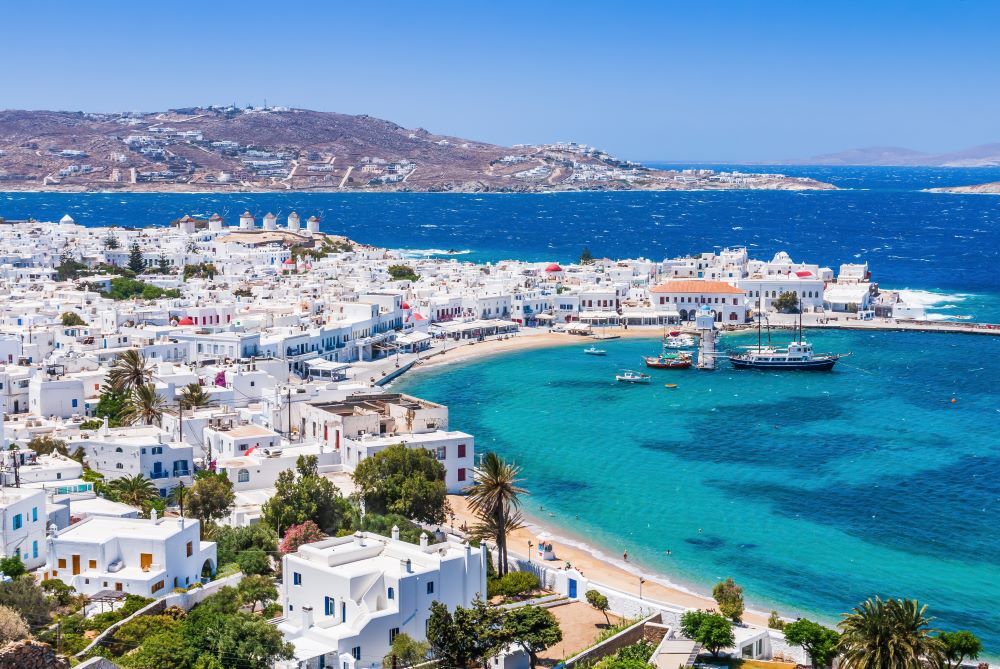
Mykonos’s old town, often referred to as Chora, forms the heart of life on the island. Built along the western coast around a natural harbour, the town is famous for its labyrinth of narrow streets, lined with whitewashed houses all adorned with blue shutters and private balconies. The layout of the streets was originally a defensive purpose, designed to confuse pirates who once raided the island with alarming frequency. Visitors exploring Chora can uncover the small hidden churches, boutiques and traditional tavernas that are dotted between the alleys. Along the waterfront lies the district known as Little Venice, where colourful houses sit directly along the water’s edge and feel reminiscent of the iconic Italian floating city.
The windmills that overlook Mykonos Town have become one of the island’s defining landmarks. Built primarily during the sixteenth and seventeenth centuries under Venetian influence, these structures once played an important role in grinding grain transported to the island by sea. Situated on a low hill above the harbour, the windmills capture the strong winds that frequently pass through the Cyclades. Today, several remain standing in a row facing the sea, creating a striking silhouette against the skyline, providing both a glimpse into the island’s less ancient past and a sweeping view across Mykonos Town and the surrounding coastline.
Ano Mera
Located further inland, Ano Mera serves as a tranquil sanctuary that takes visitors away from the crowds and bustle of Chora. The village’s history and layout are defined by the sixteenth-century Panagia Tourliani Monastery, a magnificent whitewashed structure featuring an intricate marble bell tower and a grand iconostasis carved by Florentine artists. This spiritual landmark preserves some of the island's Byzantine heritage, and exemplifies proud traditional Cycladic devotion that has remained a fixture of the island's culture for centuries. The town’s narrow alleys, lined with the classic cubic houses and bursting with bougainvillaea, offer a visually similar but much slower pace of life compared to Chora’s vibrant waterfront and town centre.
Life in the village radiates outward from the sun-drenched plaza bordered by authentic family-run tavernas and shaded cafes, always containing a smattering of locals gathered for coffee and conversation. Here, visitors can savour the traditional Kopanisti cheese and spit-roasted meats far from the typical tourist trails. Because of its elevated position at the heart of the island, Ano Mera also serves as a strategic crossroads for those looking to explore Mykonos’ rugged eastern coastline. A short drive or hike leads to the more secluded shores of Kalafati and Lia, making the village an ideal base for travellers wishing to explore more of the island away from its more populous areas.
Exploring Delos by Sea and the Island’s Beaches
Just a short boat journey from Mykonos is all that’s required to visit neighboring Delos. Today, the entire island functions as a vast open-air museum, allowing visitors to wander through the remarkably preserved skeleton of a once-great city. Walking along the ancient stone paths, guests can explore the iconic Terrace of the Lions, the monumental Theatre, and the ruins of opulent private villas adorned with exceptionally detailed mosaic floors. These archaeological treasures, set against a backdrop of sun-bleached stone and the deep blue Aegean, offer a profound sense of the island's former grandeur.
Sticking to the shores of Mykonos however allows visitors to explore and relax at the island's famous beaches. Paradise Beach sits along the island’s southern coast of Mykonos and has become one of the island’s most well-known seaside destinations. The beach forms a broad curve of golden sand backed by low hills, with calm waters that make it ideal for swimming during the summer months. Meanwhile, nearby Psarou Beach is known for its calm, sheltered waters. The bay forms a natural curve protected from strong winds, creating conditions that are particularly suitable for swimming and anchoring yachts close to the shore. The next most prominent stretch of sand is Elia Beach. Compared with the aforementioned sunspots, Elia offers a greater sense of space thanks to its long shoreline and open views toward the Aegean Sea. The beach is reached by travelling through the island’s interior hills before descending toward the coast. Once there, visitors find a broad stretch of sand where the sea remains clear and relatively calm, and is ideal for those looking to enjoy the island’s coastal scenery while avoiding the busiest parts of the shoreline.