

For a neighbourhood framed by Oxford Street, Regent’s Park and the West End, Marylebone achieves the unlikely: it feels central, yet moves at a gentler and village-like pace. Independent shops, pavement cafés and high streets give it a rhythm of its own, while two of London’s greatest parks sit just moments away, offering residents a balance of greenery and convenience that is arguably hard to match.
The neighbourhood’s manageable scale also contributes to this slower feel, with its compact grid of streets, small squares and neatly kept mews making daily life unusually walkable for central London.
History
Marylebone’s story begins as St Mary by the Bourne, a modest medieval settlement named for its parish church and the small stream that once ran beside it. Its fortunes changed in the 16th century when Henry VIII took possession of the local manor and used the surrounding land for hunting, land that would eventually become Regent’s Park.
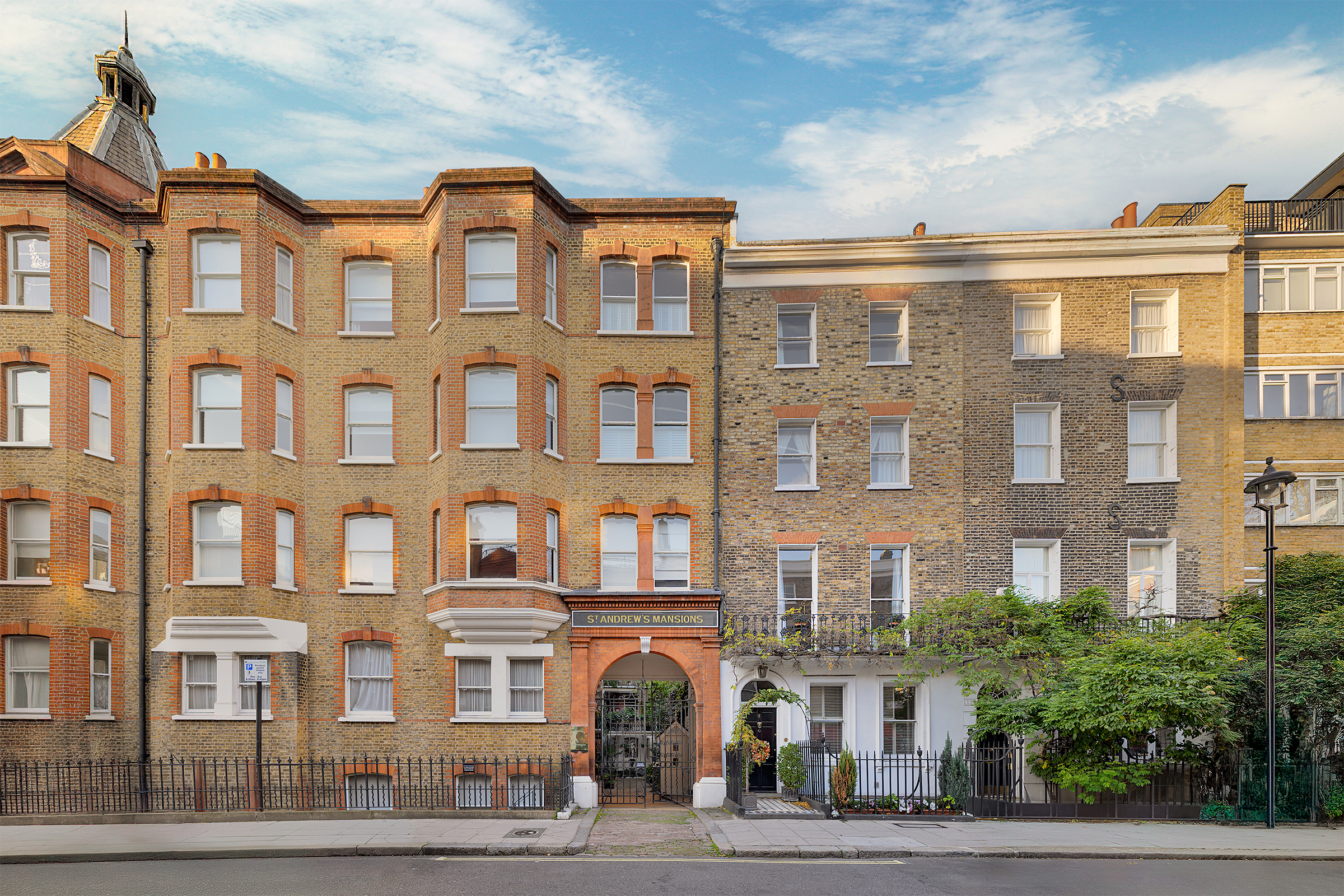
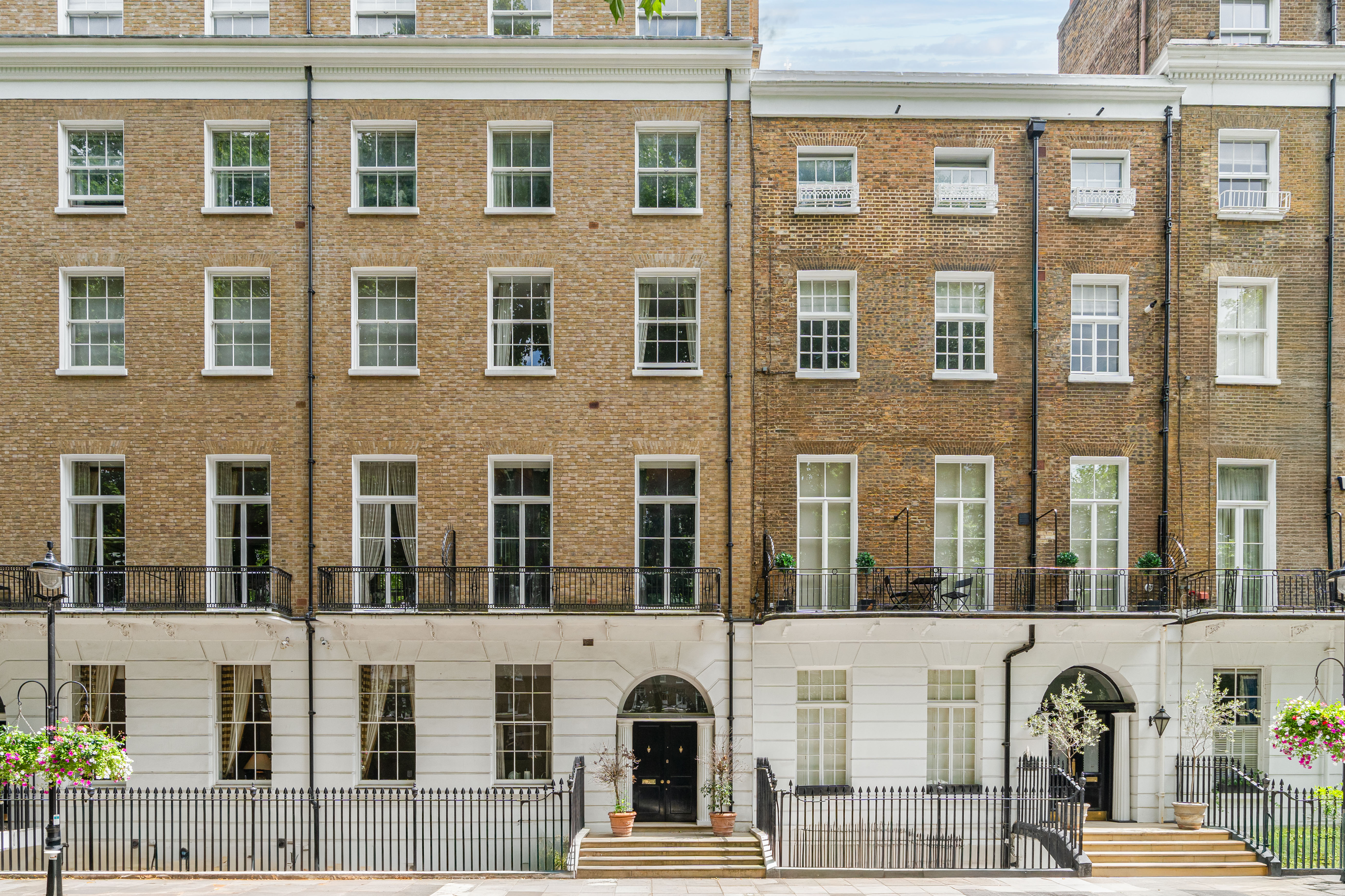
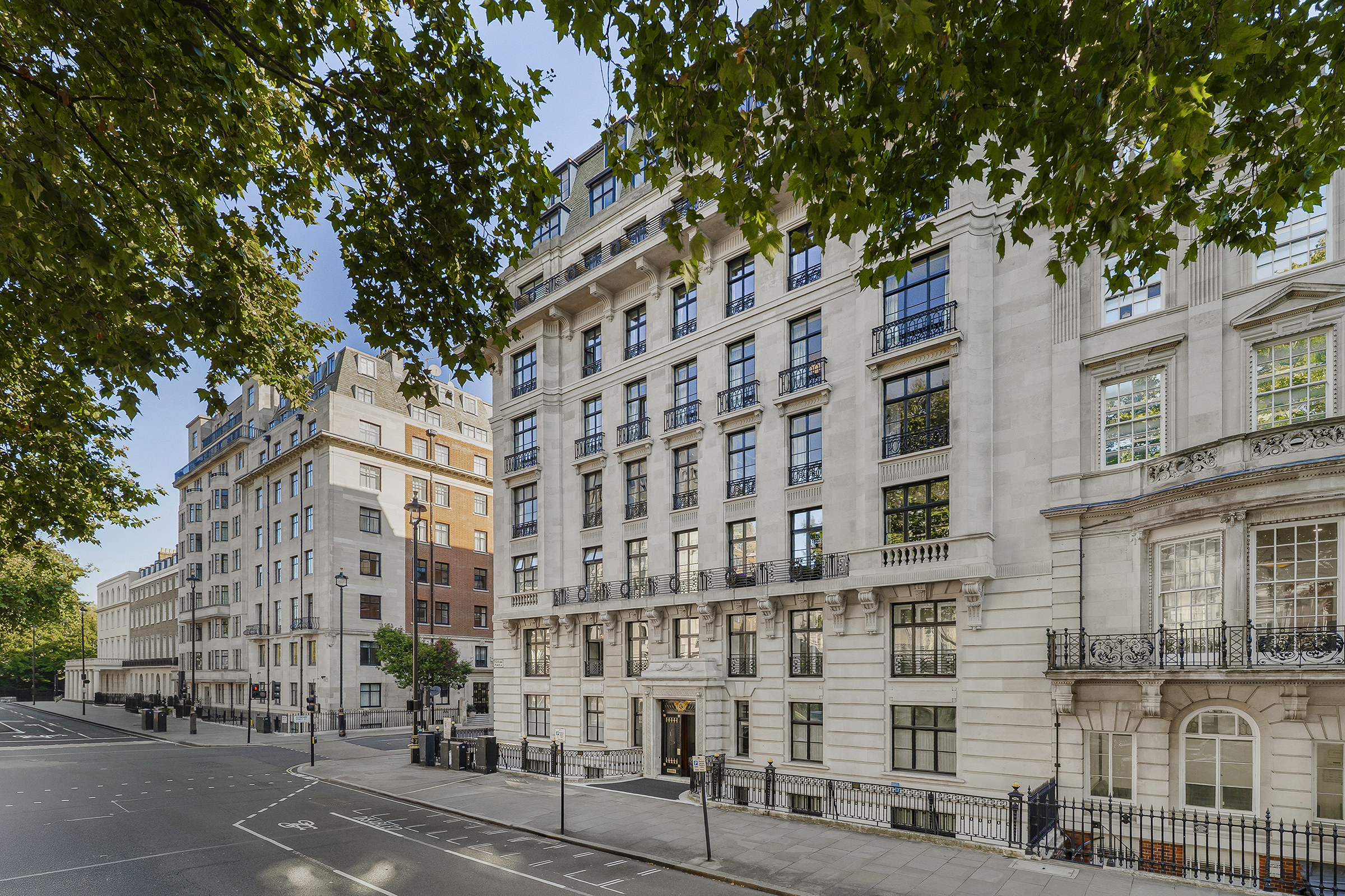
By the 18th and 19th centuries, Marylebone had evolved again, this time into one of London’s most fashionable residential quarters. Georgian terraces, Regency townhouses, Victorian mansion blocks and later Art Deco-inspired properties began to fill its streets, many of which still shape the architectural character of the neighbourhood today. Examples remain particularly striking on streets such as Mansfield Street, Wimpole Street and Manchester Square, where townhouses built for aristocratic residents still stand largely intact.
A recent installation at the southern end of Marylebone Lane pays tribute to the area's layered history. Inspired by an elm tree on the high street, which is believed to be the oldest surviving elm in London and a veteran of both the Second World War and the 1970s disease outbreak, the tree features a sculpted green leaf embossed “Marylebone Village” and now stands as a proud symbol of endurance and local heritage.
Property in Marylebone Village
Marylebone owes much of its coherence to the two historic estates that still oversee it, the Howard de Walden Estate, which manages the eastern grid around Harley Street and Marylebone High Street and the Portman Estate, which steers the western side towards Edgware Road. Their long-term custodianship has helped preserve the area’s architectural harmony.
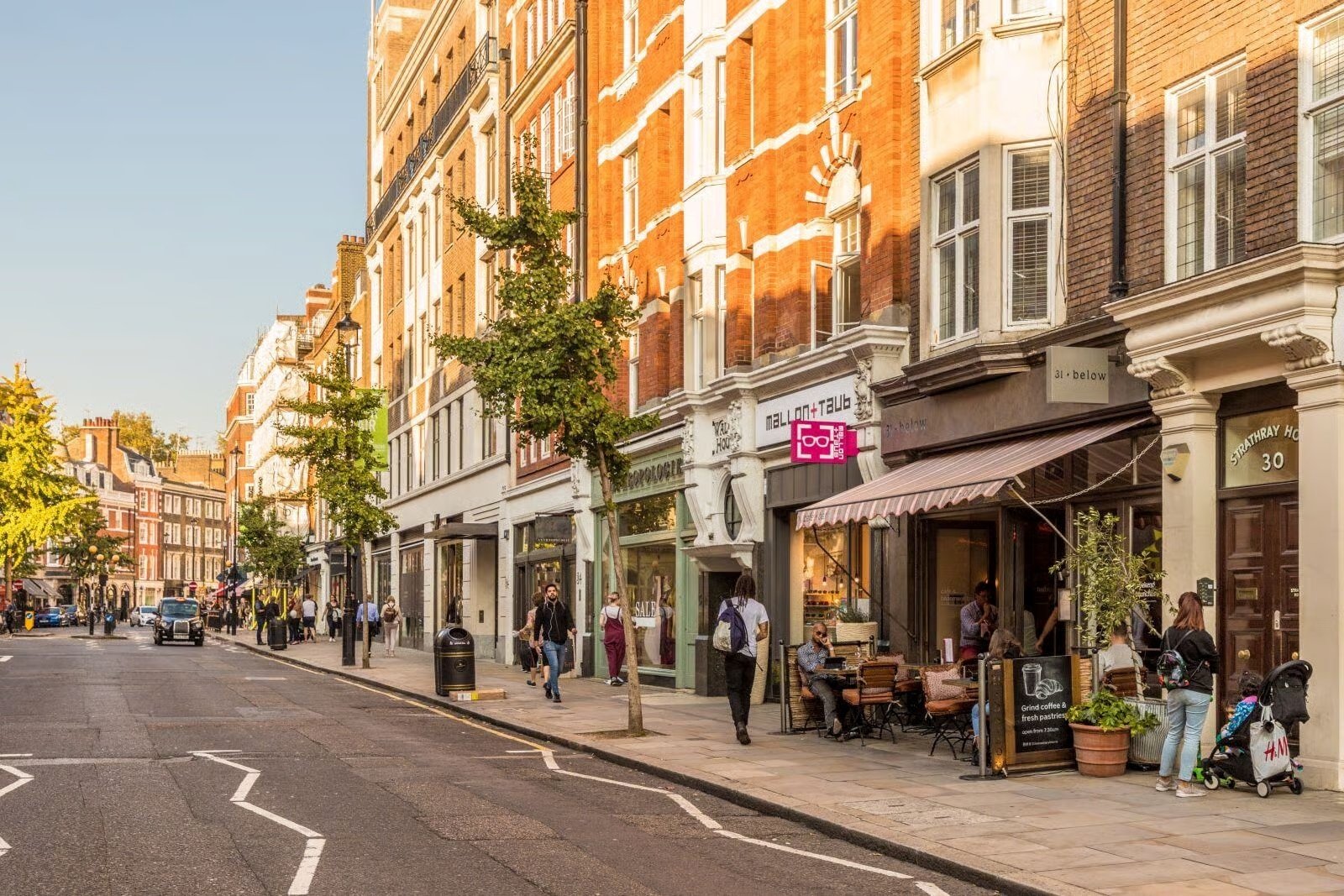
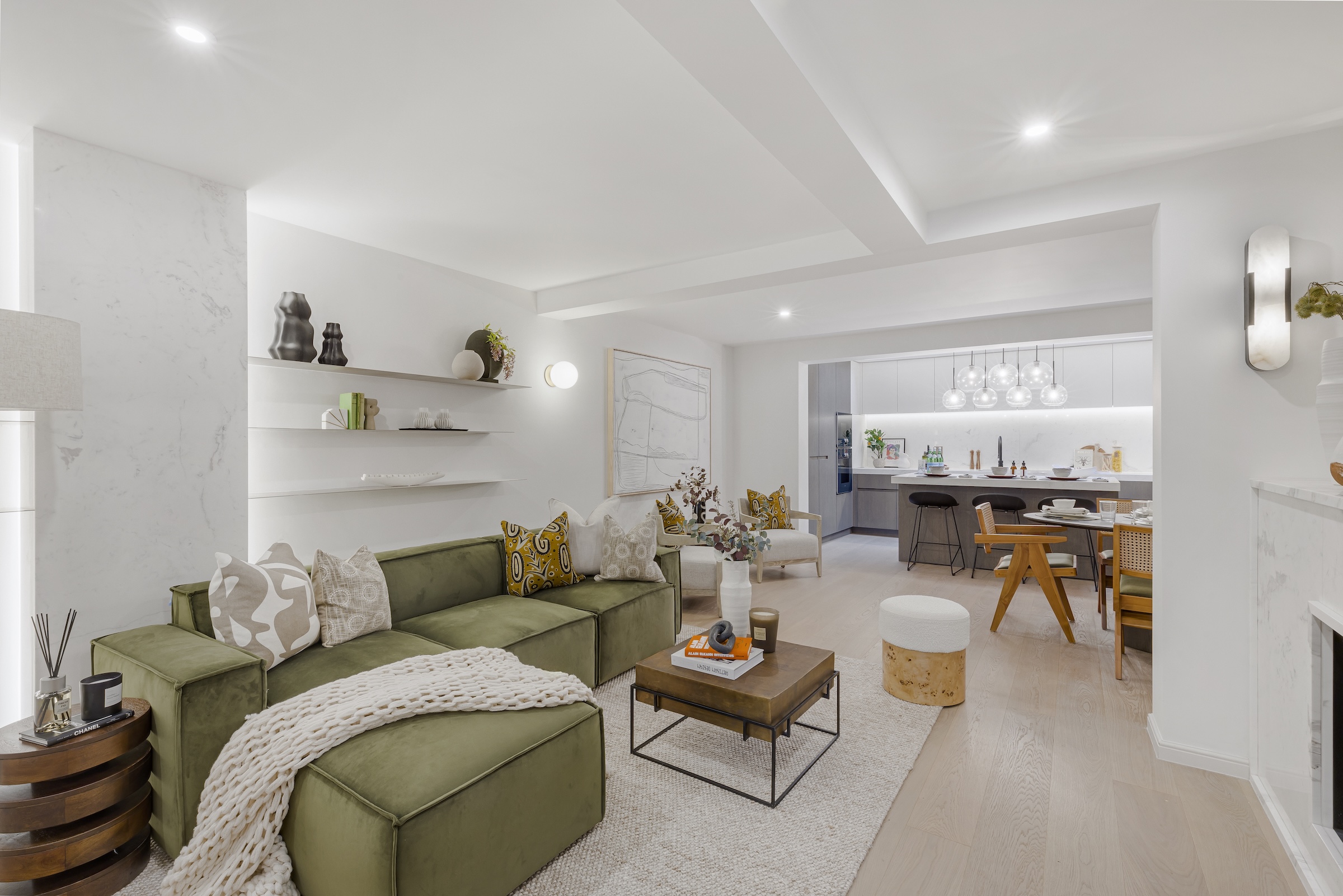
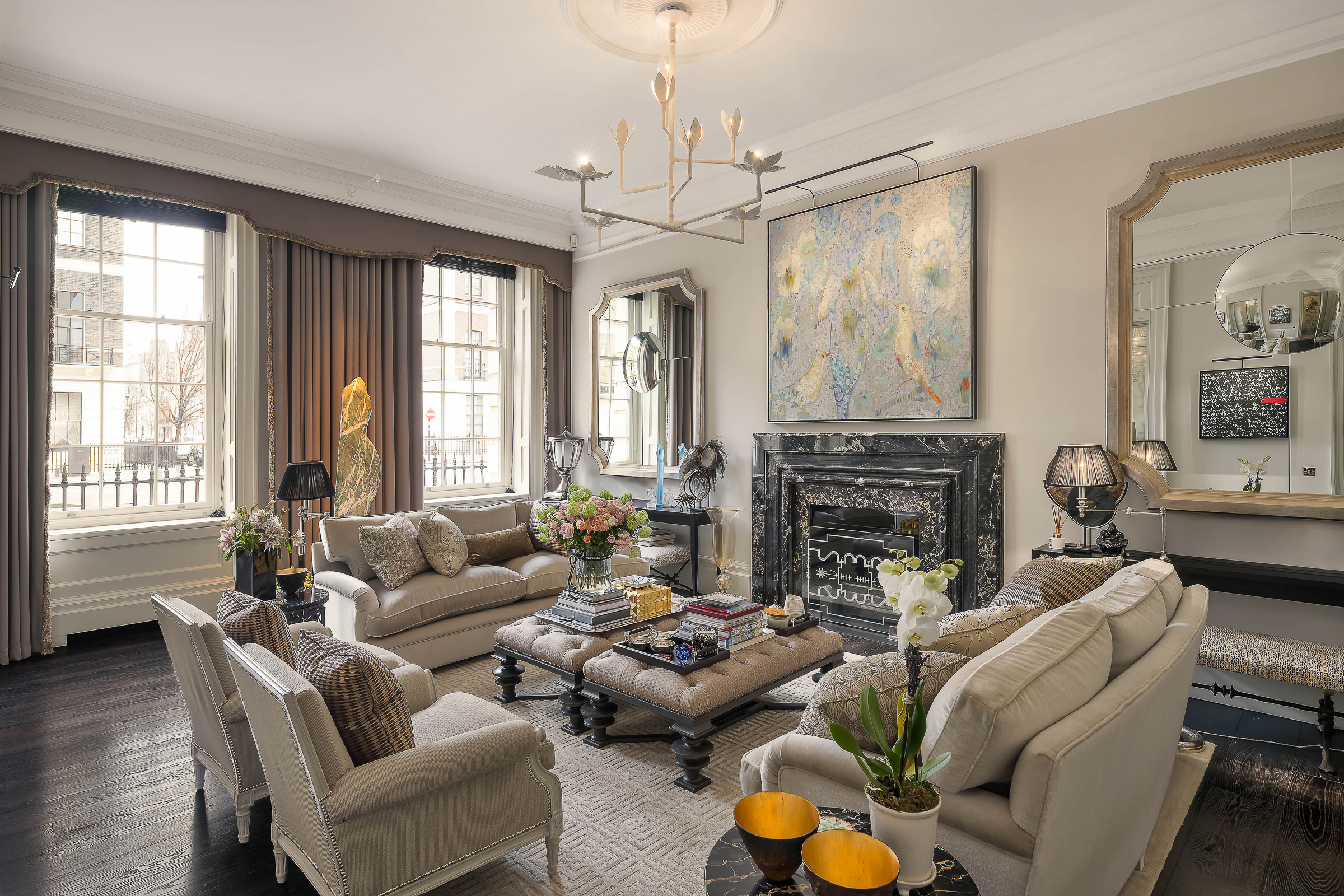
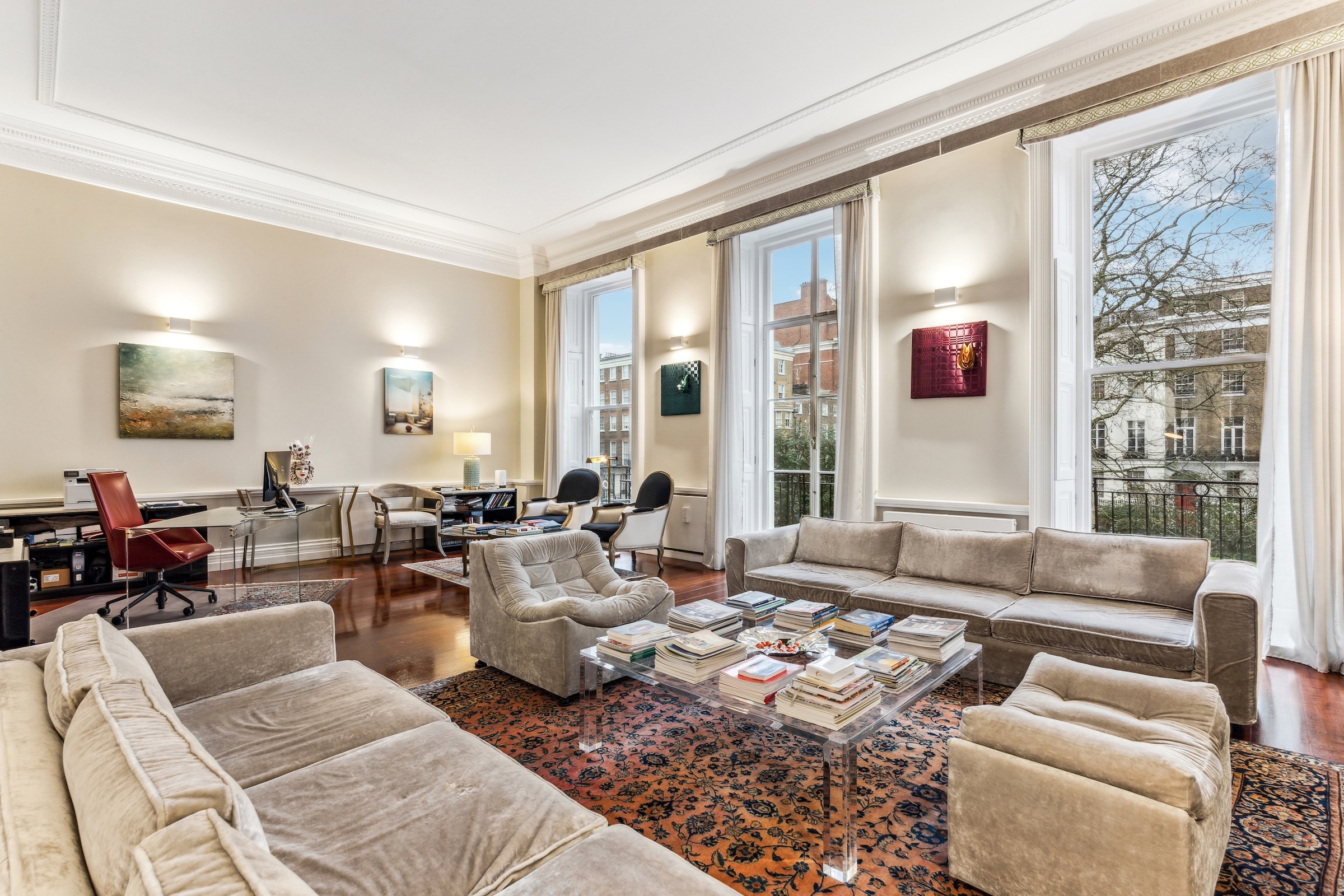
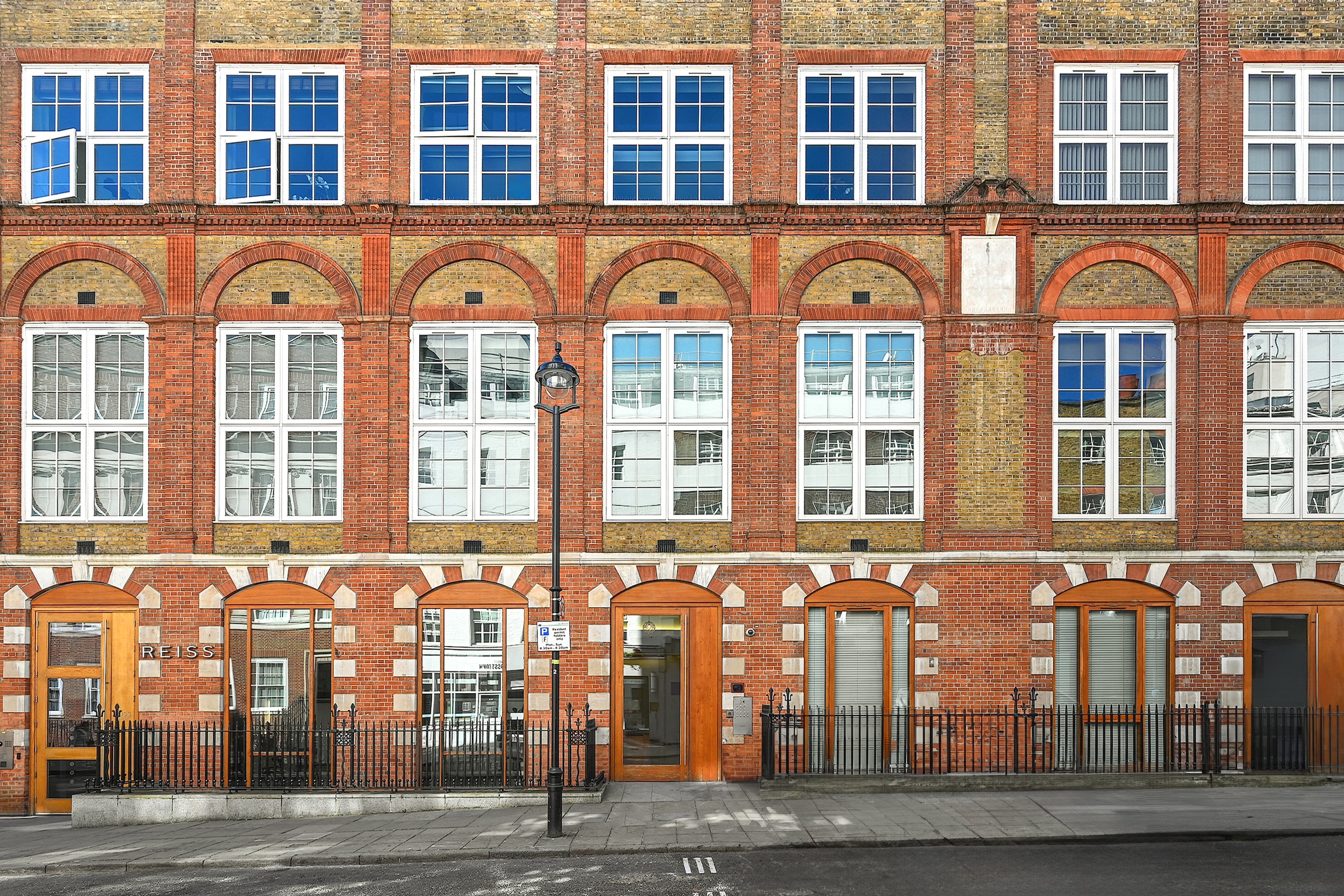
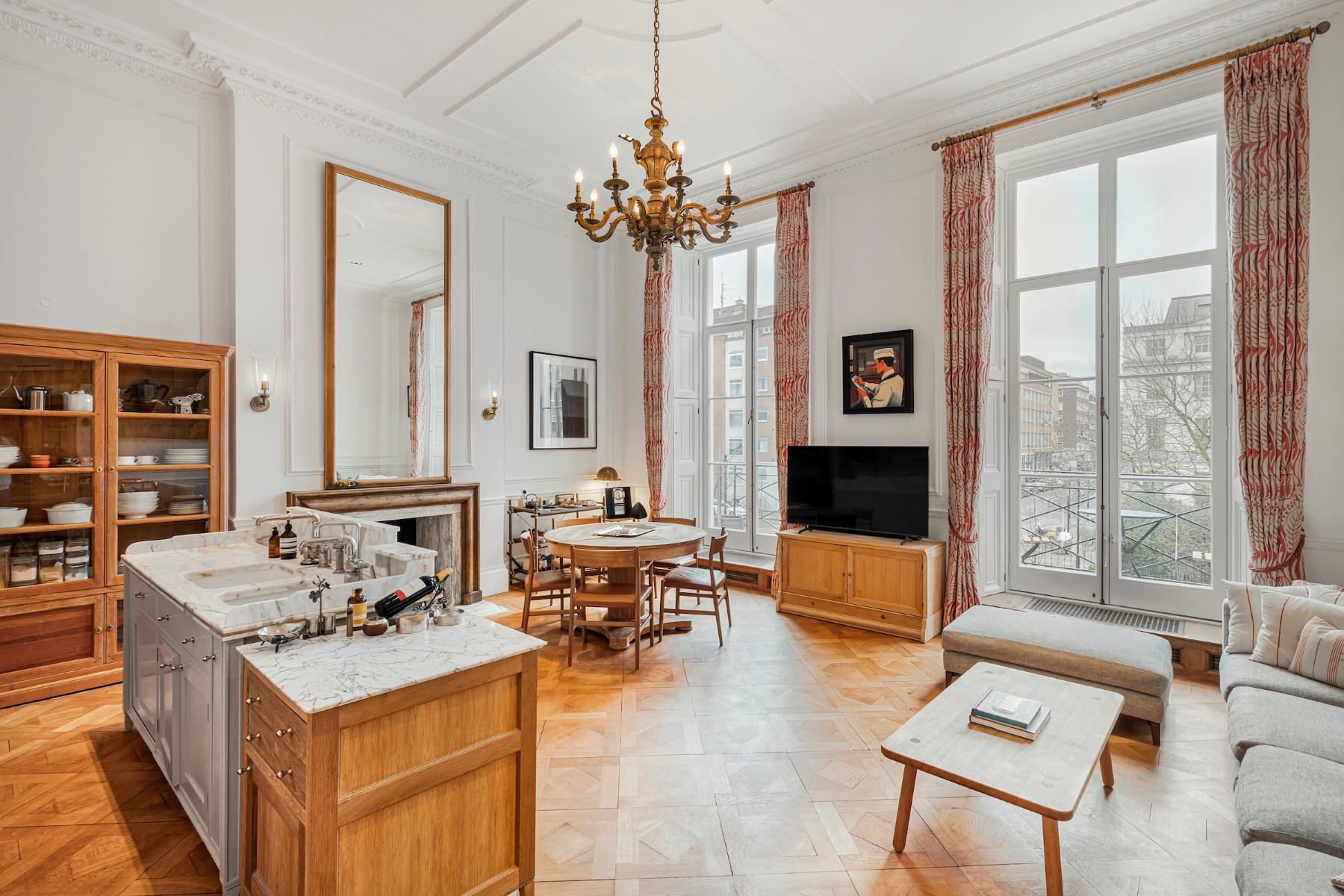
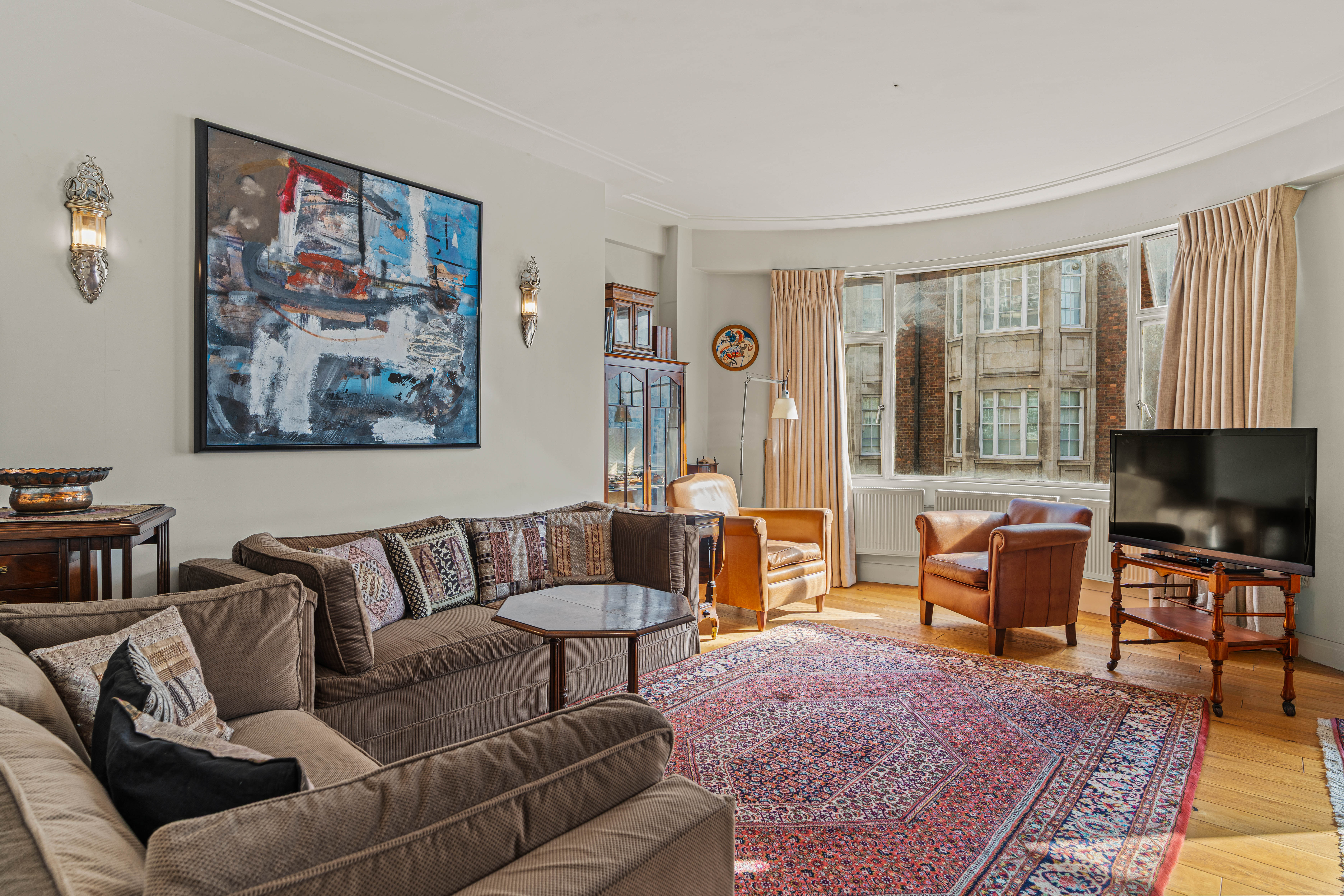
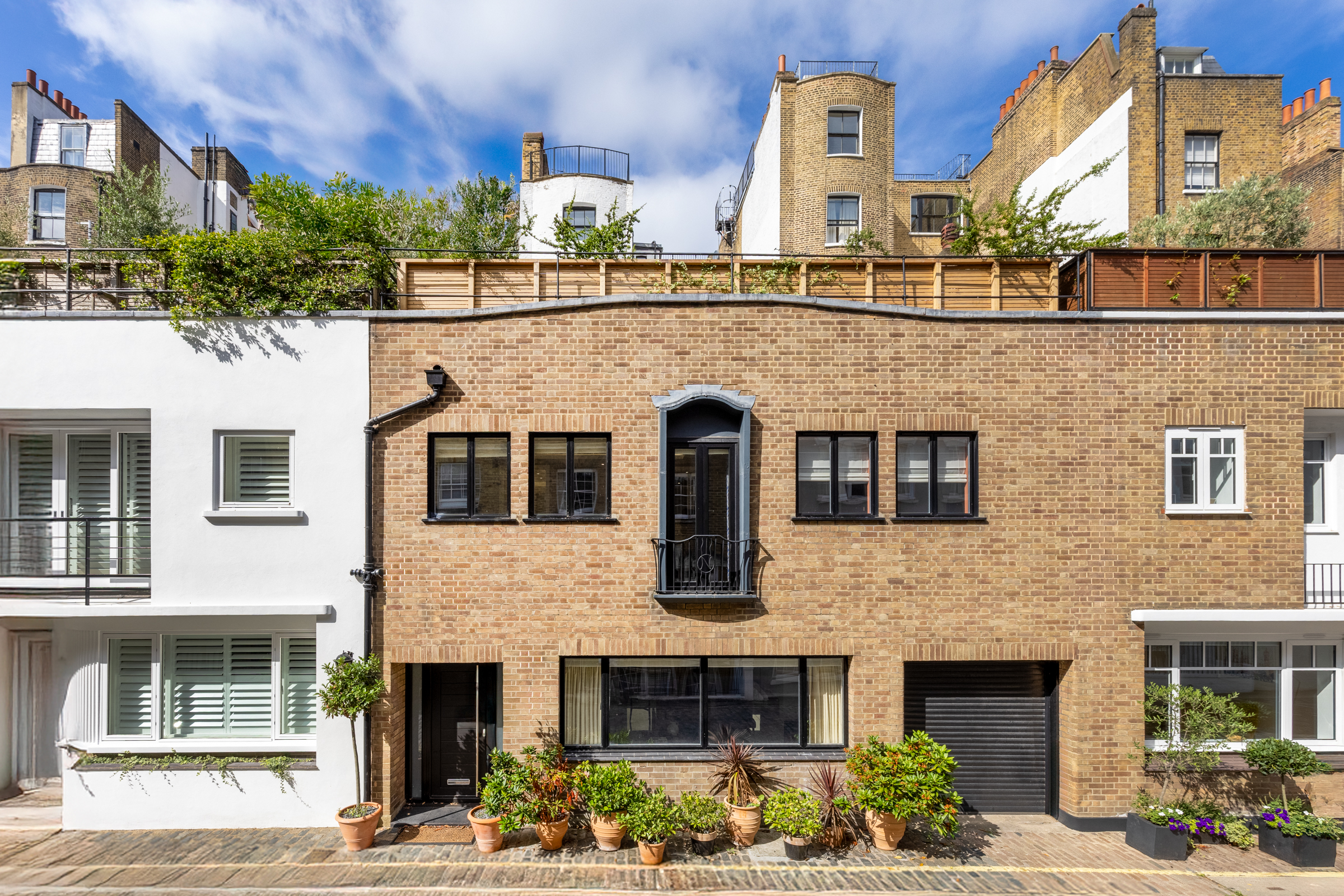
Properties in Marylebone are varied but consistently elegant. Georgian and Victorian conversions line quieter residential streets, while red-brick mansion flats and modernised lateral apartments sit above the shops and cafés of the high street. Discreet mews houses and contemporary developments provide further choice that sit further away from the main roads.
Unsurprisingly, the area has long attracted a mix of cultural and creative names, among them Paul McCartney, Madonna and Noel Gallagher. Today, interest remains strong thanks to new boutique properties such as the Chiltern Place tower and restored buildings around Paddington Street Gardens.

Retail
Marylebone Village’s appeal is closely tied to the quality and range of its independent retailers. Fashion, beauty and lifestyle brands sit alongside specialist food shops and a weekly farmers’ market on Sundays,
Among the fashion names, Zadig & Voltaire offers leather goods and iconic cashmere knits, inspired by art and fuelled by rock 'n' roll, while Sézane focuses on considered design and responsible production across its womenswear, homeware and children’s lines.
Nearby, Aesop provides a calm, minimalist space with its familiar amber bottles and well-known skincare products. A short walk away, Fresh and the Nordic bakery Ole & Steen add to a high street that feels well-balanced and practical.
Entertainment and Culture
However, Marylebone offers plenty beyond shopping. Portland Place delivers one of the area’s most striking architectural perspectives, its Georgian façades interspersed with early 20th-century landmarks, including the original BBC Broadcasting House. Whilst The Royal Institute of British Architects, which is positioned nearby, hosts exhibitions and talks that run throughout the year.
Regent’s Park remains the neighbourhood’s primary green area, with 410 acres of open space, formal gardens and lake paths home to both Queen Mary’s Gardens and London Zoo. Baker Street, meanwhile, is a perennial draw, which was once part of the punk scene andnow synonymous with The Beatles Shop, Madame Tussauds and the Sherlock Holmes Museum.
Art and culture are equally well represented. The Wallace Collection in Manchester Square offers one of London’s finest assemblages of 18th- and 19th-century art, housed in an opulent former mansion. The Royal Academy of Music and Wigmore Hall, which are also both close by, ensure that classical and chamber music remain integral to local life.
On summer evenings, the Open Air Theatre in Regent’s Park, which has been leased to The New Shakespeare Company since 1932, draws audiences from across the city. In Summer 2026, it will host a brand-new production of Andrew Lloyd Webber’s global sensation CATS.
Education
Marylebone’s education offering is broader than its relatively compact geography suggests. St Marylebone CofE School, one of London’s highest-performing non-selective secondary schools, sees 82% of students achieve grades 9–4 in both English and Maths, placing it in the top 10% of schools in England.
Nearby, Wetherby Preparatory School provides a well-established prep-school route for boys, offering an independent day education for ages 11–18. Highly commended in the Muddy’s Best Schools Awards for Outstanding Pastoral Care, it is also a proud member of Inspired Education, the leading global group of 121 top independent schools. For international families, ICS London offers the full International Baccalaureate pathway, while EIFA International School on Portland Place teaches bilingually in English and French.
Adding to this is the Sylvia Young Theatre School, long associated with Marylebone and now based just off Marble Arch, offering a dual curriculum that combines GCSE study with intensive training in drama, dance and singing. The school was established in 1981 in Drury Lane and moved in 1983 to a former 1880s church school building in Marylebone. In July 2010, it relocated to its current premises in Nutford Place, just off Seymour Place in W1. The site includes two vocational floors with studios, rehearsal rooms and a recording studio, along with two academic floors.
For younger children, a number of well-regarded nurseries and prep schools, including Abercorn School and St Vincent’s RC Primary, contribute to a strong mix for families living locally.
Marylebone may sit in the middle of the city, but its quieter rhythm sets it apart, as a neighbourhood that feels lived-in, welcoming and distinctly its own. A place where history, culture, and modern London living come together.