

Open public spaces in modern capital cities hold an incredibly important symbolic status. As the march of an industrialised world gathered pace across the final centuries of the last millennium, room to roam and connect with nature became increasingly difficult to find. These places are therefore charged with a civic power to allow residents and the workforces to get outside, breathe in the air and restore their energy in the most time-honoured fashion possible.
A Symbol of Human Connections
This same philosophy is shared all over the world. It is a universal requirement that is attended to in creative, remarkable and beautiful ways through projects that seek to create havens for us all to reflect and revive. At the end of the last century, there was a trend for many of these public spaces to highlight this fact with collaborations and installations that overtly demonstrated connections between countries, cultures and cities and the people that lived there. One of the very best examples to be found in the UK lies in the borough of Kensington and Chelsea amid the stunning surroundings of Holland Park.
A Partnership in Bloom
The Kyoto Garden was officially opened by the Prince of Wales and the Crown Prince of Japan in September 1991. Significantly and symbolically, these two figures have both grown to become King Charles III and Emperor Naruhito of their respective countries in the time since then as a fitting footnote to the long-term outlook of the installation.
The project was created to mark the 1992 Japan Festival in London as a collaboration between the Kyoto Chamber of Commerce and the Royal Borough of Kensington and Chelsea. From the outset, this was intended as an embodiment of the classical Japanese stroll garden aesthetic kaiyū-shiki teien in the heart of a thriving west London community. Japanese master garden architect Shoji Nakahara used this grounding and style to evoke the vast landscapes of the natural world in miniature form, where mountains appear through waterfalls and oceans are represented with ponds open to the elements of the famously unpredictable London weather. A key element of kaiyū-shiki teien is framing these views as living portraits, and Nakahara and his team worked for 18 months at the planning stage to ensure that they would be perfectly placed to do so.
A Stroll Around Kyoto Garden
The centrepiece of the garden is an ornamental pond fed by a wonderful, tiered waterfall structure that displays power and grace in its micro form. Significantly, this pond is filled with coloured Koi carp that are renowned for their presence in Japanese mythology, philosophy and cultural values. The legend goes that Koi carp swim upstream against strong currents as a performance of strength and resilience, with those that eventually reach the top of the waterfall being transformed into huge dragons.
There is an engaging choreography to the Kyoto Garden that encourages pauses to observe how the elements interact and inform different moods within oneself. Slowing down is part of the journey, with internal reflections often being the result of our own connection with what is on display.
Peaceful Paths
With the water as the focal point, walking paths meander around the space past lanterns and onto a striking stone-slab bridge. An audience of Japanese maple trees and cherry trees sway gently as part of the overall composition of tranquillity that has become the home for a cohort of wildlife too. A walk around the Koi carp here will undoubtedly bring you into contact with a free-roaming peacock, adding a riot of colour to the muted palette of stones and water. The resident squirrels and native birds add even more life to this scaled-down living portraiture of the natural world.
Seasonal Delights
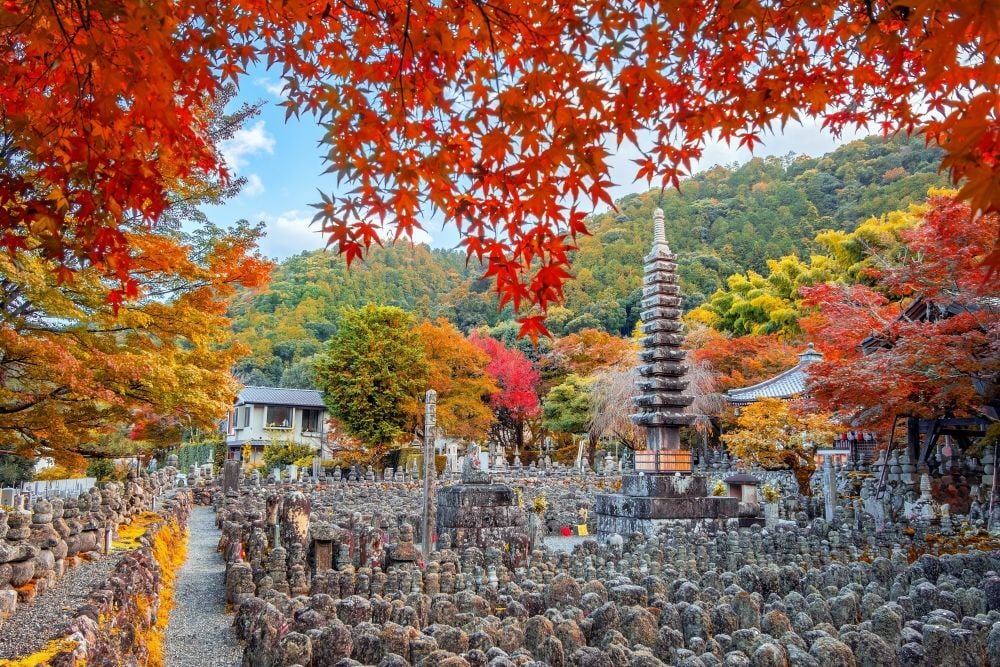
The evergreen appeal of Kyoto Garden is supported by its seasonal transformations. Cherry blossoms in spring release clouds of soft pinks across the garden that speak to the hanami traditions back in Kyoto, where people will gather to sit underneath them as they fall. A summer of deep green maples and verdant surrounding lawns offers layers of depth and shade from the trees to provide new lighting on the waterfall as it catches the sunlight. As autumn approaches, the Japanese acers respond through their transition to crimson and gold, offering an entirely new palette for nature to create from. And even in the depths of winter, there are the hardy mosses that communicate with the micro-mountains of stone and gravel paths in an almost sculptural way.
A Celebration of Japan in West London
Kyoto Garden marked the beginning of a broader Japanese presence in this area that demonstrates how important multicultural inclusion and representation are to the future of the city in general. It signifies the universality of all our conditions and highlights how important it is for us all to recognise that time in nature is always time well spent. The always-changing images of Kyoto Garden remind people that no matter how small or brief our daily connections with the natural world, they can often have the biggest impact on our lives.