

A Private Island on Loch Lomond: Inchconnachan Comes to Market
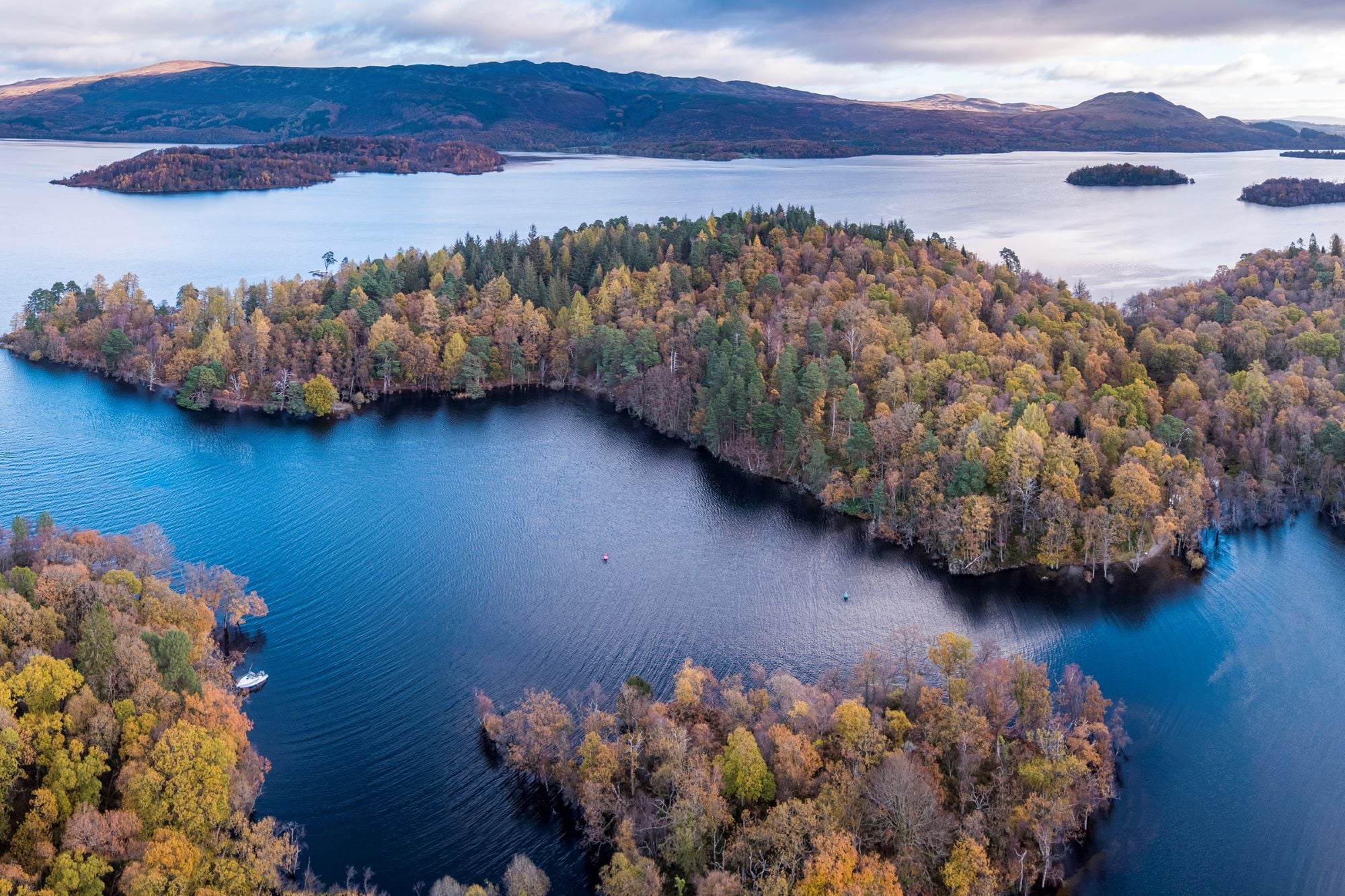
Private islands rarely appear on the market, and fewer still come with their own colony of wild wallabies. Inchconnachan, a 100-acre island at the heart of Loch Lomond, is one such rarity: a wooded, wildlife-rich retreat within Loch Lomond & The Trossachs National Park, now offered for sale through United Kingdom Sotheby's International Realty.
An Island Six Centuries in the Making
Inchconnachan's story stretches back to the 14th century, when the island first came into the ownership of the Colquhoun clan, from whom its name derives (roughly, "the Colquhouns' Island"). For generations it remained a quiet retreat on the loch's western shore, valued for its seclusion rather than any grand ambitions of development.
Its most colourful chapter began in the 1940s, when Fiona Gore, Countess of Arran, a Colquhoun by birth and a pioneering powerboat racer later nicknamed the fastest granny on water, introduced a small colony of red-necked wallabies to the island. Decades on, their descendants still roam the woodland, making Inchconnachan one of only a handful of places outside Australia with a wild, self-sustaining wallaby population, and lending the island its popular nickname, Wallaby Island.
The island was sold by the Colquhoun family in 2020, and passed into the hands of Soho House founder Nick Jones and his wife, the broadcaster Kirsty Young. What followed was a long and closely watched planning process, as the new owners sought consent to replace a derelict 1920s timber bungalow with a contemporary lodge. Conservation groups raised concerns about the island's ancient woodland and its wallaby colony along the way, but in January 2025, the Loch Lomond and Trossachs National Park Authority granted formal planning permission, citing long-term biodiversity benefits alongside the development.
Under the terms of that consent, ownership carries a genuine conservation commitment. A legal agreement tied to the planning permission requires the island's custodians to manage Inchconnachan for ecological benefit, including the restoration of its wet woodland habitat and the removal of non-native species that have taken hold over the decades. For a buyer, this is less a constraint than a framework: a clear, already-negotiated path to developing a single considered residence while safeguarding the rest of the island's character for the long term.
What's on Offer
Spanning more than 100 acres, Inchconnachan is designated both an Area of Special Scientific Interest and a Special Area of Conservation. Ancient Scots pine, oak and birch cover much of the island, providing habitat for sea eagles and nesting ospreys as well as the resident wallabies. From the island's 50-metre summit, elevated viewpoints and a shoreline stretching to nearly 4km open onto uninterrupted views across the loch to Ben Lomond.
Approved architectural plans, drawn up by Nicos Yiatros and Gunnar Groves-Raines of Edinburgh-based GRAS Architects, set out a two-storey main lodge positioned to overlook the loch, built on screw-piled foundations to protect the island's root systems and woodland floor. The scheme includes expansive living space, a library, decked terraces and three generous bedroom suites, with an alternative five-bedroom layout also available. A short walk through the woods leads to a sheltered cove, where the plans place a boathouse with secure mooring beneath and independent accommodation above, including a warden's residence. A mainland jetty and garage complete the proposals, all designed with restraint, so that the buildings sit quietly within the landscape rather than dominating it.
Inchconnachan is offered with two routes to ownership. Buyers can acquire the land with planning permission in place for £2.5 million and take on the development themselves, or purchase the island as a turnkey asset for £9.5 million, with construction, estimated at a further £7 million, expected to take around two years. The existing planning consent remains valid for a further two years, giving a buyer time to decide how to proceed.
Seclusion, Without Isolation
For all its wildness, Inchconnachan is not as remote as its setting suggests. Glasgow International Airport, with connections to London, Europe and transatlantic destinations, is just 30 minutes away, while Cumbernauld Airport, with private aviation facilities, is around 40 minutes from the island. Loch Lomond Golf Club, one of the world's most exclusive private members' clubs, is a short boat ride away, and the surrounding national park offers sailing, kayaking, mountain biking and wildlife watching on the doorstep. Nearby mainland villages provide everyday amenities, from shops and cafés to medical facilities, while the wider Loch Lomond area is known for its hotels, restaurants and marinas.
Life on Inchconnachan
Access is by private boat, a matter of minutes from the historic lochside village of Luss, and the island's isolation is precisely the point. Scotland's right-to-roam laws mean walkers can technically cross the island regardless of ownership, but the architectural plans have been deliberately positioned to preserve the owner's privacy, tucking the lodge and boathouse into sheltered, less-visited corners of the shoreline. For a family seeking a genuine retreat, whether for golfing and fishing weekends or simply for the quiet of watching sea eagles over the water, the setting is hard to match anywhere else in the country.
A Rare Proposition
Islands of this scale, ecological significance and proximity to a major international airport seldom reach the open market, and Inchconnachan's combination of approved planning consent, protected wilderness and private ownership since the 14th century sets it apart from anything comparable in Scotland. Whether taken on as a hands-on development project or acquired ready-built, the island offers a genuinely singular proposition: a private world within one of Britain's most celebrated landscapes, home to eagles, ospreys and, of course, its wallabies.
Read More