


At the highest tier of global real estate, London and Dubai sit in distinct yet complementary positions. Both markets attract international capital, both offer world-class inventory, and both are deeply embedded in global wealth flows. However, the investment philosophies they serve are different. One is anchored in heritage and long-term capital preservation; the other is defined by growth, yield, and modernity.
Understanding how they compare requires looking beyond surface-level metrics, and instead examining the structural differences that shape returns, lifestyle, and long-term value.
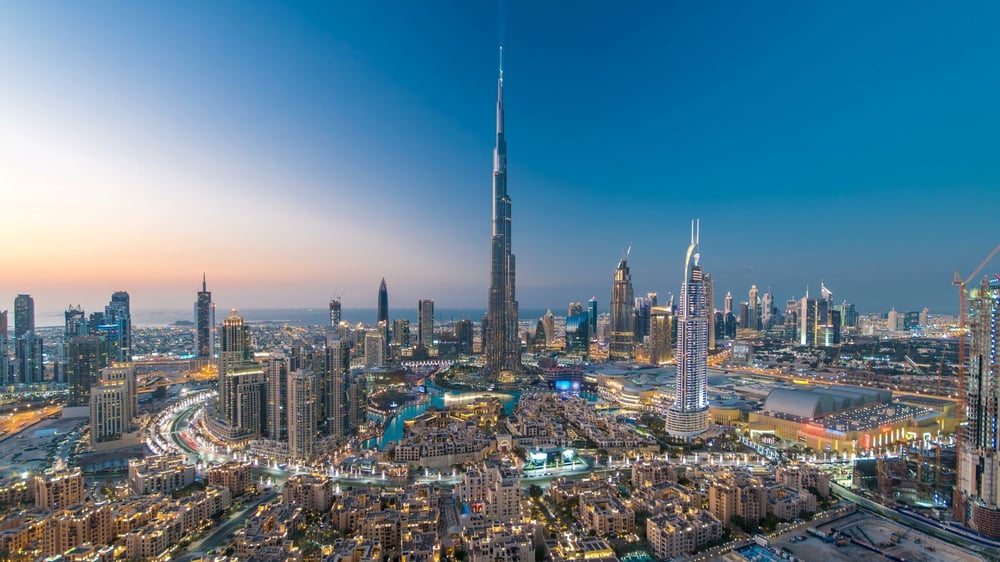
A Tale of Two Markets: Stability vs Momentum
Dubai has, in recent years, emerged as one of the most compelling destinations for luxury property investment. Its appeal is straightforward: strong rental yields, tax efficiency, and comparatively accessible entry points. Prime properties regularly achieve yields in the region of 6–9%, significantly outperforming traditional global hubs. Crucially, these returns are not eroded by taxation as there is no income tax on rental earnings, no capital gains tax, and no annual property tax. For investors focused on income generation and efficiency, the proposition is difficult to overlook.
London, by contrast, operates as a mature, highly regulated market where capital preservation takes precedence over short-term returns. Rental yields in prime central areas typically range between 2–4%, and are often further reduced by stamp duty, income tax, and capital gains tax. Yet this apparent trade-off underpins London’s enduring appeal: it is widely regarded as a market that offers transparency and steady returns.
Dubai’s appeal lies in continued performance and efficiency. London’s in its maturity and enduring market depth.
Value and Space: A Study in Contrast
Perhaps the most immediate point of divergence lies in value per square foot. A budget of $1 million (approximately £750,000–£800,000) unlocks fundamentally different opportunities in each city.
In Dubai, this level of investment can secure a spacious, high-specification apartment measuring as much as 900–1,000 sq ft within a prime waterfront or lifestyle-driven community. Developments are typically new-build, amenity-rich, and designed with contemporary living in mind: open-plan layouts, expansive terraces, and integrated smart home technology are standard.
In London, the same budget is more likely to acquire a compact and charming one-bedroom apartment — or even a studio — within a prime postcode. Space is secondary to location; what investors are ultimately buying is access to globally recognised districts such as Mayfair, Knightsbridge, and Chelsea, where supply is finite and demand remains consistently strong.
This disparity is not simply about cost, but about philosophy: Dubai prioritises scale and lifestyle, while London prioritises scarcity and legacy.
Choosing the Right Asset
The process of selecting a property differs markedly between the two markets, shaped by their respective histories and urban structures.
In London, property selection is intrinsically linked to postcode. Micro-locations carry significant weight, often defining not only value but long-term performance. Prime central areas such as Mayfair (W1), Belgravia (SW1), Knightsbridge (SW7) represent the pinnacle of prestige, though yields here tend to be lower. Increasingly, investors are also looking to Zones 2 and 3, where regeneration and infrastructure improvements are driving stronger rental returns and capital growth.
Property types are equally distinctive. London’s luxury stock is characterised by Georgian and Victorian townhouses, listed buildings, and converted apartments, many of which are held on a leasehold basis. Considerations such as proximity to Underground stations, school catchments, and conservation restrictions play a critical role in decision-making.
Dubai, on the other hand, is organised around master-planned communities rather than postcodes. Locations such as Palm Jumeirah, Dubai Marina, and Emirates Hills are defined by lifestyle: beachfront living, golf course views, or urban high-rise environments. Here, the emphasis is on amenities, accessibility, and tenant appeal.
Properties are predominantly freehold, offering full ownership rights to international buyers. From branded residences and penthouses to expansive villas in gated communities, the market is designed with global investors in mind. Proximity to Sheikh Zayed Road — Dubai’s principal highway linking key commercial and residential districts — along with metro connectivity and lifestyle amenities, from beach clubs to retail, are central to both rental demand and long-term resale value.
Architecture and Living Experience
The architectural polarities between London and Dubai are striking, reflecting not only different eras, but different approaches to luxury itself.
Dubai’s built environment is unapologetically modern. Glass, steel, and sweeping forms define the skyline, while interiors prioritise light, space, and fluidity. Floor-to-ceiling windows, high ceilings, and open-plan living areas create a sense of scale rarely found in older cities. Smart home systems, private pools, concierge services, and wellness facilities are often integrated as standard, particularly within the luxury segment.
London derives much of its appeal from its architectural heritage. Georgian, Victorian, and Regency properties dominate prime neighbourhoods, distinguished by brick façades, sash windows, and intricate detailing. Interiors often blend these classical features with contemporary design, resulting in homes that feel both timeless and tailored.
The living experience follows suit. Dubai offers expansiveness and convenience — homes designed for modern lifestyles, often within self-contained communities. London offers character and context — properties embedded within centuries of history, where location and provenance carry intrinsic value.
Buying Process, Regulation, and Taxation
From a transactional perspective, both markets are accessible to international investors, though the experience differs in pace and structure.
The UK operates within a highly established legal framework. Property purchases follow a structured process involving solicitors, due diligence, and registration with the Land Registry. While foreign buyers face no restrictions on ownership, they must navigate a layered tax environment. Stamp Duty Land Tax (SDLT) can be substantial, particularly at higher price points, with additional surcharges for non-residents and second homes. Ongoing taxation, including income tax on rental earnings and capital gains tax on disposal, further impacts overall returns.
Dubai’s system, by comparison, is streamlined and notably efficient. Transactions are overseen by the Dubai Land Department (DLD) and regulated by RERA, ensuring transparency and investor protection. Once terms are agreed, the process — from signing the Memorandum of Understanding to title deed issuance — can be completed relatively quickly.
The tax environment is one of Dubai’s defining advantages. There is no tax on rental income or capital gains, and no annual property tax. Transaction costs are largely limited to one-time fees, including a 4% DLD transfer fee and brokerage commissions. For many investors, this clarity and efficiency are central to Dubai’s appeal.
Additionally, Dubai offers long-term residency incentives, such as the Golden Visa, further strengthening its position as an investment destination.
Investment Outlook: Yield vs Preservation
Ultimately, the decision between London and Dubai comes down to investment intent.
Dubai is ideally suited to those seeking yield, liquidity, and growth. Its market is dynamic, responsive, and aligned with global demand for modern, lifestyle-driven living. Investors benefit from strong rental returns, tax efficiency, and the ability to acquire larger, higher-specification assets at comparatively lower entry points.
London, meanwhile, appeals to those prioritising stability, prestige, and long-term wealth preservation. Its market is underpinned by legal certainty, global demand, and a finite supply of prime real estate. While returns may be lower in the short term, the city’s track record as a store of value remains unmatched.
A Complementary Strategy
Rather than viewing London and Dubai as competing markets, many sophisticated investors approach them as complementary components of a diversified portfolio.
Dubai provides income, security and growth — a market that works actively for the investor. London provides prestige and legacy — an asset that endures across generations.
In this context, the question is not which city is superior, but which aligns more closely with the investor’s objectives. For some, the answer may well be both.