


The attraction of riding motorbikes has captivated commuters and thrill seekers for well over a century. Across the world, millions of people take to the roads and tracks on two wheels with an understanding of the power, precision and liberating ability to go where four wheels simply cannot. For the majority of this time, there has been a huge reliance on the familiar and trusted combustion engine to provide the energy, range and efficiency that electric batteries found impossible to match.
Things are rapidly changing, however. Driven by an ever-increasing need for reduced emissions and the evolution of lithium-ion batteries, electric bikes have most definitely turned an important corner in the last decade. The pioneer brands, such as Zero Motorcycles and Energica, demonstrated how production-ready models could be created to carve an entirely new space in the industry. Now in 2026, with the supporting infrastructure of EV chargers undergoing significant development and growth across the world, the age of the electric motorbike may very well be visible on the horizon.
Our guide details a collection of the best electric motorbikes currently available.
Honda WN7
The Honda WN7 holds several significant developments for the electric motorbike. Chief amongst these has to be the fact that such a recognisable and trusted traditional motorbike manufacturer is committing to the cause of electric motorcycling with this wonderful model. It is not a concept bike or a limited edition produced as a curiosity for collectors; this is created for everyday, real-world use and designed by the biggest motorbike brand in the world.
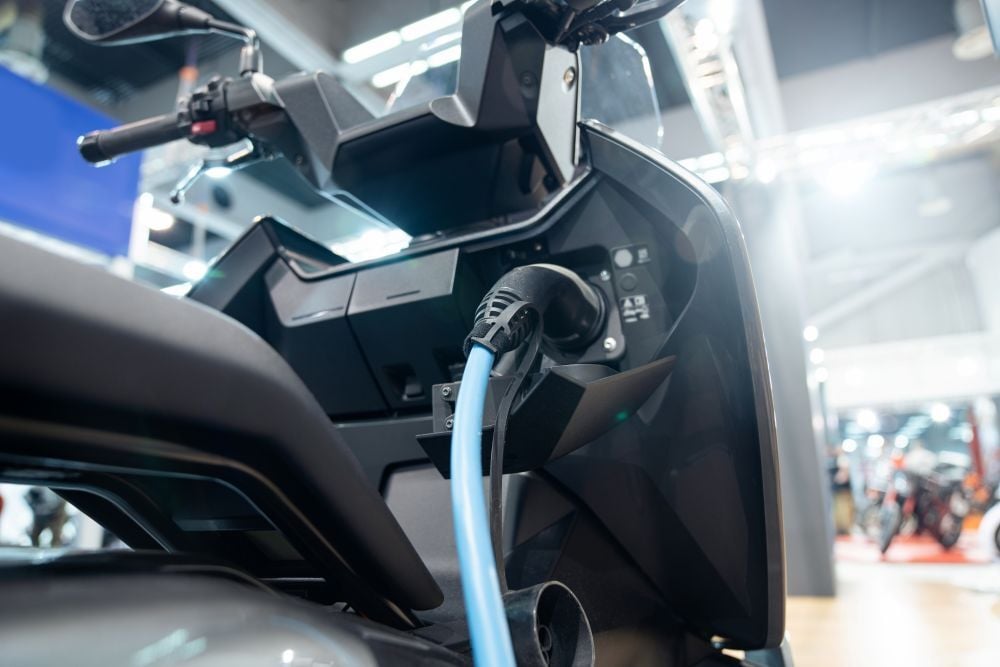
Its aesthetic is purposely traditional and somewhat conservative to retain familiarity for new riders in this space. The bodywork is simple and clean, with the battery housed where a conventional fuel tank would commonly be. And the overall result is a riding experience that does not have to be relearned or adapted by petrol riders of any ability. Similarly, for power and performance, it is positioned clearly in the middleweight suburban category with a 50kW output that produces around 67 brake horsepower for a top speed of 100 miles per hour. Honda made the decision to implement the CCS2 DC charging that has become the EV standard across Europe. This provides a major advantage for destination charging, with an increase of 20 to 80% possible in around 30 minutes. At a price of around £10,000 to £11,000, this reliable bike could be an important game-changer in terms of mass adoption.
Zero SR/S
The California-based manufacturer Zero Motorcycles started in 2006 with an aim to meet the new sustainability requirements for motorcycles in real style. This Zero SR/S model distils almost two decades of their knowledge, research, manufacturing skill and sophistication into one single impressive machine.
It represents a new balance between range, power, comfort and the all-important rideability factor that is equally suited for daily use, long distances and high speeds. With bodywork shaped by aerodynamics and the ergonomics of regular travel, it keeps the rider relaxed and engaged even across uneven surfaces. The ZF75-10 electric motor at work reaches a top speed of 124 mph with acceleration of 0-60mph in under 4 seconds. Importantly, this power is tuned for seamless transition from standstill to motorway speeds without any gear changes or clutch modulation. A Zero 17.3kWh lithium-ion battery is mounted low in the chassis for optimised stability and weight distribution with a range of 170 miles for city riding and around 90 miles for motorway speeds. These stats place the Zero SR/S comfortably among the longest range models on the market. Standard AC charging will take around 9 hours from 0-100%, with the Charge Tank accessory allowing for rapid charge times of 0-95% in 2 hours. The 2026 model is listed at around £1900, depending on configuration, for the most complete electric motorcycle available on the market.
LiveWire One
The LiveWire One is defined by its ambition to embrace the opportunities that an electric motorcycle presents in terms of engineering and style. As a result, it feels and looks distinctly modern with a technical confidence and assertive aesthetic of visible mechanics. Minimalist bodywork and a sharp profile are home to a compact battery and motor, all centralised in the frame with eye-catching LED lighting functionality to display it. There are innovations here too. Its electric drivetrain is built to deliver sustained power coupled with consistent thermal management for performance sustained throughout the ride, instead of the more common accelerative bursts. 104bhp on the LiveWire One provides top speeds of 110mph with a rapid 0-60mph score of around 3 seconds too. A 15.4kWh lithium-ion battery provides an urban range of up to 145 miles with a combined real-world range that resolves to just under 100 miles. A CCS DC charger can take the battery from 0-80% in approximately 40 minutes, with AC Level 2 capability also available for longer scheduled stops.
The high-resolution touchscreen interface is pleasingly intuitive to deliver customisation and journey data without over complicating the ride. At around £22,000, the LiveWire One demonstrates exactly what electric motorcycles are capable of in a very exciting way.
Energica Ego
Energica Motor Company has a fine pedigree in the very top tier of electric motorcycles. This Italian manufacturer supplies machinery for international electric racing competitions and the Ego implements all of that know-how in a dramatic manner for the road. Sustained speed, nerve-jangling acceleration and sophisticated control are the Energica hallmarks evident here in a ride unlike any other in the electric motorbike sphere. It has an almost aggressive superbike stance with precision detailing that is uniquely crafted for the upper limits of road performance and capability.
145 bhp makes top speeds of 150mph achievable with an astonishing record of acceleration from 0-60mph in around 2.8 seconds. This immediate power is controlled with professional-levels of traction and torque management that ensure stability and consistency, whatever the ride surface. Energica’s battery technology is in the highest league of engineering available for production bikes with a listed range of 250 miles for low-speed, urban environments. Even in real-world and mixed speed rides, it can comfortably offer 120 miles from a full charge with CCS DC capability, providing 0-80% battery within 40 minutes.
The Energica Ego has a chassis that looks destined to race. Its tubular steel trellis frame and managed centralised weight give excellent mid-corner stability with confidence and valuable feedback. Priced at around £25,000, this machine shows how far electric motorbikes have developed in the last five years in terms of speed and raw power.
Electric motorbikes are proving impossible to ignore in the second half of the decade. The models detailed above manage to marry a sense of freedom and imagination that motorcycling has always maintained with a forward-thinking element of modern engineering and innovative electric design. The journey for these fantastic machines may have been bumpy up to this point, but everything points to an incredibly exciting and smooth ride for the future.