

The history and development of London is filled with connections to the impact that its markets have had. These have assumed the responsibility to serve one of the biggest urban populations in Europe for well over a thousand years, with everything from food, clothing, goods and cultural items and art. This is a city built on trade and commerce, with enterprising vendors always quick to identify an opportunity that can be scaled up to reach the widest number of people possible.
Borough Market in Southwark, Central London, is a striking example of how all these elements have combined throughout history. Since at least 1014, there is evidence of a continually trading food market in this area. Its location initially made it perfect to develop a trading ecosystem with buyers originally flocking here for grain, meat, fish, fruit and ale from sellers that were always expanding to meet demand. With London Bridge as the only river crossing and the constant imports of food sailing on the Thames nearby, goods would arrive by boat, cart and foot to serve the gathering crowds.
From The Mediaeval To Modernity
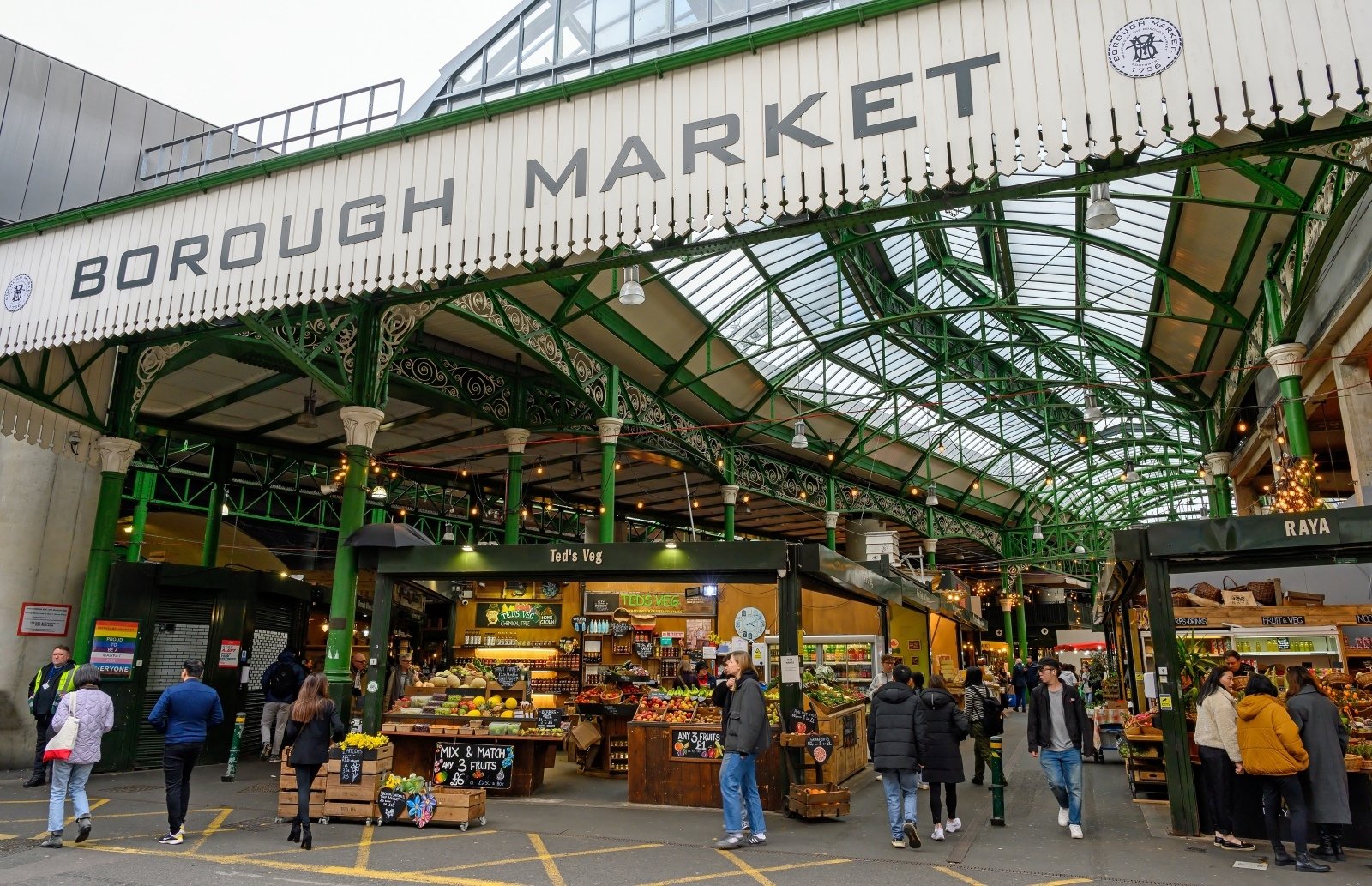
All the way through Mediaeval times, Borough Market remained a constant presence, serving the people of the capital with their daily needs. As London expanded in Victorian times, the market was relocated off the main thoroughfare to a dedicated and purpose-built structure created to manage the flow of goods and people. Crucially, it became owned by trustees that governed everything about it, a practice that continues to this day. The beautiful iron and glass surroundings were home to a hive of activity until the late 20th century, when demand slumped and the market was almost consigned to history.
Everything changed in the late 1990s when a burgeoning British food culture took hold. The market adopted a ‘producer-first’ philosophy that valued small-scale artisan stalls and operations that had real provenance and value. It very quickly came to life as the centre of this movement in London, with street stalls now selling hot food to the returning crowds too.
2026 Treats
Borough Market is now a curated food experience that connects British farmers to London chefs and restaurants while serving the general public with incredible street food options. It symbolises heritage with impeccable taste in more ways than one.
Here is a collection of the best stalls to sample and vendors to visit during a trip there.
Kappacasein
Bill Oglethorpe is a cheesemaker and master of all things dairy who started Kappacasein to showcase his range of British & Alpine cheeses. This place is widely regarded as a pioneer for the transformation of Borough Market.
Their signature dish of raclette with potatoes, gherkins and onions is the ultimate Borough Market snack for many visitors.
Brindisa
As one of the most influential and respected Spanish food importers, Brindisa has showcased its ingredients for those fabulous ‘little plates’ since the 1980s. Their Borough Market presence is a great way to experience exactly what can be done with their excellent produce.
The grilled chorizo roll with piquillo peppers is a delightful introduction to the brilliant Brindisa.
The Black Pig
The Black Pig is one of those wonderful examples of a British food brand that understands its food history but aligns it with modern standards. It has all the discipline and quality of restaurant production with the immediacy and pace of street food.
The beautifully tender, slow-roasted British pork sandwiches are a callback to the types of lunches that have been served around here for over a thousand years. Albeit with elevated levels of creation and presentation, of course.
Horn OK Please
Perhaps the single most important and exciting element of modern London is the influence of global cultures it has cultivated in recent years. Horn OK Please is a truly authentic Indian street food vendor that has a clear focus on vegetarian dishes with all the vibrant spices and tastes that bring them to life.
The egg kati rolls and moong dal dosa are bright, sharp and hearty as a lunch time treat straight from the streets of the subcontinent to the banks of the Thames.
Richard Haward’s Oysters
This sixth-generation family operation from the Blackwater Estuary in Essex is one of the most renowned oyster producers in the entire country. At Borough Market, it may just have found the ideal setting for its fresh seafood snacks served with sophistication and style.
The Colchester natives and rock oysters served raw on the half shell with lemon and white pepper are clean, simple and refined.
The Ginger Pig
The Ginger Pig is a great example of a British butcher and food brand that set out to restore the highest quality for provenance and flavour in the products they sell. They did so by creating direct relationships with a network of smaller farms across the country, predominantly in the South West and Home Counties.
Their take on British snack classics such as sausage rolls and Scotch eggs is consistently cited as among the best in all of London.
Monmouth Coffee Company
No London food court or dedicated epicurean area could be taken seriously without providing an excellent cup of coffee. Borough Market is fortunate to have a place that takes coffee very seriously, with Monmouth Coffee Company as part of its offering. Since the late 1990s, this has been here to witness the coffee revolution in the capital with its own inimitable focus on single-origin sourcing and flavour education strategy.
Keeping things nice and simple with a black Americano from Monmouth will provide an appropriate and refreshing pitstop during the Borough Market experience.
Time spent at Borough Market in London is valuable in several different ways for visitors and residents. Firstly, it delivers on the promise of being one of London’s finest collections of independent and artisanal food and drink brands, with all the sounds, sights, smells and tastes to make it an essential day out for any food lover. Importantly, it also acts as an interesting connection between all the variations and versions of London’s past in this area. It takes its visitors on a thousand-year journey through incredible developments, evolutions and changes to arrive at the ideal version of a 21st century market in the city.