

The 4 Best Things to Do in Cornwall
There is a particular magic to Cornwall that makes it feel unlike anywhere in the country. Its landscapes are soaked in beauty and myths, with an atmosphere that makes it feel almost like a country entirely of its own.
400 metres of dramatic coastline meet the full force of the Atlantic to the north of the county, with warmer and greener shores of the English Channel to the south. They have harboured stories of ancient Celtic civilisations, generations of mining innovation and even tales of smuggling skullduggery as a stop for pirates through the ages. In modern times however, one is more likely to encounter the glamour of the holiday-goers on the Cornish Riviera than a buccaneer looking for treasure. From fishing to folklore in Truro to Tintagel Castle, this is a place that demands exploration and discovery.
Here is a collection of the very best things to do in Cornwall.
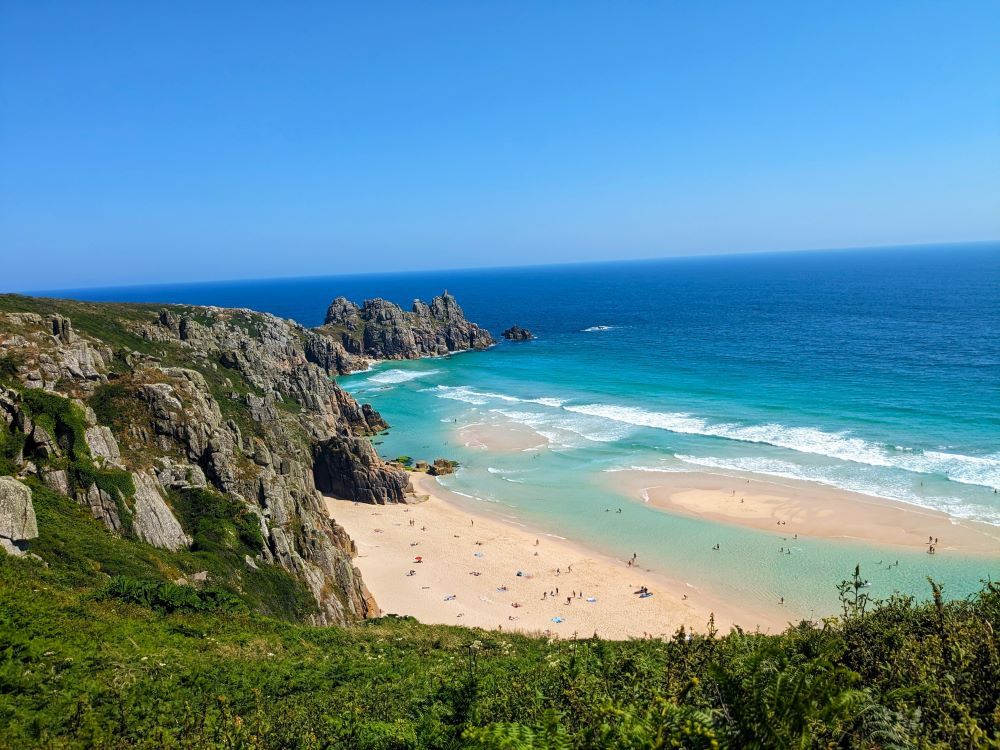
The Minack Theatre
The Minack Theatre is an extraordinary example of an arts venue that has literally become part of the landscape in Cornwall. Standing imperiously on the granite cliffs above Porthcurno Bay, overlooking the Atlantic Ocean, this is a theatre hewn from rock out in the open air. In 1931, landowner Rowena Cade responded to a local theatre group that needed a space to perform their version of Shakespeare’s The Tempest with a stunning feat of community construction. On her own, with a pickaxe and wheelbarrow, she began to build a theatre from the natural environment of her own clifftop garden.
Over the next fifty years, it was developed with seating inspired by the classical proportions of Greece and Rome. The result is an outstanding performance space that feels like an ancient ruin with the stage set in rock and an immersive view of the tumultuous water beyond it. The programme for shows in 2026 is a wonderful mix of children’s entertainment with Steve Backshall Dinomania, live music from Newton Faulkner, and a collection of plays ranging from folk classics to modern musicals. There is even the opportunity to ramble around this incredible place during non-show days to fully appreciate how this unique and breathtaking place was brought to life by the vision and determination of one woman.
The Eden Project
At the turn of the last century in the UK, there was a collection of ambitious new attempts to create landmarks of the built environment that would become classics for the future. The Eden Project just outside St Austell is one of the most successful among them. This was intended as a celebration of the natural world on a site that had suffered centuries of mining and would become the largest indoor rainforest in the world. Two huge, enclosed biome domes cover around 30 acres, rising to 180 feet at their highest point in a restorative and environmentally-focused landmark for Cornwall.
The striking organic geometry of hexagons and pentagons rises from the ground with a living architecture that takes one's breath away. Inside the rainforest biome are bamboo groves, banana trees and rubber plants with a multitude of vines cascading from the steel supports as the perfect metaphor for what has been built here. A waterfall even runs through the space with walkways above that let visitors witness everything from above. The neighbouring Mediterranean Biome is a festival of olive trees, grape vines and citrus groves with a recreated climate more akin to Southern Europe or California than the familiar Cornwall bluster. The Eden Project is definitely a full day exploration, with booking for families strongly recommended, whatever the weather.
The Camel Trail
The Bodmin and Wadebridge Railway was one of Cornwall’s first attempts at moving slate and stone from inland facilities to the coast. It was built in the 19th century and served well into the 1960s until closure and disrepair eventually followed. However, what remains is now a traffic-free route through some of the most spectacular scenery in the whole country that has walkers, cyclists and horse riders traversing 18 miles of estuary, woodland, farmland and riverside in an accessible and gentle journey.
From Padstow to Wadebridge, one first encounters the Camel Estuary, where freshwater and saltwater collide as the River Camel and the sea meet. Marshland and reed beds are home to feeding birds and wildlife, with the occasional kayaker or small boat slipping into the waters beyond. From Wadebridge to Wenford Bridge, the trail narrows as a picture postcard image of the county emerges, supported by old stone bridges and meadowlands.
The whole trail feels alive in a way outside of the modern world. Honesty boxes selling the freshest farm produce and bike hire huts sporadically line the tracks with an overriding sense of freedom and space to roam. Of course, the towns of Padstow, Wadebridge and Wenford Bridge are always available as pit stops or even journey’s end if the full trail proves too much for little wheels or legs. Picturesque picnics, serious strolls and romantic rides are all the order of the day on the incredible Camel Trail.
Tintagel Castle
The legends and apocryphal stories that are sewn into the fabric of Cornish culture really don’t come much bigger than those of King Arthur. According to the historical chronicles of over a thousand years ago, Tintagel was the birthplace of the mythical king who drew the sword from the stone and created the court of Camelot with his magical advisor, Merlin. The huge bronze statue that stands on the headland facing the sea is certainly a wonderful symbol of all that may have happened upon a landscape that certainly feels like it could hold such stories.
The site of Tintagel Castle does have verified history too, of course. Henry VIII’s brother, Richard, Earl of Cornwall, built much of the ruins that we see today. However, there is also archaeological evidence from North African and eastern Mediterranean cultures here from the 5th to 7th centuries, when the place was a high-status centre of early international trade. The sheer drama of Tintagel bridge, created in 2019, to span the divided landscape with the Atlantic raging in the chasm below, is pure theatre. Down there, at low tide, one can even enter Merlin’s cave, where the iconic sorcerer is claimed to have worked and lived. For curious hearts, inquisitive minds and active feet of all ages, Tintagel simply cannot be missed.
Cornwall is a 21st-century triumph of coastal living in the UK. Taking a day or two to retreat away from the buzz of activity in its modern towns and busy beaches to the peace and majesty of these landmark destinations is thoroughly recommended. They each offer an engaging connection to the place’s past and a clearer understanding of how Cornwall is set to thrive in the future.