

The Best Things to Do in Camberwell
Camberwell has been a lived-in part of south London for centuries, evolving from a small rural village into one of the capital’s most established inner neighbourhoods. Today, Camberwell retains its strong local identity shaped by markets, pubs, galleries and a long-standing creative scene.
In this guide, we look at the best things to do in Camberwell, from its parks and weekend stalls to its restaurants, live music and cultural venues.
History
Its name is often linked to an old “well” in the area, thought to have been connected to a bend in the River Effra, which once ran through this part of London before being covered over and channelled underground. By the Georgian and Victorian periods, Camberwell began to shift from countryside to suburb. Improved roads and transport links brought growth, and by the 19th century, it had developed into a densely populated residential district, shaped by rows of terraces, civic buildings and green spaces.
Explore Myatts Fields Park
For an area that’s largely built-up, Camberwell does have its softer edges and Myatts Fields Park is the best of them. A short walk from Camberwell Green, the 14-acre Victorian park first opened in May 1889 and was created with a clear civic purpose, often captured in the phrase: “To the people gardens and to the children playgrounds.”
The land was once part of a 109-acre estate, later owned by the Minet family, Huguenots who fled France in the late 1600s. As the railways arrived in the 1860s and Camberwell grew, William Minet donated land for the park in 1882, while also shaping much of the neighbourhood around it. Like many London green spaces, it also carries wartime traces: it hosted a military hospital in World War I and trenches were dug during World War II for shelter during bombing.
What makes Myatt’s Fields especially worth building into a Camberwell day, though, is that it’s active without being over-programmed. The park’s community project runs a calendar of free events, from wildlife walks to workshops, talks, music, food and market stalls. There are also regular community gardening workshops, term-time forest school sessions in the wildlife area near the Little Cat Café and drop-in Stay and Play mornings for under four-year-olds.
Watch Jazzlive at The Crypt
Jazzlive at the Crypt began life in 1995 as the St Giles Jazz Club and it didn’t take long to earn a reputation that extended well beyond Camberwell. In 2000, it teamed up with the musicians’ collective Jazz Umbrella, with the two later merging to form a charity and trading arm dedicated to both performance and jazz education. Its weekly Friday-night concerts have since welcomed leading players from London, the UK, Europe and further afield.
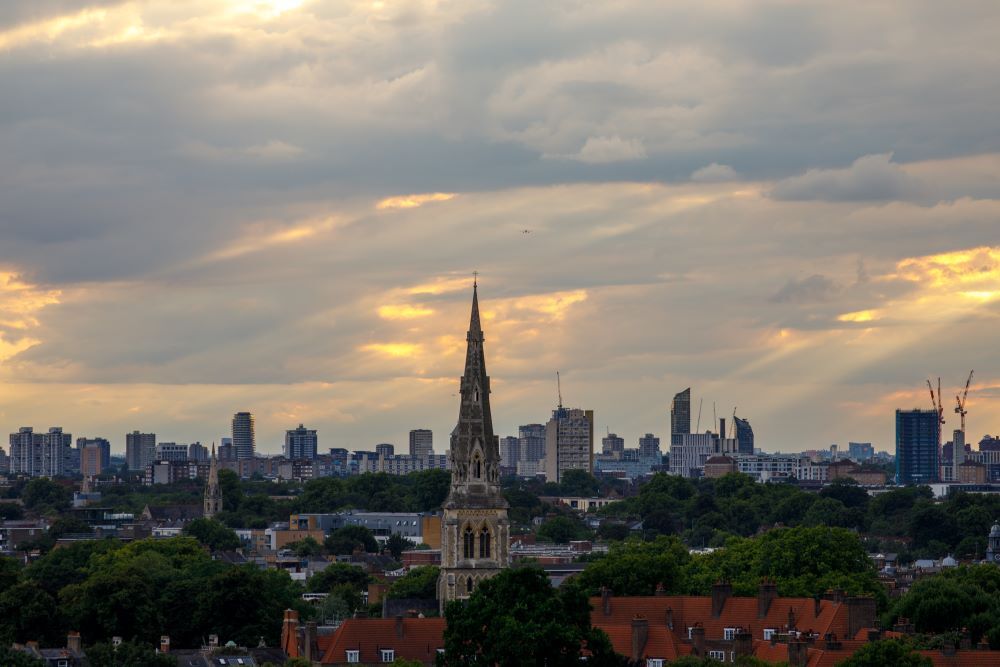
The Crypt sits beneath St Giles’ Church on Camberwell Church Street, a building associated with the architect George Gilbert Scott. The space itself carries a deeper history still, as it is thought to be part of the original Anglo-Saxon church that stood on the site from at least the 11th century, before it was destroyed by fire in 1841. The gothic architecture and subterranean atmosphere make it a rare London venue that feels transportive without trying to manufacture a mood.
Today, concerts run every Friday evening, with additional dates on some Thursdays and Saturdays and the venue holds a late licence until 2am from Thursday to Saturday. It remains one of Camberwell’s most distinctive nights out.
Spend a Morning at Camberwell Green Market
Camberwell does weekends well and its Saturday market is one of the simplest reasons to show up. Urban Farmers’ Market takes over Camberwell Green every Saturday from 10am to 3pm, bringing together local producers, street food, craft stalls and the occasional vintage find.
The line-up shifts, but there’s a strong core of regular traders. The Celtic Bakers (working alongside Breadwinners charity) covers artisan bread, pastries and cakes, while Marsh Produce brings rare breed Dexter beef, lamb and chicken, plus wild game in season and homemade pies from Romney Marsh in Kent. Old Hall Farm supplies seasonal fruit and vegetables and you’ll also find smaller-scale South London favourites such as Alda’s Original Sorrel, JuiceDeCruz for fresh juices, Roka Brings Flowers with bouquets from a bike stall and Herbal Haven for naturally grown culinary and medicinal herbs.
Dine at Silk Road
Silk Road is the sort of restaurant Camberwell does best: small, informal and quietly brilliant. Set a few doors down from the Green on Camberwell Church Street, it has built a loyal following for its food and the bold flavours of Xinjiang, China’s far north-west.
The menu is short and to the point, with dumplings, skewers and stews at the forefront. Dishes can be fiery, but they’re balanced with aromatics that feel rooted in the old trading routes the restaurant nods to, such as cumin, chilli and star anise.
Explore South London Gallery
The South London Gallery has been part of Camberwell’s cultural fabric for well over a century, established on its current site in 1891 by the philanthropist William Rossiter with the ambition to “bring art to the people of south London.” That founding idea still shapes the experience today: serious contemporary art, presented without barriers.
The gallery’s programme focuses on international contemporary work, often giving London first-time solo shows to artists who have rarely exhibited at this scale in the capital. Alongside exhibitions, there’s a year-round schedule of events, talks, film screenings and community-led projects. Admission is free.
Watch a Performance at The Blue Elephant
The Blue Elephant Theatre is one of Camberwell’s most impressive cultural fixtures. Founded in 1999 by Antonio Ribeiro, it has built a reputation for taking risks early, often staging work that later goes on to wider recognition, transfers, awards and international touring.
Over the years, its programme has ranged widely, from Born African (by Zimbabwean company Over the Edge, later transferring to Battersea Arts Centre) to Art in the Balkans, billed as London’s first pan-Balkan theatre, film and visual art season. It has hosted notable firsts too, including an Estonian play produced in the UK (The Highway Crossing by Jaan Tätte) and premieres linked to literary figures such as Mervyn Peake, including The Cave and the first stage version of Noah’s Ark, shortlisted for an Off West End Award in 2011.
It’s also a theatre with a strong local standing: the venue won the inaugural Southwark Arts Forum Award for Performing Arts in 2013 and in 2019, it took five People’s Choice Awards at the OffWestEnd.com awards, including recognition for programming and being one of the most welcoming London venues.
Drink at The Camberwell Arms
Dating back to the 19th century and relaunched in 2014, The Camberwell Arms has become one of Camberwell’s most dependable fixtures, warm, busy and consistently good, now led by chef-director Mike Davies. Seasonal cooking sits at the centre of it all, backed by a natural-leaning wine list and well-made cocktails, with the same team behind Frank’s Café in Peckham.
Much of what you eat is made in-house, from breads and ice creams to pickles, smoked fish and ferments, with dishes that change with the seasons but stay grounded. Upstairs, one of the grander rooms has been turned into an elegant private dining space with its own bar and the kitchen’s reputation is strong enough that it was named among the Guardian’s best Sunday lunches in 2017.
Camberwell isn’t short of things to do, and much of what’s best about it reveals itself once you’re there. From Myatt’s Fields for a slower hour outdoors, to the Green on a Saturday, small theatres and a late-night jazz set, it’s easy to see why Camberwell has stayed popular for so long.