

Over the past decade, Shoreditch has moved decisively beyond its reputation as a purely creative or nightlife-led district and established itself as one of London’s dining neighbourhoods. Once associated with temporary pop-ups, experimental kitchens and late-night openings, the area now supports a growing number of permanent and chef-led restaurants that are operating at a consistently high level. This shift has been driven in part by proximity to the City, changing residential patterns and the arrival of chefs seeking space and independence outside the West End.
What distinguishes Shoreditch at the upper end of the market is not spectacle but intent. The prevailing mood is less theatrical than Mayfair and less formal than St James’s, yet standards in both kitchen and dining room remain exacting. Many of the area’s best restaurants favour tasting or set-menu formats, limited covers and tightly controlled service, reflecting a broader move towards longevity rather than novelty.
In this guide, we walk through some of the very best high-end restaurants in Shoreditch, each defined by a clear point of view, technical confidence and a commitment to consistency.
The Clove Club
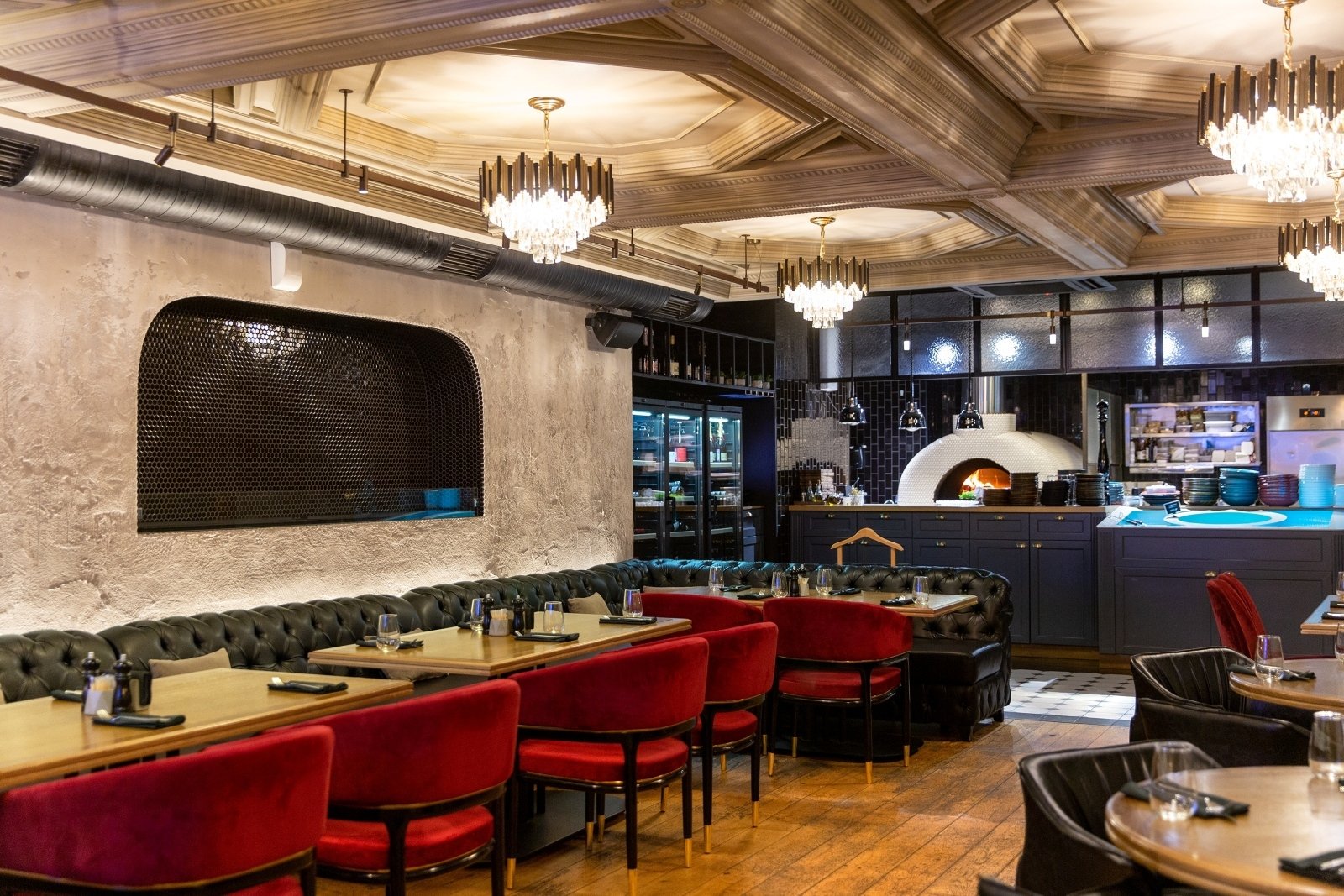
Set within the Grade II-listed Shoreditch Town Hall, The Clove Club is the area’s most established fine-dining restaurant. Led by chef-patron Isaac McHale, it operates as a tasting-menu restaurant with a clear emphasis on British produce and seasonality, delivered through precise and modern cooking. Menus are structured and restrained, allowing ingredients such as Orkney scallops, Wiltshire trout, Herdwick lamb and Middle White pork to remain central. Snacks and aperitifs precede a multi-course sequence that prioritises balance and clarity over embellishment, whilst the open kitchen provides a functional focal point. The wine list is extensive and confidently assembled, featuring a combination of lesser-known labels with a solid selection of classical European bottles. Holding two Michelin stars, The Clove Club has built its strong reputation by offering a dining experience that is assured and deliberately understated.
Brat
Brat, from chef Tomos Parry, draws heavily on the cooking of northern Spain and the Basque Country, with wood fire and smoke at its core. Housed on the first floor of a former pub, the restaurant centres on live-fire cooking, with an open kitchen that brings the flames into view. Whole turbot – ‘brat’ being the Basque name for the fish – is the house speciality and is grilled over lumpwood charcoal and designed for sharing. Elsewhere, the menu ranges across seafood, meat and seasonal vegetables, supported by starters and a burnt cheesecake that has become a menu fixture. Despite its accolades, Brat retains a sense of informality. The room is lively without tipping and the cooking, which is bold and elemental, is delivered with confidence rather than flourish.
Bistro Freddie
Bistro Freddie brings a more European sensibility to Shoreditch, with cooking that is rooted in French technique and driven by seasonal British produce. The menu favours familiar forms, beef tartare, fish with beurre blanc and is executed with precision rather than reinterpretation. The 45-cover restaurant, from HAM Restaurants, operates largely through a set-menu format that keeps the focus on consistency. The approach is deliberately limited in scope and is supported by a concise and French-leaning wine list. The dining room is softly lit and informal, lending itself to long lunches and unhurried evenings.
Manteca
Manteca approaches Italian cooking through a modern lens, with a focus on in-house pasta, whole-animal butchery and an uncompromising commitment to flavour. The menu evolves frequently, but the underlying emphasis on quality ingredients and careful technique remains constant. A collaboration between Smokestak’s David Carter and Pitt Cue’s Chris Leach, the restaurant is known for its nose-to-tail ethos, hand-rolled pastas, wood-fired breads and in-house salumeria. Dishes make use of duck hearts, pig heads and beef fat alongside whole roasted fish and carefully cured meats from native British breeds. Even dessert nods to the kitchen’s carnivorous streak. The wine list spans low-intervention bottles and classical selections from Italy and beyond, while the cocktail offering leans heavily into amari. The dining room is open and energetic without becoming overwhelming. Manteca succeeds by feeling contemporary without abandoning tradition, which is a balance that suits Shoreditch particularly well.
Counter 71
At Counter 71, the cooking is shaped by the landscape. The restaurant’s philosophy is grounded in the natural rhythms of the British Isles, drawing inspiration from land and sea rather than individual memories or canonical dishes. Its focus sits firmly on seasonality and sourcing, with an emphasis on working in step with soil, weather and water to produce food that feels purposeful rather than ornamental.
This approach is reflected in the ingredients at the centre of the menu: British seafood, heritage-breed meats and sustainably grown vegetables, sourced with care and treated with restraint. Counter 71 exists to give these raw materials space to speak for themselves, with dishes designed to reflect their origin and the conditions under which they are produced.
Housed within a converted, long-shuttered pub on a quiet Shoreditch backstreet, the restaurant operates as a 16-seat chef’s counter arranged around a substantial marble surface. The open kitchen sits at its centre, placing both cooks and diners firmly on display. Dinner is served as a single sitting, beginning at 7.15pm, with guests encouraged to arrive early for a drink downstairs at Lowcountry, the restaurant’s basement bar.
The multi-course tasting menu opens with snacks before moving through a sequence of seasonal dishes that make careful use of prime ingredients. Plates such as lamb with asparagus, grey mullet with tomato and cuttlefish with seaweed reflect the kitchen’s emphasis on clarity and balance, all prepared and plated directly in front of guests.
Shoreditch’s restaurant scene reflects the area’s broader evolution: confident, settled and no longer chasing novelty. These kitchens prioritise craft, produce and atmosphere over excess, offering dining experiences that feel considered rather than contrived. In a neighbourhood that has matured quietly, the best restaurants now operate with assurance and little need to shout about it.