

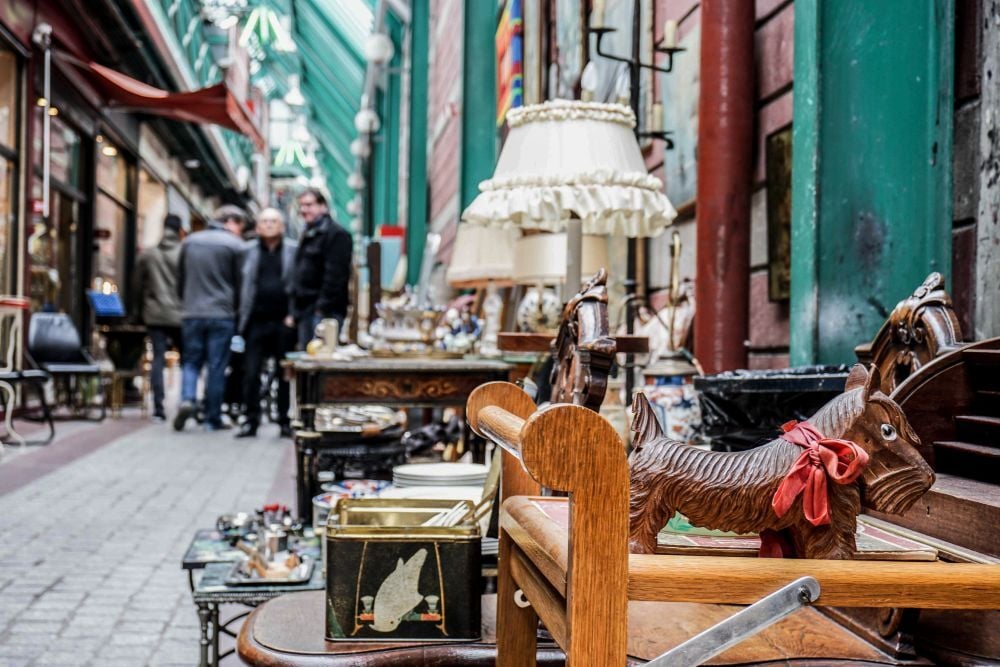
What keeps antiques relevant now is not nostalgia, but practicality and taste. A good piece has already proved it can last. It carries a weight and finish that modern manufacturing often struggles to replicate. Yet even as auction houses shift onto screens and international bidders buy in from abroad, many still favour the trade in its original form. This is shopping that hasn’t been over-curated: pieces are compared, questions are asked, condition is inspected, prices are negotiated and the best finds are often the ones spotted a moment before someone else notices them.
In this guide, we reveal a handful of the best antique markets in London.
History
London has been buying and selling the past for as long as it has been building over it, but the first real turning point came much earlier than most may realise. During the Renaissance, roughly between the 14th and 17th centuries, a new fashion took hold among London’s upper classes: collecting. Driven by curiosity and the hunger for learning, households began acquiring decorative pieces alongside anthropological and scientific objects. London collectors were among the most influential in the world. The late 17th-century naturalist Sir Hans Sloane, the namesake of Sloane Square, amassed more than 71,000 objects from travels, including Jamaica and Japan, later leaving his collection as the foundation for what became the British Museum.
Bermondsey Antique Market
Bermondsey Antique Market is one of London’s true antiques institutions, with a history that runs far deeper than its Friday-morning ritual may suggest. Formally known as the New Caledonian Market, it traces its roots back to the 19th century, first emerging from London’s old cattle and general goods trading culture before gradually evolving into the antiques specialist it’s known for today.
Relocated south of the river after the war and reshaped over decades of changing tastes, it has survived scandal, redevelopment and the slow drift of the trade indoors. Held at Bermondsey Square every Friday from 7am to 2pm, it’s an early start for a reason, as buyers come to sift through silver, china, jewellery and vintage pieces. The selection can range from small and characterful finds on the central stalls to bigger and more eclectic objects in the surrounding spaces and the atmosphere still feels refreshingly authentic.
Grays Antique Market
Grays Antique Market is Mayfair antiques shopping at its most polished. Established in 1977 and set inside a handsome Edwardian building on Davies Street, it has long drawn serious collectors alongside London’s more style-led crowd. Across its two levels, nearly 100 specialist dealers trade in everything from fine antique jewellery (Georgian, Victorian, Edwardian and Art Deco pieces are a particular strength) to silver, watches, porcelain, ceramics and fine art, with objects that range from investment-level to simply beautiful.
It’s the sort of place where one might come looking for a vintage ring or a classic timepiece and leave with an unexpected obsession, a piece of Chinese porcelain, an Art Nouveau vase or a perfectly chosen object for the home. Open Monday to Friday, 10am to 6pm, it’s also one of the easiest antiques detours in Central London, located just a short walk from Oxford Circus.
Alfies Antique Market
Alfies Antique Market is a four-floor emporium of antiques and vintage that is tucked inside a former department store on Church Street. Opened in 1976, the market took over an Art Deco-style building with a retail history dating back to the Jordan’s department store era and it still carries that old-school and browse-for-hours atmosphere today.
Inside, visitors will find 75+ specialist dealers (closer to 100 depending on the line-up) trading in everything from antique jewellery, silver and ceramics to mid-century lighting, textiles, vintage fashion and collectable design pieces. The stock is particularly strong for those decorating with intent, think statement mirrors, 1960s lamps, paintings and prints, glassware and one-off decor pieces. It’s open Tuesday to Saturday, 10am to 6pm, with a rooftop café that makes it easy to turn the visit into a full afternoon.
Portobello Market
Portobello Road Market is London antiques shopping at its most iconic, a 19th-century street market turned global name, running through the pastel terraces of Notting Hill. It first built its reputation as a bric-à-brac and collectables market in the mid-20th century and whilst it now spans everything from fashion to food, antiques remain the main event: jewellery, silver, ceramics, fine art, vintage textiles and antiquarian books.
The best time to visit is Friday, when many of the best antiques traders come out in force, while Saturday is the busiest, with stallholders stretching the market out over more than a mile. The antiques section sits between Portobello Road and Kensington Park Road, W11 and traditional market hours run Monday to Saturday, 8.30am to 6pm (often shorter in winter), though the wider market area also trades more broadly across the week.
Greenwich Market
Greenwich Market has been doing the same thing for centuries. Trading here dates back to the 14th century, later formalised by royal charter and it still sits right where it should: between Greenwich Park and the Old Royal Naval College, in the middle of Maritime Greenwich’s World Heritage backdrop. Today, it’s definitely worth the trip on its antique days, when the stalls lean into vintage and collectables, jewellery, ceramics and small furniture pieces. It’s open seven days a week, 10am to 5.30pm, but Tuesdays and Thursdays are key dates for antiques and collectables (with arts, crafts and designer-makers filling the rest of the week). While there’s plenty beyond the bric-a-brac, independent shops, café stops and street food that keep the market busy well past lunchtime, its appeal is still rooted in the basics, unhurried browsing and shopping with a sense of the city’s past close at hand.
London’s best antiques markets still do what they always do best: give old objects a new life and buyers the pleasure of finding them. The pace is slower than most shopping, but the decisions feel sharper and are shaped by the small thrill of taking home something with a history of its own.